Uwe Deichmann - Böcker
Visar alla böcker från författaren Uwe Deichmann. Handla med fri frakt och snabb leverans.
3 produkter
3 produkter
220 kr
Skickas inom 10-15 vardagar
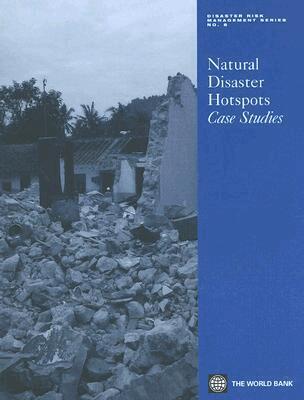
These case studies complement the earlier ground breaking work of ""Natural Disaster Hotspots: A Global Risk Analysis"" published in April 2005. Three case studies address specific hazards: landslides, storm surges and drought. An additional, three case studies address regional multi-hazard situations in Sri Lanka, the Tana River basin in Kenya, and the city of Caracas, Venezuela.
337 kr
Skickas inom 10-15 vardagar
This report responds to pressing questions for policymakers in Eurasian cities and national governments. Faced with changing economic circumstances and a reorientation of trade toward Europe and Asia, will Eurasia’s cities be able to adjust? Will some cities be granted the flexible regulations and supportive policies necessary for growth? And will some be permitted to shrink and their people assisted in finding prosperity elsewhere in the region? Even as Eurasian cities diverge, they face shared challenges. Policymakers have a key role in assisting spatial restructuring, particularly in addressing imperfect information and coordination failures. They can do so by rethinking cities, better planning them, better connecting them, greening them and finding new ways to finance these changes. Eurasian cities will also have to find the right balance between markets and institutions to become sustainable. As the World Development Report 2009: Reshaping Economic Geography illustrates, Eurasia (excluding Russia) is a 3D region- a region with low density, long distance, and many divisions. Securing accessibility to leading regional markets such as China, India, and Russia is thus critical. This will require key institutions to be developed to unite the countries, key connective infrastructures to be established between domestic and regional markets, and targeted interventions to be undertaken to compensate countries for short-term losses from this deepened economic integration. Policymakers at the highest levels in these countries should put accessibility at the top of their agendas.| Irving Babbitt was a giant of American criticism. His writings from the 1890s to the 1930s helped advance American criticism and scholarship to international esteem. More than seventy years after his death his intellectual staying power remains undiminished. On Literature, Culture, and Religion is an ideal introduction to this seminal American thinker. Babbitt's opinions were uncompromising, and his vocal allies and opponents included almost every name in American literature and scholarship: T. S. Eliot, Edmund Wilson, Paul Elmer More, H. L. Mencken, and Sinclair Lewis. A founder of New Humanism, Babbitt was best known for his indictment of Romanticism and his insistence that the modern age had gone wrong. Babbitt argued for a renewal of humanistic values and standards--which he found best articulated in classical Greece, Hinduism, and Buddhism. The selections cover topics central to Babbitt: criticism, Romanti-cism, classical literature, French literature, education, democracy, and Buddhism. They typify Babbitt's method: recondite allusion, penetrating insight and analysis, impeccable scholarship, and unrelenting pursuit of the furthest ramification and the profoundest implication. The original annotation is retained. Brief introductions to the essays place them in the Babbitt canon. A major introductory essay by George A. Panichas surveys Babbitt's career and critical reception and summarizes the concepts that inform Babbitt's writing. Panichas raises again controversial issues that were not really resolved in Babbitt's time. The essay will challenge those long familiar with Babbitt and New Humanism and those newly introduced thereto. George A. Panichas is professor emeritus of English at the University of Maryland and editor of Modern Age: A Quarterly Review. He is the author of Adventure in Consciousness: The Meaning of D. H. Lawrence's Religious Quest, Dostoevsky's Spiritual Art: The Burden of Vision (available from Transaction), The Reverent Discipline: Essays in Literary Criticism and Culture, and The Courage of Judgment: Essays in Criticism, Culture, and Society.
380 kr
Skickas inom 10-15 vardagar
Pollution from fossil fuels and degraded natural lands are raising the earth’s temperature. The evidence of the causes of global warming is clear, as are its consequences. The economic impacts of climate change are already apparent and they threaten development gains. Extreme weather events have brought severe droughts to Central Asia, heat waves and forest fires to Russia, and floods to Southeastern Europe. Unchecked emissions will come at rising economic cost and increasing risk to individuals. There is a clear case for all of the world's economies to move to a low-carbon growth path. Yet, climate action has been inadequate, especially in Eastern Europe and Central Asia (ECA). With prospects of a global climate agreement uncertain, Growing Green: The Economic Benefits of Climate Action identifies the actions that governments in the region can take to reduce the carbon footprints of their economies. It shows that many of these actions will more than pay for themselves - and quite quickly when indirect benefits such as better health and increased competitiveness are considered. To realise these benefits, policy makers in ECA need to quickly move on three sets of priorities: use energy much more efficiently, gradually move to cleaner energy sources, and increase carbon capture in soils and forests. This will require transformations in power generation, industrial production, mobility, city living, and in farming and forestry. Policy makers are justifiably worried that climate action may jeopardise economic performance and strain the budgets of poorer families. The report shows how well-designed growth and social policies can make climate action growth-enhancing while protecting the living standards of less-well-off households. The ECA Region has been a bystander on climate action, and sluggish in realising the benefits of the economic and technological innovations available to combat climate change. This book aims to help ECA become a leader in confronting this challenge. In doing so, it shows how countries in the region can make climate action-along with economic growth and social inclusion - the third pillar of their development strategies.