V. Ramanadham - Böcker
Visar alla böcker från författaren V. Ramanadham. Handla med fri frakt och snabb leverans.
8 produkter
8 produkter
1 749 kr
Skickas inom 10-15 vardagar
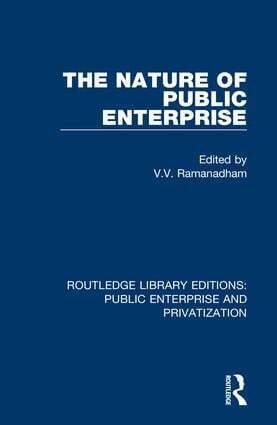
In both the developed world and the third world public enterprise has come to assume considerable importance in the structure and development of national economies.Originally published in 1984, this book, by an acknowledged international authority on public enterprise, explores this concept in both the major and the developing economies. He analyses how public enterprise functions and demonstrates how it may be integrated into both traditional Western mixed economies and third world economies with a much high level of state control.
523 kr
Skickas inom 10-15 vardagar
In both the developed world and the third world public enterprise has come to assume considerable importance in the structure and development of national economies.Originally published in 1984, this book, by an acknowledged international authority on public enterprise, explores this concept in both the major and the developing economies. He analyses how public enterprise functions and demonstrates how it may be integrated into both traditional Western mixed economies and third world economies with a much high level of state control.
1 331 kr
Skickas inom 10-15 vardagar
How amenable is public enterprise to the implementation of national distributional policies? This is the question explored here by Professor Ramanadham. Originally published in 1988, he examines the various channels through which distributional effects take place through their operations, and draws attention to the implicit conflicts of interest among consumers, workers, and tax payers. He focuses on the problems associated with the use of public enterprises as instruments of distributional goals and examines the question of whether direct budgetary measures on the part of government would be preferable. There are detailed analyses of the distributional implications of wage incomes, prices, and surpluses in the public enterprise sector. Finally, the author comments from the distributional angle on the results of privatization.Here is a detailed study of the way in which public enterprise may be employed as an instrument of redistribution of income and wealth, also of the extent to which this is feasible.
495 kr
Skickas inom 10-15 vardagar
How amenable is public enterprise to the implementation of national distributional policies? This is the question explored here by Professor Ramanadham. Originally published in 1988, he examines the various channels through which distributional effects take place through their operations, and draws attention to the implicit conflicts of interest among consumers, workers, and tax payers. He focuses on the problems associated with the use of public enterprises as instruments of distributional goals and examines the question of whether direct budgetary measures on the part of government would be preferable. There are detailed analyses of the distributional implications of wage incomes, prices, and surpluses in the public enterprise sector. Finally, the author comments from the distributional angle on the results of privatization.Here is a detailed study of the way in which public enterprise may be employed as an instrument of redistribution of income and wealth, also of the extent to which this is feasible.
1 958 kr
Skickas inom 10-15 vardagar
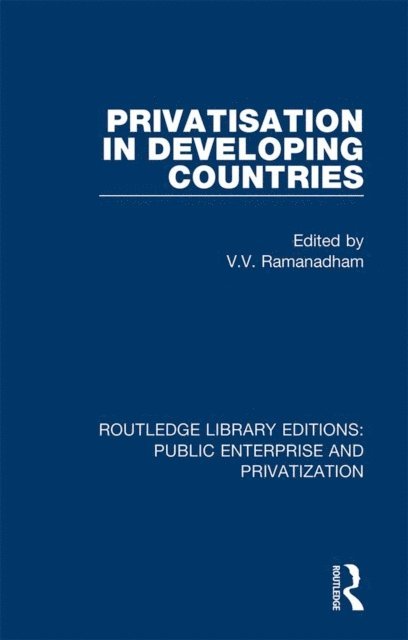
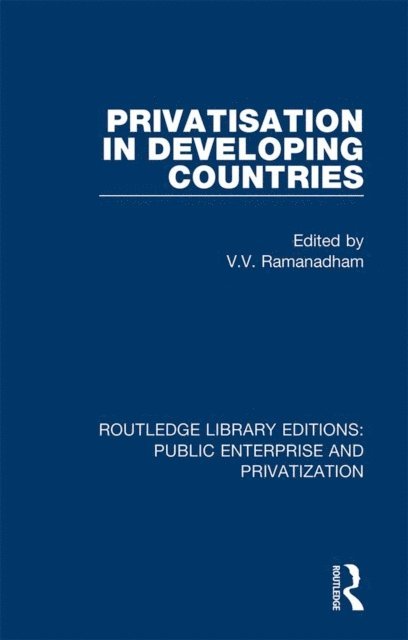
It is widely felt that the public sector in many developing countries is too large, and that privatisation would benefit both the users of individual services and the economy in general. However, enthusiasm for private enterprise solutions is not always matched by the requisite financial and economic technology. The sort of schemes appropriate for a country like China, with its highly planned public sector economy, and Jordan, with its dominant private sector, are unlikely to be the same. Privatisation without reference to these differences will be an economic, administrative and organisational chaos rather than a panacea.Originally published in 1989, this book starts with an analysis on the concept, rationale and fundamental issues of privatisation, with reference to both developed and developing countries. There follows a critical scrutiny of the privatisation programmes of countries in Asia, Africa and Latin America, written by contributors actively concerned with public enterprise and privatisation at the time. It examines the role of international aid agencies, including the World Bank, in promoting the schemes and it details the positive impact of them as well as their pitfalls. These country accounts are complemented by a concluding chapter giving an overview of the substantial issues raised.
523 kr
Skickas inom 10-15 vardagar
It is widely felt that the public sector in many developing countries is too large, and that privatisation would benefit both the users of individual services and the economy in general. However, enthusiasm for private enterprise solutions is not always matched by the requisite financial and economic technology. The sort of schemes appropriate for a country like China, with its highly planned public sector economy, and Jordan, with its dominant private sector, are unlikely to be the same. Privatisation without reference to these differences will be an economic, administrative and organisational chaos rather than a panacea.Originally published in 1989, this book starts with an analysis on the concept, rationale and fundamental issues of privatisation, with reference to both developed and developing countries. There follows a critical scrutiny of the privatisation programmes of countries in Asia, Africa and Latin America, written by contributors actively concerned with public enterprise and privatisation at the time. It examines the role of international aid agencies, including the World Bank, in promoting the schemes and it details the positive impact of them as well as their pitfalls. These country accounts are complemented by a concluding chapter giving an overview of the substantial issues raised.
1 958 kr
Skickas inom 10-15 vardagar
Public enterprises have played a central part in the development of all mixed economies in the post-war period, but they are now in a crisis phase. Privatisation has pushed back the level of public enterprise almost throughout the world. Where public enterprises remain, they are being brought under significant reforms. Originally published in 1991, this book presents a comprehensive critique of public enterprise, analysing why its performance has fallen far short of expectations. Part one is concerned with the establishment of public enterprises: the case for them, the circumstances in which they emerged, the extra enterprise objectives attached to them, and the decisions on their investment feasibility and capital structure.Part two looks at the working of public enterprises: the state of their financial performance, the peculiarities of pricing, the determination of targets which they should meet, the continuous monitoring and evaluation of their operations.Macro concerns are the focus of Part three. Among the issues addressed are the level of indirect taxation and subsidisation implicit in the pricing structures of public enterprises, the links between public enterprise and the public exchequer and the implications of their operations for distributional equity. In Part four the extent to which privatisation can solve the problems of public enterprise is discussed. The book ends with some broad conclusions on the future of public enterprise. Throughout, the approach is analytical, but the arguments are supported by extensive examples from both developed and developing economies.
523 kr
Skickas inom 10-15 vardagar
Public enterprises have played a central part in the development of all mixed economies in the post-war period, but they are now in a crisis phase. Privatisation has pushed back the level of public enterprise almost throughout the world. Where public enterprises remain, they are being brought under significant reforms. Originally published in 1991, this book presents a comprehensive critique of public enterprise, analysing why its performance has fallen far short of expectations. Part one is concerned with the establishment of public enterprises: the case for them, the circumstances in which they emerged, the extra enterprise objectives attached to them, and the decisions on their investment feasibility and capital structure.Part two looks at the working of public enterprises: the state of their financial performance, the peculiarities of pricing, the determination of targets which they should meet, the continuous monitoring and evaluation of their operations.Macro concerns are the focus of Part three. Among the issues addressed are the level of indirect taxation and subsidisation implicit in the pricing structures of public enterprises, the links between public enterprise and the public exchequer and the implications of their operations for distributional equity. In Part four the extent to which privatisation can solve the problems of public enterprise is discussed. The book ends with some broad conclusions on the future of public enterprise. Throughout, the approach is analytical, but the arguments are supported by extensive examples from both developed and developing economies.