Valentin Jeutner - Böcker
Visar alla böcker från författaren Valentin Jeutner. Handla med fri frakt och snabb leverans.
6 produkter
6 produkter
370 kr
Skickas inom 7-10 vardagar
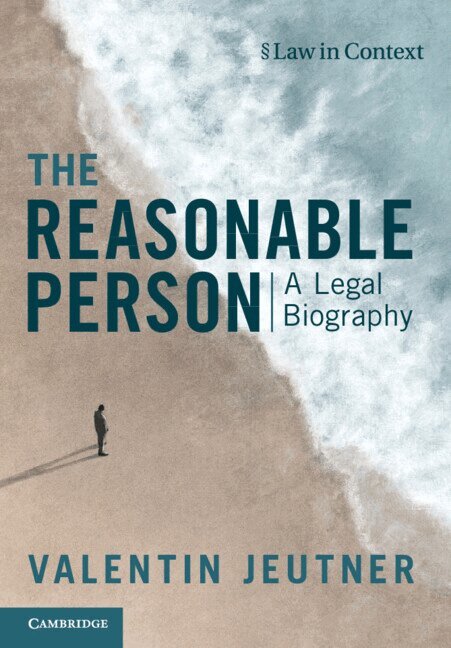
Jeutner argues that the reasonable person is, at heart, an empathetic perspective-taking device, by tracing the standard of the reasonable person across time, legal fields and countries. Beginning with a review of imaginary legal figures in the legal systems of ancient Egypt, Greece, and Rome, the book explains why the common law's reasonable person emerged amidst the British industrialisation under the influence of Scottish Enlightenment thinking. Following the figure into colonial courts, onto battlefields and into self-driving cars, the book contends that the reasonable person invites judges, jury-members, and lawyers to take another person's perspective when assessing their own or another person's conduct. The perspective of another is taken by means of empathy, by feeling what others might feel in a particular situation. Thus construed, the figure of the reasonable person can help us make more accurate judgments in a diverse world.
226 kr
Skickas inom 5-8 vardagar
A software’s analysis and re-arrangement of strings of letters and words produces an irritating echo. It is an irritating echo because, at times, the algorithmic attempts to modify, create, and translate legal texts reveal residual traces of reality which rigorous and systematic legal processes aimed to eradicate. Conversely, it is also irritating because, at times, the algorithmic engagement with law surpasses the lawyer’s desire to reduce reality into legal form by ruthlessly succeeding with the expulsion of any non-technological elements from the realm of legal language. Valentin Jeutner is Associate Professor of International Law at the Faculty of Law, Lund University and Senior Retained Lecturer at Pembroke College, Oxford. ”Epic” Marina Aksenova ”Hilarious and disturbing and sometimes both” Fleur Johns ”Compelling and provocative” M. nourbeSe Philip ”Original” Philippe Sands
Irresolvable Norm Conflicts in International Law
The Concept of a Legal Dilemma
Inbunden, Engelska, 2017
1 697 kr
Skickas inom 5-8 vardagar
Conventionally, international legal scholarship concerned with norm conflicts focuses on identifying how international law can or should resolve them. This book adopts a different approach. It focuses on identifying those norm conflicts that law cannot and should not resolve. The book offers an unprecedented, controversial, yet sophisticated, argument in favour of construing such irresolvable conflicts as legal dilemmas. Legal dilemmas exist when a legal actor confronts a conflict between at least two legal norms that cannot be avoided or resolved. Addressing both academics and practitioners, the book aims to identify the character and consequences of legal dilemmas, to distil their legal function within the sphere of international law, and to encourage serious theoretical and practical investigation into the conditions that lead to a legal dilemma. The first part proposes a definition of legal dilemmas and distinguishes the term from numerous related concepts. Based on this definition, the second part scrutinises international law's contemporary norm conflict resolution and accommodation devices in order to identify their limited ability to resolve certain kinds of norm conflicts. Against the background of the limits identified in the second part, the third part outlines and evaluates the book's proposed method of dealing with legal dilemmas. In contrast to conventional approaches that recommend dealing with irresolvable norm conflicts by means of non liquet declarations, judicial law-making, or a balancing test, the book's proposal envisions that irresolvable norm conflicts are dealt with by judicial and sovereign actors in a complementary fashion. Judicial actors should openly acknowledge irresolvable conflicts and sovereign actors should decide with which norm they will comply. The book concludes with the argument that analysing various aspects of international law through the concept of a legal dilemma enhances its conceptual accuracy, facilitates more legitimate decision-making, and maintains its dynamic responsiveness.
Sovereign Human Being
Carl Schmitt, Dietrich Bonhoeffer and Responsible Decision-Making
Inbunden, Engelska, 2024
1 331 kr
Skickas inom 5-8 vardagar
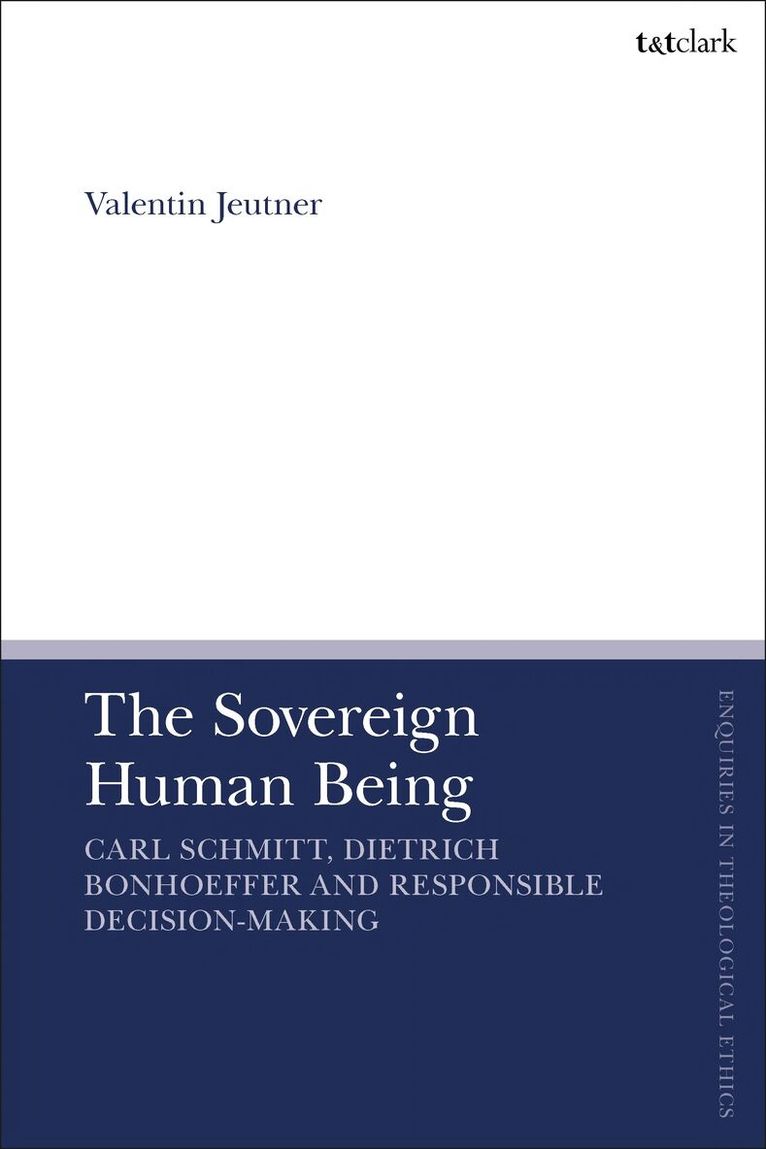
Sovereign is who decides; and who decides is responsible. The book develops these two arguments by comparing Carl Schmitt's and Dietrich Bonhoeffer's theories of sovereignty. Carl Schmitt was an influential jurist of Nazi Germany. Dietrich Bonhoeffer was a Lutheran priest hanged for his involvement in a plot to assassinate Adolf Hitler. In many ways, the two men could not be more different. But they both struggled with the question of how to maintain order and how to prevent violence at times of crisis. In this considered work, Jeutner brings these two thinkers into careful dialogue. They both agreed that order is established not by appealing to existing norms or general principles but by an individual's sovereign decision. Ascribing sovereignty to individuals communicates that they always have a choice and that they are always responsible for these choices. Thus, it is not just powerful individuals who have the choice to bring wars to an end or who can combat climate change. This exploratory work reveals that, by making sovereign decisions, ordinary individuals, too, can work towards the peaceful resolution of conflicts or reduce their carbon footprint. Making such sovereign decisions is not easy for individuals who are taught to follow orders and norms. For this reason, this book supplements the comparative analysis of Schmitt and Bonhoeffer with an action-guiding decision-making framework. While the proposed framework departs from Schmitt's and Bonhoeffer's theses by recognizing the agency, responsibility, and sovereignty of all individuals, Jeutner argues that this acknowledgement of the universal sovereignty of individuals is the only way to bring about the orderly and peaceful world of which Schmitt and Bonhoeffer dream.
Sovereign Human Being
Carl Schmitt, Dietrich Bonhoeffer and Responsible Decision-Making
Häftad, Engelska, 2026
468 kr
Kommande
Sovereign is who decides; and who decides is responsible. The book develops these two arguments by comparing Carl Schmitt's and Dietrich Bonhoeffer's theories of sovereignty. Carl Schmitt was an influential jurist of Nazi Germany. Dietrich Bonhoeffer was a Lutheran priest hanged for his involvement in a plot to assassinate Adolf Hitler. In many ways, the two men could not be more different. But they both struggled with the question of how to maintain order and how to prevent violence at times of crisis. In this considered work, Jeutner brings these two thinkers into careful dialogue. They both agreed that order is established not by appealing to existing norms or general principles but by an individual's sovereign decision. Ascribing sovereignty to individuals communicates that they always have a choice and that they are always responsible for these choices. Thus, it is not just powerful individuals who have the choice to bring wars to an end or who can combat climate change. This exploratory work reveals that, by making sovereign decisions, ordinary individuals, too, can work towards the peaceful resolution of conflicts or reduce their carbon footprint. Making such sovereign decisions is not easy for individuals who are taught to follow orders and norms. For this reason, this book supplements the comparative analysis of Schmitt and Bonhoeffer with an action-guiding decision-making framework. While the proposed framework departs from Schmitt's and Bonhoeffer's theses by recognizing the agency, responsibility, and sovereignty of all individuals, Jeutner argues that this acknowledgement of the universal sovereignty of individuals is the only way to bring about the orderly and peaceful world of which Schmitt and Bonhoeffer dream.
1 157 kr
Skickas inom 7-10 vardagar
Jeutner argues that the reasonable person is, at heart, an empathetic perspective-taking device, by tracing the standard of the reasonable person across time, legal fields and countries. Beginning with a review of imaginary legal figures in the legal systems of ancient Egypt, Greece, and Rome, the book explains why the common law's reasonable person emerged amidst the British industrialisation under the influence of Scottish Enlightenment thinking. Following the figure into colonial courts, onto battlefields and into self-driving cars, the book contends that the reasonable person invites judges, jury-members, and lawyers to take another person's perspective when assessing their own or another person's conduct. The perspective of another is taken by means of empathy, by feeling what others might feel in a particular situation. Thus construed, the figure of the reasonable person can help us make more accurate judgments in a diverse world.