Valeria Wagner – författare
Visar alla böcker från författaren Valeria Wagner. Handla med fri frakt och snabb leverans.
4 produkter
4 produkter
Inbunden, Engelska, 1999
941 kr
Skickas inom 10-15 vardagar
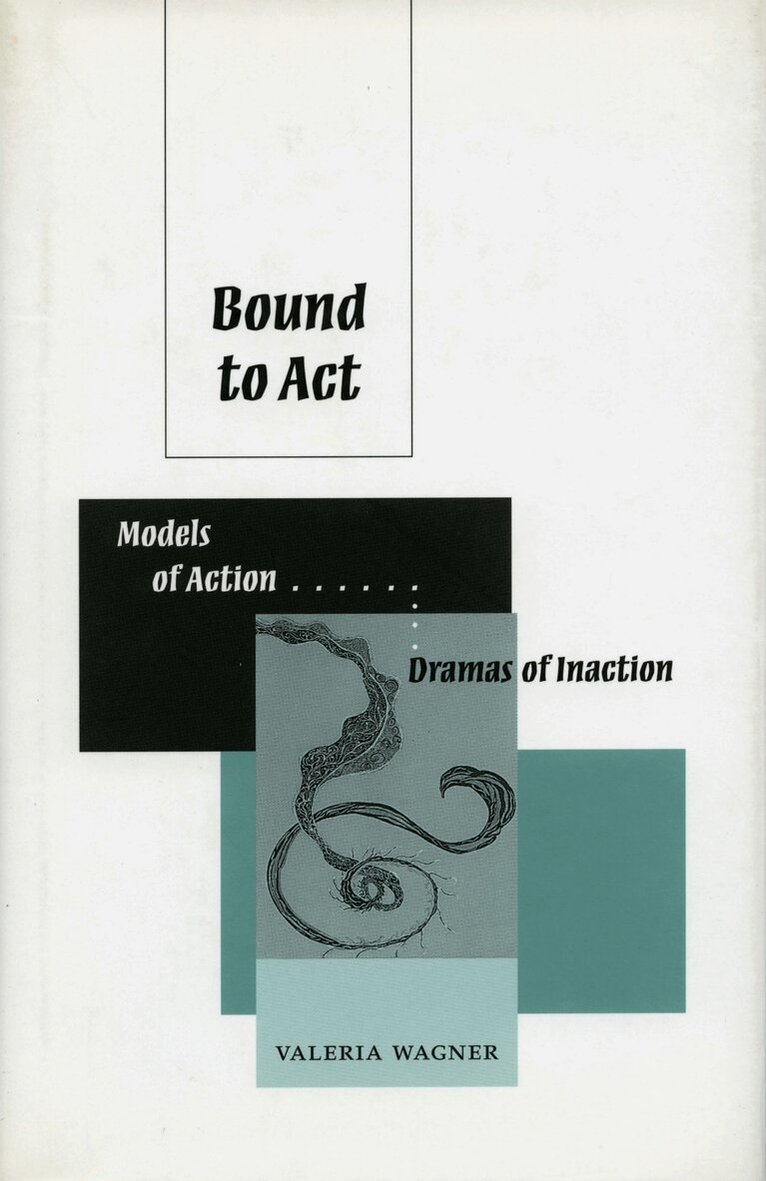
This study of models of action seeks to respond to the loss of faith in political action that seems to predominate in Western societies, to the sense that there is nothing we can do to change the course of events, or that political action is ultimately useless, without effect in a world governed by independent political and economic laws. Its topic is the tension between the theme of the impossibility of acting, a question since Hamlet, and the impression that many events involving human agency do indeed take place. The author deals with both philosophical and dramatic texts in addressing this question.These texts formulate the impossibility of acting in terms of the difficulty of the passage à l'acte, which each inflects differently. Marlowe's Faustus bargains his soul away to a powerful servant capable of sparing him the necessity of action, but ultimately cannot refrain from acting. Hamlet spends his time wishing for the passage à l'acte to take place, wondering why he does not act. In Locke's Two Treatises of Government, citizens are more than willing to renounce a considerable amount of their power to act in exchange for the political power of their word. Milton's Samson and Shelley's Prometheus find themselves literally bound by their speech acts; whereas Samson wants to be free to act, Prometheus would like to be free from action.Nietzsche's The Birth of Tragedy denounces and dethrones the Kantian subject, who wills himself abstracted from what he contemplates, and instead dramatizes the human subject as a spectator who is already part of the spectacle. Bakhtin addresses this fallen transcendental subject by explaining that the distance between subject and action is but the displacement (transportation) of the fundamental distinction between "me" and the "other." If Bakhtin returns agency to every life, Beckett and Wittgenstein show that it is still necessary to bring actions back within the realm of the practicable. Finally, in Baudrillard's and Lyotard's texts, the issue becomes irrelevant because the future has been programmed, if not physically accomplished, in cosmic and televisual spheres. By couching this historical narrative of concern about action in terms of models of action, the author hopes to critique positions like those of Baudrillard and Lyotard and help establish renewed modalities for accommodating action into our understanding of literature and of the world.
Häftad, Engelska, 2016
673 kr
Skickas inom 5-8 vardagar
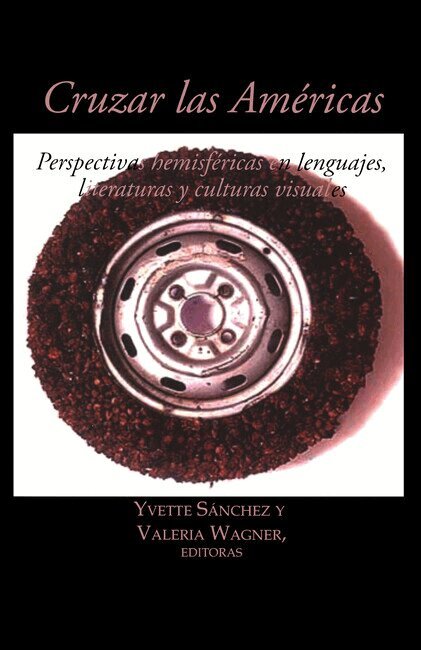
Esta colección de ensayos participa en el trabajo de revsión de los imaginarios de las Américas que se lleva a cabo desde hace unas décadas. Asistimos a una despolarización de la historia económica, política y cultural, manifiesta en una marcada tendencia a “cruzar” fronteras imaginarias e institucionales entre el Norte y el Sur, lenguas, historias, grupos étnicas, disciplinas. Al mismo tiempo, constatamos en las Américas y en el mundo, el refuerzo y la multiplicación de fronteras visibles e invisibles. En este contexto paradójico, los “cruces” cumplen la importante función de des-construir los antagonismos y la bipolaridad que estructuran las visiones de las Américas, para que podamos pensarlas como estructura transcultural de red. El “cruzar”, que proponemos como figura y límite de nuestro enfoque compartido, pretende destacar las dinámicas a la vez contradictorias y prometedoras en las relaciones interamericanas. La metáfora del cruce evoca el proceso de traslación entre polos, las inversiones quiásmicas más que dicotómicas; orienta la mirada y la atención hacia las nuevas configuraciones y prácticas socio-culturales que se gestan a pesar y en contra de las fronteras. Con ella queremos mantener a la vista la trampa de la armonización e idealización de la diferencia que acecha a todo investigador de las Américas.~This collection of essays participates in the revision of the imaginaries of the Americas that has been carried out for several decades. We are witnessing a depolarization of economic, political and cultural history, manifested in a marked tendency to 'cross' imaginary and institutional borders between North and South, languages, histories, ethnic groups, disciplines. At the same time, we see in the Americas and in the world, the reinforcement and growth of visible and invisible borders. In this paradoxical context, the 'crossings' fulfill the important function of deconstructing the antagonisms and bipolarity that structure the visions of the Americas so that we can think of them as a transcultural network structure. The 'crossing', which we propose as a figure and limit to our shared approach, it aims to highlight the dynamics that are both contradictory and promising in inter-American relations. The crossing metaphor evokes the transfer process between poles, chiasmic rather than dichotomous inversions; directs the gaze and attention towards the new socio-cultural configurations and practices that are being developed despite and against borders. With it we want to make visible the trap of harmonization and idealization of difference that haunts every researcher in the Americas.
E-bok
Spanska, 2022113 kr
Läs direkt efter köp
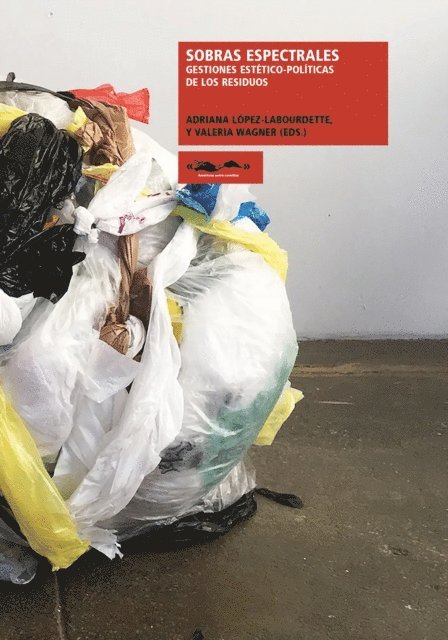
Sobras espectrales: gestiones estético-políticos de los residuos es una antología de crítica cultural inspiradora y en resonancia con el actual giro material en las humanidades. El conjunto de ensayos indaga sobre el dispositivo de lo residual para repensar nuestro presente a través de expresiones culturales mayoritariamente latinoamericanas. Estéticas que se enfocan en la presencia y agencia de los restos de memoria, en las sobras del hiperconsumo, y en los desechos reales y simbólicos. El libro piensa cómo puede leerse aquello que está fuera del sistema de producción, como síntoma de lo social, lo ecológico y lo político. Sin caer en la nostalgia romántica, Adriana López-Labourdette y Valeria Wagner convierten la crítica cultural en arqueología de nuestro presente y plantean modos reivindicativos de pensar el mundo basurizado, el vertedero y la ruina (económica, ambiental y social). Asumiendo una multiplicidad de enfoques de diferentes disciplinas, este volumen colectivo abarca desde la poesía brasileña, la narrativa cubana, peruana, chilena y argentina, hasta la vanguardia venezolana, el cine transnacional y los vertederos cubiertos en Ginebra (Suiza) y Uranium City (Canadá). Se encontrará aquí una lectura de nuestra imposibilidad de gestionar la producción de desechos, o de archivar completamente los restos del pasado. Una lectura hecha desde América Latina hacia el mundo y una reflexión aguda sobre los procesos (insuficientes) de reciclaje tanto en el propio arte, como en nuestros sistemas sociales, políticos y estéticos.Nanne Timmer, Universidad de Leiden
E-bok
Spanska, 201834 kr
Läs direkt efter köp
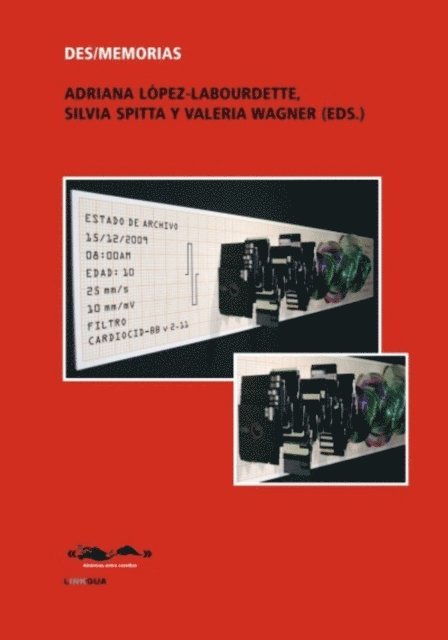
Los ensayos del volumen Des/memorias se interesan por las claves y procesos de pérdida y/o "reanimación" de la memoria. El término que da título al volumen no es solo –aunque también lo sea– un juego de palabras. Su primer significado –"falta de memoria"– remite al olvido voluntario o involuntario, material o virtual, que forma parte constitutiva de la memoria. Pensadas como espacios y procesos múltiples y conflictivos, las des/memorias invitan a ir más allá de esa clásica dicotomía memoria versus olvido, para retomar y atender la inextricable relación entre esos dos extremos. El prefijo des denota falta, privación, exterioridad (estar fuera de), pero también inversión, exceso e incluso afirmación, evocando así la complejidad del concepto y de sus posibles declinaciones. La reversibilidad del prefijo (des-montar, des-hacer) apunta a la memoria como un trabajo de reelaboración, reactualización y continua reconfiguración de imaginarios e historias, que en nuestras sociedades de fast-forward y fast-rewind se llevan a cabo difícilmente.Des/memorias se desplaza no solo hemisféricamente, conjugando el norte y el sur americanos, sino también sincrónica y diacrónicamente: desde el horror vacui barroco y los mitos coloniales del ingenio azucarero y su persistencia actual, hasta los más recientes ensayos de recuperación de la memoria post dictaduras del Cono Sur en la fotografía, el cine y la narrativa, pasando por performances de la memoria inscritos en la nostalgia culinaria del exilio o en la lectura lenta como arte rememorativo.