Valerian J. Derlega - Böcker
Visar alla böcker från författaren Valerian J. Derlega. Handla med fri frakt och snabb leverans.
4 produkter
4 produkter
1 790 kr
Skickas inom 3-6 vardagar
Along with the distress associated with the diagnosis of a life-threatening disease, individuals with HIV also face huge social challenges based on reactions to their disease by other individuals and society. While there are numerous books covering research on risk of HIV infection and attitudes about the disease, limited empirical research on the social interaction process in coping with HIV exists. Carefully edited, HIV and Social Interaction explores the seropositive personÆs relationships with family, friends, intimate partners, and other members of his or her social network. The contributors present original theoretical models and research, derived from psychology and communication. Written with clarity, HIV and Social Interaction indicates how being HIV positive influences an individualÆs social interactions as well as interpersonal relationships. Chapters include the following topics: + The stigmatization of HIV and AIDS + Weighing the benefits and risks of self-disclosure about the HIV diagnosis + Accessing, finding, and maintaining quality social support + The value of group residence facilities for persons with AIDS + The effects of HIV on intimate relationships + The impact on volunteers who provide assistance to persons with AIDS In addition, the chapter authors discuss implications of their work for interventions and assisting HIV positive individuals, members of their social networks, health providers, and social services providers. A deeper understanding of these and related issues is vital for the comprehensive and empathetic delivery of services by healthcare professionals. HIV and Social Interaction is equally important for social scientists, students, as well as persons who are HIV-positive and anyone within their social network.
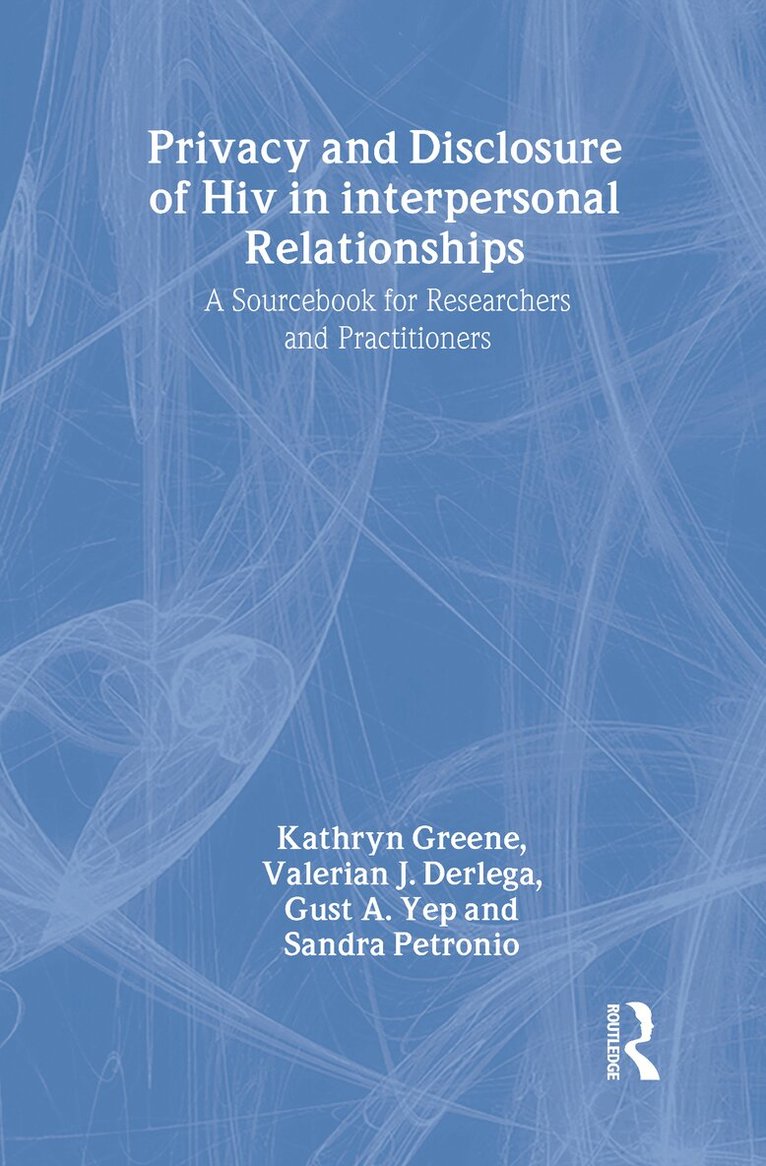
Privacy and Disclosure of Hiv in interpersonal Relationships
A Sourcebook for Researchers and Practitioners
Inbunden, Engelska, 2003
2 629 kr
Skickas inom 5-8 vardagar
As the HIV epidemic enters its third decade, it remains one of the most pressing health issues of our time. Many aspects of the disease remain under-researched and inadequate attention has been given to the implications for the relationships and daily lives of those affected by HIV. Disclosing an HIV diagnosis remains a decision process fraught with difficulty and despite encouraging medical advances, an HIV diagnosis creates significant anxiety and distress about one's health, self-identity, and close relationships.This book provides an overarching view of existing research on privacy and disclosure while bringing together two significant areas: self-disclosure as a communication process and the social/relational consequences of HIV/AIDS. The unifying framework is communication privacy management and the focus of this volume is on private voluntary relational disclosure as opposed to forced or public disclosure. Utilizing numerous interviews with HIV patients and their families, the authors examine disclosure in a variety of social contexts, including relationships with intimate partners, families, friends, health workers, and coworkers. Of note are the examinations of predictors of willingness to disclose HIV infection, the message features of disclosure, and the consequences of both disclosure and non-disclosure.This volume, with its personal exercises and sources of additional information, offers an invaluable resource for individuals living with HIV and their significant others, as well as for professionals in the fields of health communication, social and health psychology, family therapy, clinical and counseling psychology, relationship research, infectious disease, and social service.
Privacy and Disclosure of Hiv in interpersonal Relationships
A Sourcebook for Researchers and Practitioners
Häftad, Engelska, 2003
579 kr
Skickas inom 10-15 vardagar
As the HIV epidemic enters its third decade, it remains one of the most pressing health issues of our time. Many aspects of the disease remain under-researched and inadequate attention has been given to the implications for the relationships and daily lives of those affected by HIV. Disclosing an HIV diagnosis remains a decision process fraught with difficulty and despite encouraging medical advances, an HIV diagnosis creates significant anxiety and distress about one's health, self-identity, and close relationships.This book provides an overarching view of existing research on privacy and disclosure while bringing together two significant areas: self-disclosure as a communication process and the social/relational consequences of HIV/AIDS. The unifying framework is communication privacy management and the focus of this volume is on private voluntary relational disclosure as opposed to forced or public disclosure. Utilizing numerous interviews with HIV patients and their families, the authors examine disclosure in a variety of social contexts, including relationships with intimate partners, families, friends, health workers, and coworkers. Of note are the examinations of predictors of willingness to disclose HIV infection, the message features of disclosure, and the consequences of both disclosure and non-disclosure.This volume, with its personal exercises and sources of additional information, offers an invaluable resource for individuals living with HIV and their significant others, as well as for professionals in the fields of health communication, social and health psychology, family therapy, clinical and counseling psychology, relationship research, infectious disease, and social service.
523 kr
Skickas inom 10-15 vardagar
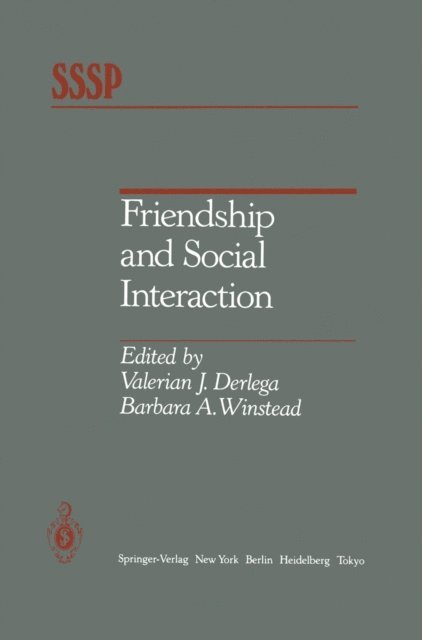
A neglected topic in the field of personal relationships has been the study of friendships. Social psychologists have studied how and why individuals are attracted to one another and the processes of interaction during initial encounters, but they have not paid much attention to ongoing friend ships. A major goal of the present volume is to develop theories and integrate research on the development and maintenance of friendships. Another major goal is to build bridges between social psychologists and other social scientists by presenting an interdisciplinary approach. Although a majority of the contributors are social psychologists, other authors include sociol ogists as well as developmental, personality, and clinical psychologists. The chapters also present research on friendship based on a wide range of research methodologies, including laboratory research as well as longi tudinal, naturalistic, and clinical studies. Hence, the book incorporates a variety of conceptual and methodological approaches that should con tribute to a cross-fertilization of ideas among disciplines. The first chapter, by Barbara A. Winstead and Valerian J. Derlega, provides an overview of theory and research on friendship. The second chapter, by Daniel Perlman and Beverley Fehr, provides a summary and conceptual critique of social psychological theories of social attraction that are relevant to the study of friendship. Adopting a developmental approach, Duane Buhrmester and Wyndol Furman, in Chapter 3, demonstrate the particular importance of friendship during middle childhood and adolescence in fulfilling interpersonal needs.