Valmaine Toki - Böcker
Visar alla böcker från författaren Valmaine Toki. Handla med fri frakt och snabb leverans.
3 produkter
3 produkter
467 kr
Skickas inom 10-15 vardagar
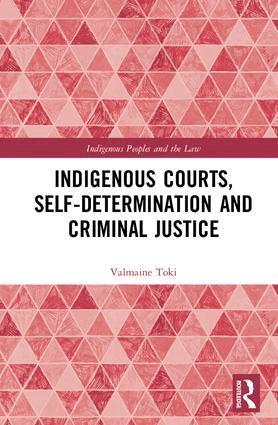
In New Zealand, as well as in Australia, Canada and other comparable jurisdictions, Indigenous peoples comprise a significantly disproportionate percentage of the prison population. For example, Maori, who comprise 15% of New Zealand’s population, make up 50% of its prisoners. For Maori women, the figure is 60%. These statistics have, moreover, remained more or less the same for at least the past thirty years. With New Zealand as its focus, this book explores how the fact that Indigenous peoples are more likely than any other ethnic group to be apprehended, arrested, prosecuted, convicted and incarcerated, might be alleviated. Taking seriously the rights to culture and to self-determination contained in the Treaty of Waitangi, in many comparable jurisdictions (including Australia, Canada, the United States of America), and also in the United Nations Declaration on the Rights of Indigenous Peoples, the book make the case for an Indigenous court founded on Indigenous conceptions of proper conduct, punishment, and behavior. More specifically, the book draws on contemporary notions of ‘therapeutic jurisprudence’ and ‘restorative justice’ in order to argue that such a court would offer an effective way to ameliorate the disproportionate incarceration of Indigenous peoples.
1 625 kr
Skickas inom 10-15 vardagar
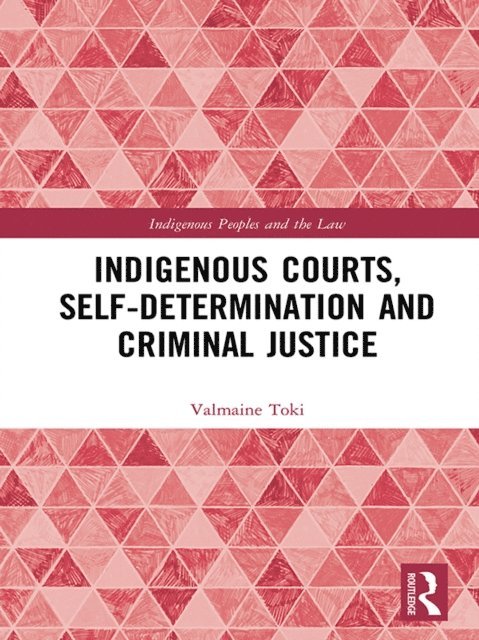
In New Zealand, as well as in Australia, Canada and other comparable jurisdictions, Indigenous peoples comprise a significantly disproportionate percentage of the prison population. For example, Maori, who comprise 15% of New Zealand’s population, make up 50% of its prisoners. For Maori women, the figure is 60%. These statistics have, moreover, remained more or less the same for at least the past thirty years. With New Zealand as its focus, this book explores how the fact that Indigenous peoples are more likely than any other ethnic group to be apprehended, arrested, prosecuted, convicted and incarcerated, might be alleviated. Taking seriously the rights to culture and to self-determination contained in the Treaty of Waitangi, in many comparable jurisdictions (including Australia, Canada, the United States of America), and also in the United Nations Declaration on the Rights of Indigenous Peoples, the book make the case for an Indigenous court founded on Indigenous conceptions of proper conduct, punishment, and behavior. More specifically, the book draws on contemporary notions of ‘therapeutic jurisprudence’ and ‘restorative justice’ in order to argue that such a court would offer an effective way to ameliorate the disproportionate incarceration of Indigenous peoples.
1 374 kr
Skickas inom 7-10 vardagar
This vital book traverses the ongoing challenges faced by Indigenous peoples in the pursuit of their fundamental right to self-determination. Set against the backdrop of issues such as climate change, governance, space and data, it explores the intersection between Indigenous rights and land, territories and resources.Indigenous peoples are particularly vulnerable to the adverse effects of climate change, and Valmaine Toki outlines its critical impact on political and economic marginalization, loss of land and resources, and human rights violations and discrimination. She advocates for the meaningful inclusion of an Indigenous worldview within climate change approaches, governing bodies and a right to space. In the fast-changing world of artificial intelligence, Toki examines how Indigenous knowledge and data can be applied to ameliorate the adverse consequences of climate change, in doing so emphasizing the importance of Indigenous data sovereignty and governance.Thought-provoking and topical, this book is invaluable for students, scholars and policymakers involved in Indigenous rights, human rights law, climate change, and environmental governance and regulation.