Vanessa Davies - Böcker
Visar alla böcker från författaren Vanessa Davies. Handla med fri frakt och snabb leverans.
4 produkter
4 produkter
2 193 kr
Skickas inom 5-8 vardagar
The unique relationship between word and image in ancient Egypt is a defining feature of that ancient culture's records. All hieroglyphic texts are composed of images, and large-scale figural imagery in temples and tombs is often accompanied by texts. Epigraphy and palaeography are two distinct, but closely related, ways of recording, analyzing, and interpreting texts and images. This Handbook stresses technical issues about recording text and art and interpretive questions about what we do with those records and why we do it. It offers readers three key things: a diachronic perspective, covering all ancient Egyptian scripts from prehistoric Egypt through the Coptic era (fourth millennium BCE-first half of first millennium CE), a look at recording techniques that considers the past, present, and future, and a focus on the experiences of colleagues. The diachronic perspective illustrates the range of techniques used to record different phases of writing in different media. The consideration of past, present, and future techniques allows readers to understand and assess why epigraphy and palaeography is or was done in a particular manner by linking the aims of a particular effort with the technique chosen to reach those aims. The choice of techniques is a matter of goals and the records' work circumstances, an inevitable consequence of epigraphy being a double projection: geometrical, transcribing in two dimensions an object that exists physically in three; and mental, an interpretation, with an inevitable selection among the object's defining characteristics. The experiences of colleagues provide a range of perspectives and opinions about issues such as techniques of recording, challenges faced in the field, and ways of reading and interpreting text and image. These accounts are interesting and instructive stories of innovation in the face of scientific conundrum.
611 kr
Skickas inom 7-10 vardagar
The unique relationship between word and image in ancient Egypt is a defining feature of that ancient culture's records. All hieroglyphic texts are composed of images, and large-scale figural imagery in temples and tombs is often accompanied by texts. Epigraphy and palaeography are two distinct, but closely related, ways of recording, analyzing, and interpreting texts and images. This Handbook stresses technical issues about recording text and art and interpretive questions about what we do with those records and why we do it. It offers readers three key things: a diachronic perspective, covering all ancient Egyptian scripts from prehistoric Egypt through the Coptic era (fourth millennium BCE-first half of first millennium CE), a look at recording techniques that considers the past, present, and future, and a focus on the experiences of colleagues. The diachronic perspective illustrates the range of techniques used to record different phases of writing in different media. The consideration of past, present, and future techniques allows readers to understand and assess why epigraphy and palaeography is or was done in a particular manner by linking the aims of a particular effort with the technique chosen to reach those aims. The choice of techniques is a matter of goals and the records' work circumstances, an inevitable consequence of epigraphy being a double projection: geometrical, transcribing in two dimensions an object that exists physically in three; and mental, an interpretation, with an inevitable selection among the object's defining characteristics. The experiences of colleagues provide a range of perspectives and opinions about issues such as techniques of recording, challenges faced in the field, and ways of reading and interpreting text and image. These accounts are interesting and instructive stories of innovation in the face of scientific conundrum.
2 976 kr
Skickas inom 5-8 vardagar
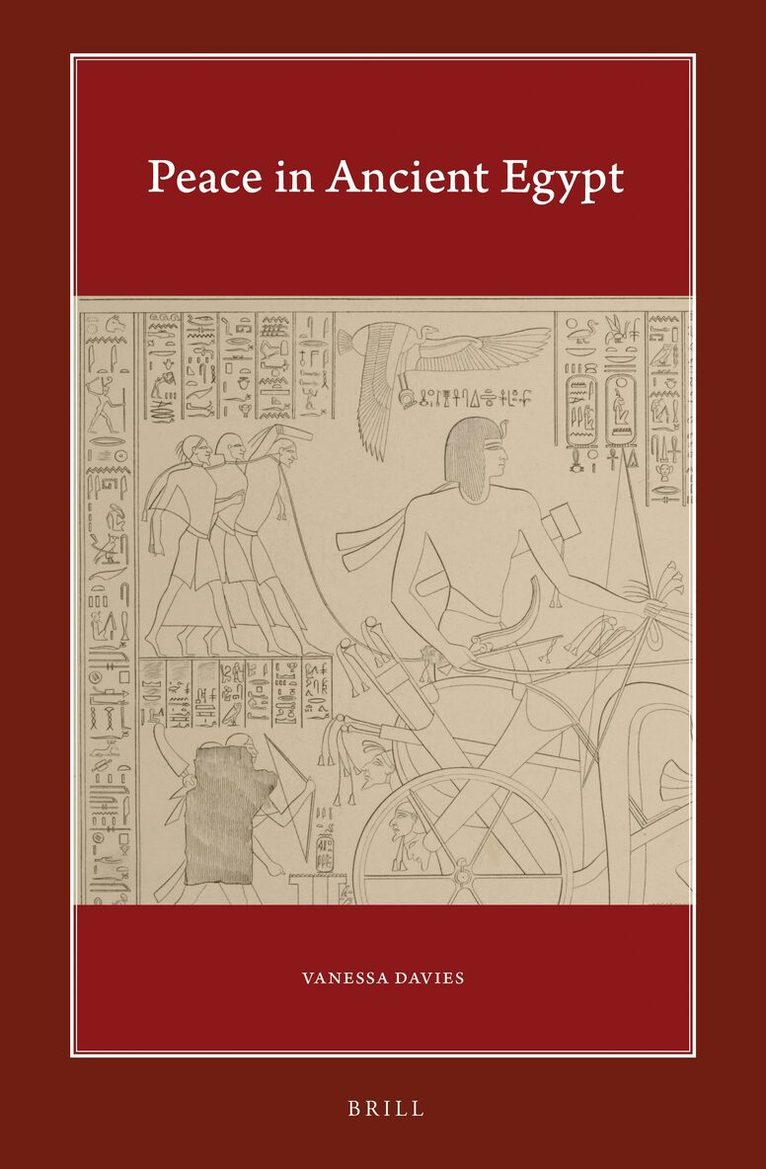
One of the world's oldest treaties provides the backdrop for a new analysis of the Egyptian concept of hetep ("peace"). To understand the full range of meaning of hetep, Peace in Ancient Egypt explores battles against Egypt's enemies, royal offerings to deities, and rituals of communing with the dead. Vanessa Davies argues that hetep is the result of action that is just, true, and in accord with right order (maat). Central to the concept of hetep are the issues of rhetoric and community. Beyond detailing the ancient Egyptian concept of hetep, it is hoped that this book will provide a useful framework that can be considered in relation to concepts of peace in other cultures.Read a recent blog post about the book here.
Del 10 - Harvard Egyptological Studies
Phoebe A. Hearst Expedition to Naga ed-Deir, Cemeteries N 2000 and N 2500
Inbunden, Engelska, 2020
3 678 kr
Skickas inom 5-8 vardagar
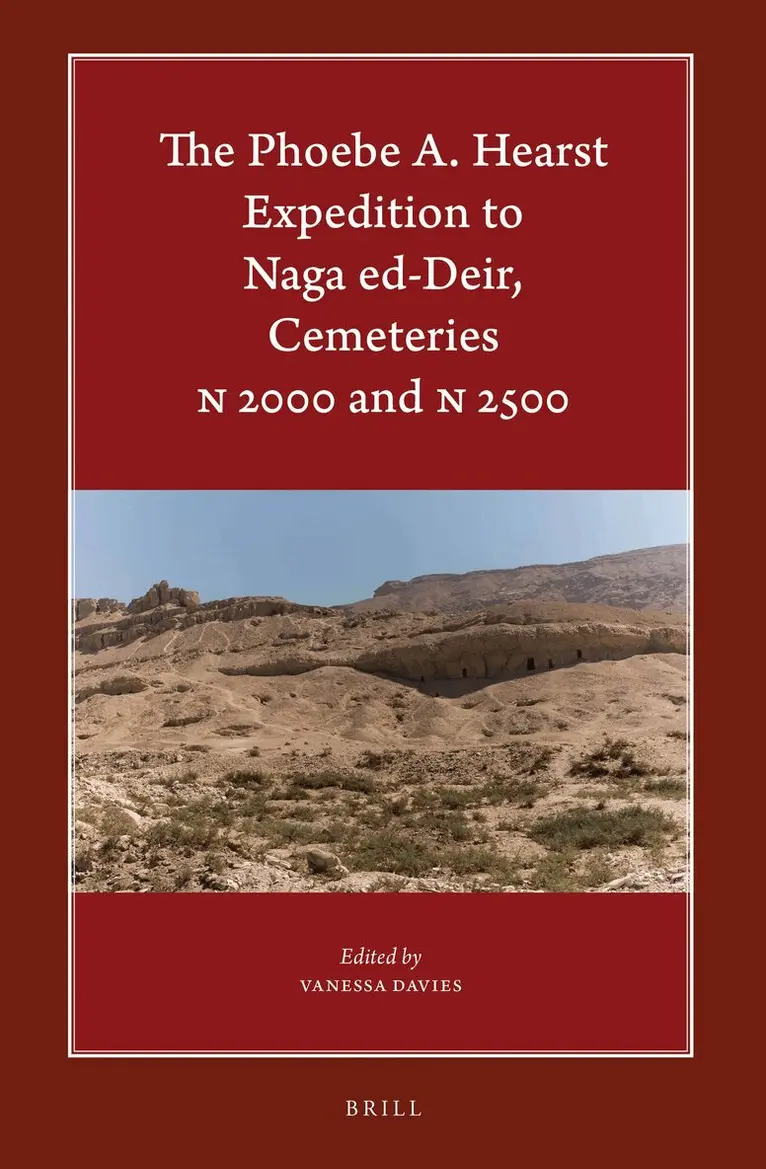
The Phoebe A. Hearst Expedition to Naga ed-Deir, Cemeteries N 2000 and N 2500 presents the results of excavations directed by George A. Reisner and led by Arthur C. Mace. The site of Naga ed-Deir, Egypt, is unusual for its continued use over a long period of time (c. 3500 BCE–650 CE). Burials in N 2000 and N 2500 date to the First Intermediate Period/Middle Kingdom and the Coptic era. In keeping with Reisner’s earlier publications of Naga ed-Deir, this volume presents artifacts in chapter-length studies devoted to a particular object type and includes a burial-by-burial description. The excavators’ original drawings, notes, and photographs are complemented by a contemporary analysis of the objects by experts in their subfields.