Vangelis Giannakakis – författare
Visar alla böcker från författaren Vangelis Giannakakis. Handla med fri frakt och snabb leverans.
4 produkter
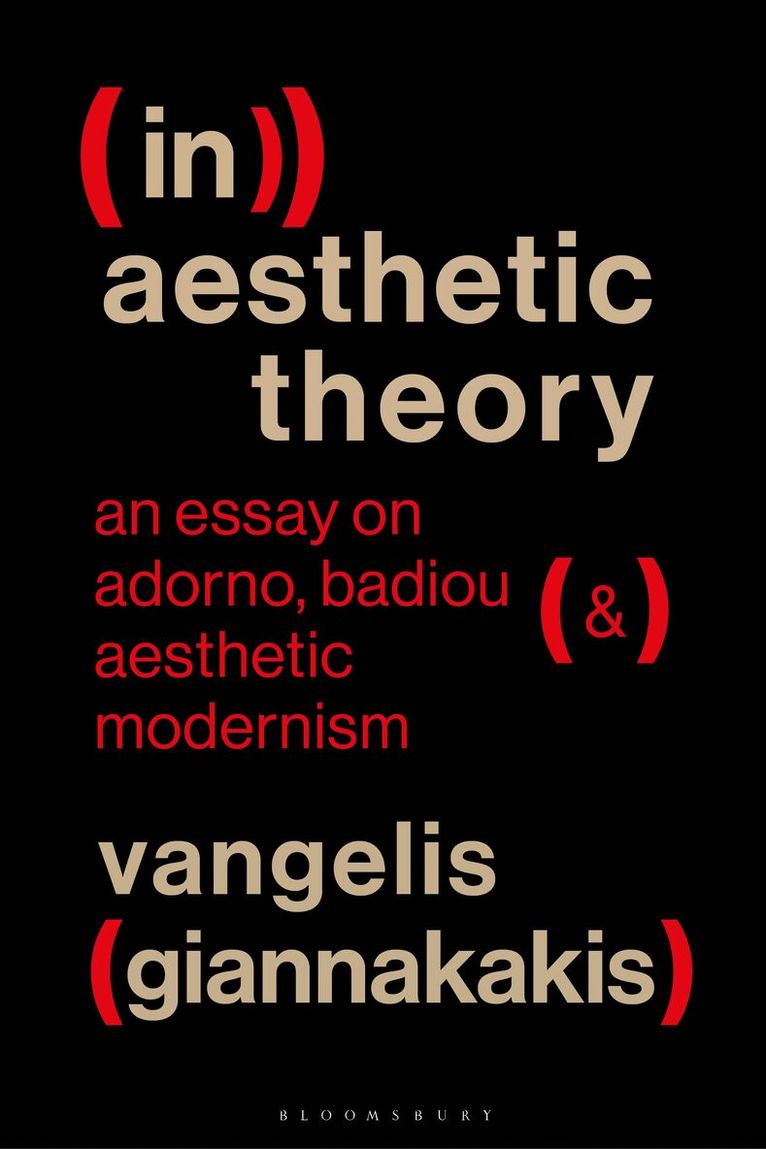
(In)aesthetic Theory
An Essay on Adorno, Badiou and Aesthetic Modernism
Inbunden, 2026
1204 kr
Lägg i varukorg
A reckoning with the radicalisation of modernist aesthetics that took hold in the mid-twentieth century, (In)aesthetic Theory illuminates the limits of aesthetic presentation by bringing Theodor Adorno and Alain Badiou’s divergent philosophies of art into critical proximity.Both theorists uncover …
(In)aesthetic Theory
An Essay on Adorno, Badiou and Aesthetic Modernism
E-bok, 2026
1325 kr
Lägg i varukorg
A reckoning with the radicalisation of modernist aesthetics that took hold in the mid-twentieth century, (In)aesthetic Theory illuminates the limits of aesthetic presentation by bringing Theodor Adorno and Alain Badiou's divergent philosophies of art into critical proximity.Both theorists uncover …
(In)aesthetic Theory
An Essay on Adorno, Badiou and Aesthetic Modernism
E-bok, 2026
1325 kr
Lägg i varukorg
A reckoning with the radicalisation of modernist aesthetics that took hold in the mid-twentieth century, (In)aesthetic Theory illuminates the limits of aesthetic presentation by bringing Theodor Adorno and Alain Badiou's divergent philosophies of art into critical proximity.Both theorists uncover …
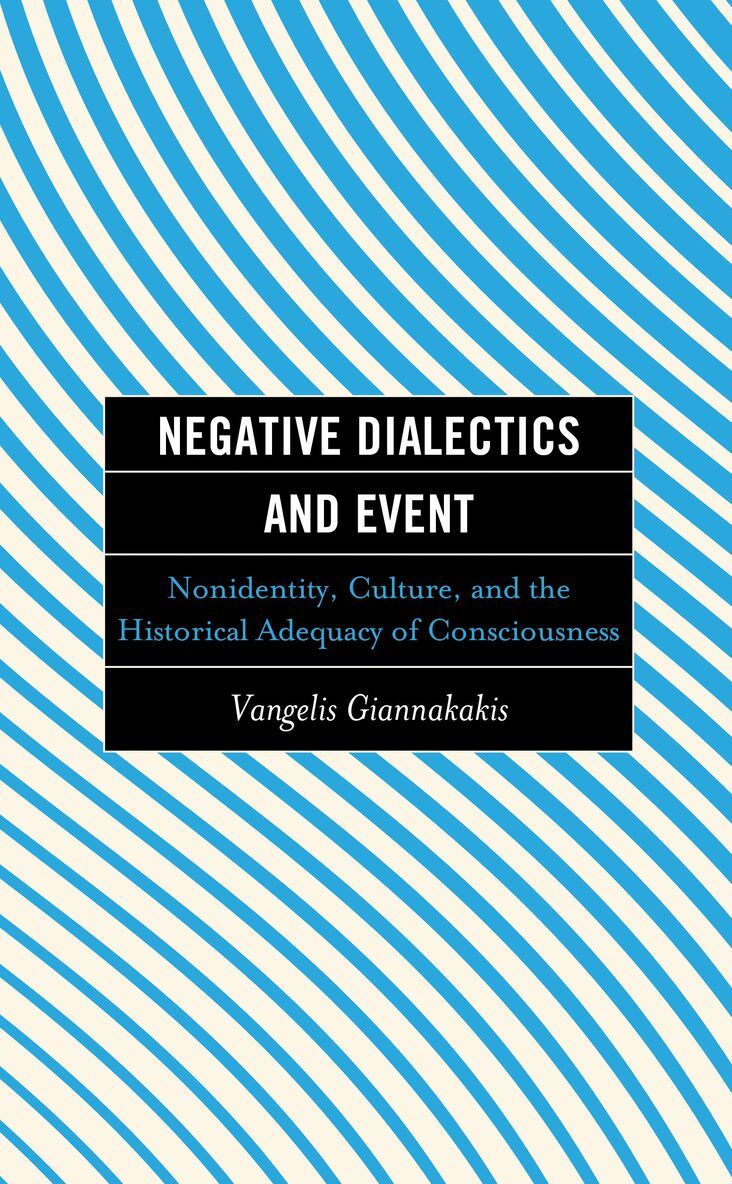
Negative Dialectics and Event
Nonidentity, Culture, and the Historical Adequacy of Consciousness
Inbunden, 2021
1204 kr
Lägg i varukorg
History is replete with false and unfulfilled promises, as well as singular acts of courage, resilience, and ingenuity. These episodes have led to significant changes in the way people think and act in the world or have set the stage for such transformations in the form of rational expectations in …