Vatthana Pholsena - Böcker
Visar alla böcker från författaren Vatthana Pholsena. Handla med fri frakt och snabb leverans.
6 produkter
6 produkter
2 201 kr
Skickas inom 3-6 vardagar
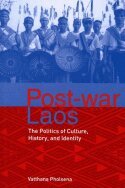
Three decades after the conclusion of the civil war that brought the communist Pathet Lao to power, the leaders of the Lao People's Democratic Republic are still searching for a compelling and unifying national identity. As detailed in Postwar Laos—a rigorously researched, cogently argued, and pathbreaking book—Laotian nationalism is caught between the rhetoric of preservation and the desire for modernity. Using fine-grained analysis of substantial ethnographic and archival material, Vatthana Pholsena sheds light on the politics of identity, the geographies of memory, and the power of historical narrative in contemporary Laos.Pholsena pays particular attention to the country's ethnic minorities, who had been marginalized—politically, administratively, and symbolically—by the French colonial government, which ruled for fifty years, and by its Royal Lao successor. Many members of these minorities fought for the Lao People's Liberation Army in the country's civil war (1960–1975), though, and were thus exposed to the processes of modern politics. The first book to examine the impact of such forces on Laos's ethnic minorities and their perception of Laotian nationalism, Postwar Laos also refines established theories of nationalism. Pholsena addresses a weakness common to all: the tendency to deny agency to individuals, who may in fact interpret their relationship to, and place within, the nation in a variety of ways that change according to time and circumstance.Postwar Laos offers a new perspective on the history of Southeast Asia and, more broadly, on the formation of national identity that will be welcomed by historians, political scientists, sociologists, ethnographers, and cultural anthropologists alike.
699 kr
Skickas inom 3-6 vardagar
Three decades after the conclusion of the civil war that brought the communist Pathet Lao to power, the leaders of the Lao People's Democratic Republic are still searching for a compelling and unifying national identity. As detailed in Postwar Laos—a rigorously researched, cogently argued, and pathbreaking book—Laotian nationalism is caught between the rhetoric of preservation and the desire for modernity. Using fine-grained analysis of substantial ethnographic and archival material, Vatthana Pholsena sheds light on the politics of identity, the geographies of memory, and the power of historical narrative in contemporary Laos.Pholsena pays particular attention to the country's ethnic minorities, who had been marginalized—politically, administratively, and symbolically—by the French colonial government, which ruled for fifty years, and by its Royal Lao successor. Many members of these minorities fought for the Lao People's Liberation Army in the country's civil war (1960–1975), though, and were thus exposed to the processes of modern politics. The first book to examine the impact of such forces on Laos's ethnic minorities and their perception of Laotian nationalism, Postwar Laos also refines established theories of nationalism. Pholsena addresses a weakness common to all: the tendency to deny agency to individuals, who may in fact interpret their relationship to, and place within, the nation in a variety of ways that change according to time and circumstance.Postwar Laos offers a new perspective on the history of Southeast Asia and, more broadly, on the formation of national identity that will be welcomed by historians, political scientists, sociologists, ethnographers, and cultural anthropologists alike.
766 kr
Skickas inom 7-10 vardagar
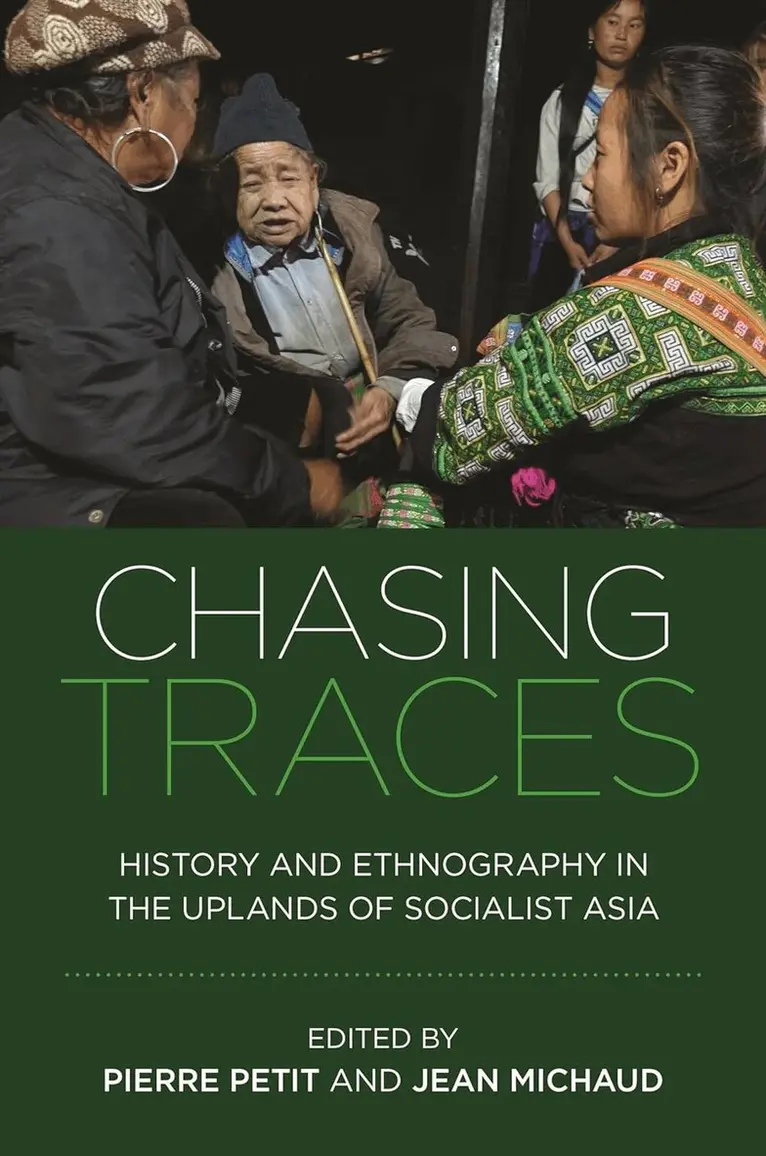
In the connected highlands of southwest China, Vietnam, and Laos, recalling the past is a highly sensitive act. Among local societies, many may actively avoid recalling the past for fear of endangering themselves and others. Oral traditions and rare archives remain the main avenues to visit the past, but the national revolutionary narrative and the language of heritagization have strongly affected the local expression of historical memory. Yet this does not prevent local societies from producing their stories in their own terms, even if often in conflict with both national and Western categories. Producing history, ethnohistory, historical anthropology, and historical geography in the Southeast Asian highlands raises significant questions relating to methodology, epistemology, and ethics, for which most researchers are often ill-prepared. How can scholars manage to competently access information about the past? How is one to capture history-in-the making through events, speech acts, rituals, and performances? How is the memory of the past transmitted—or not—and with what logic?Based on the experiences and reflections of a dozen diverse scholars rooted in decades of work in these three communist states, Chasing Traces is the first book about historical ethnography and related issues in the Southeast Asian highlands. Taking a critically reflexive posture, the authors make a plea for the individual, the hidden, and the backstage, for what life is really like on the ground, as opposed to imagined homogeneity, legibility, and unambiguousness. Their investigations on the history of ethnic minority communities adds archival historiography to ethnographic fieldwork and examines the relationship between the two fields. The individual chapters each tell distinctive stories of the conjunction of fieldwork, archival research, official surveillance, community participation, cultural norms, partnership with local scholars, and the other factors that both facilitate and frustrate the research enterprise of writing about the past in these societies. A timely work, this volume also provides guidelines for alternative ways to document and reflect when physical access becomes limited due to factors such as pandemic, political instability, and violence, and offers creative ways for researchers to cope with these dramatic shifts.
298 kr
Skickas inom 7-10 vardagar
Can Laos—with its small, scattered, ethnically diverse population, enchanting but rugged landscapes, and rich natural resources—emerge from the shadows of its more powerful neighbors? It has been carved up by colonial powers in the nineteenth century and dragged into devastating revolution and war in the twentieth. The authors provide a full, frank, and engaging survey of Laos today, assessing its history, prospects, and hopes. The book is essential reading for scholars, policymakers, and anyone interested in coming to grips with Laos today.
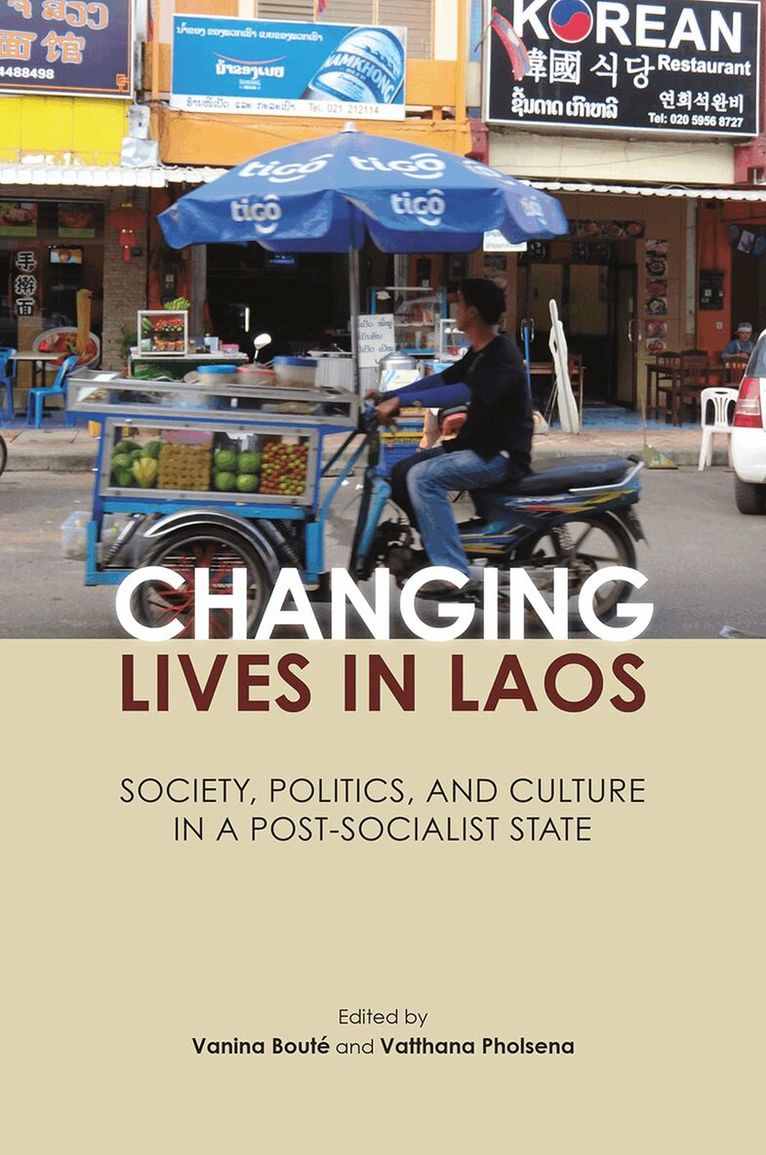
Changing Lives in Laos
Society, Politics, and Culture in a Post-Socialist State
Häftad, Engelska, 2017
388 kr
Skickas inom 7-10 vardagar
During the last two decades, Laos has undergone major transformations due to a massive influx of foreign investment. Improved communications and new forms of mobility have dramatically altered rural life. Changing Lives in Laos brings together contributions from young scholars that look closely at these transitions and the resulting rise of a new social, cultural, and economic order. The essays in this volume draw on original fieldwork and provide fresh analyses of topics such as the structures of power, the politics of territoriality, and new forms of sociability in emerging urban spaces.
Interactions with a Violent Past
Reading of Post-Conflict Landscapes in Cambodia, Laos and Vietnam
Häftad, Engelska, 2013
318 kr
Skickas inom 11-20 vardagar
The Second and Third Indochina Wars are the subject of important ongoing scholarship, but there has been little research on the lasting impact of wartime violence on local societies and populations, in Vietnam as well as in Laos and Cambodia. Today’s Lao, Vietnamese and Cambodian landscapes bear the imprint of competing violent ideologies and their perilous material manifestations. From battlefields and massively bombed terrain to reeducation camps and resettled villages, the past lingers on in the physical environment. The nine essays in this volume discuss post-conflict landscapes as contested spaces imbued with memory-work conveying differing interpretations of the recent past, expressed through material (even, monumental) objects, ritual performances, and oral narratives (or silences).While Cambodian, Lao and Vietnamese landscapes are filled with tenacious traces of a violent past, creating an unsolicited and malevolent sense of place among their inhabitants, they can in turn be transformed by actions of resilient and resourceful local communities.