Vera M Kutzinski - Böcker
Visar alla böcker från författaren Vera M Kutzinski. Handla med fri frakt och snabb leverans.
7 produkter
7 produkter
574 kr
Skickas inom 7-10 vardagar
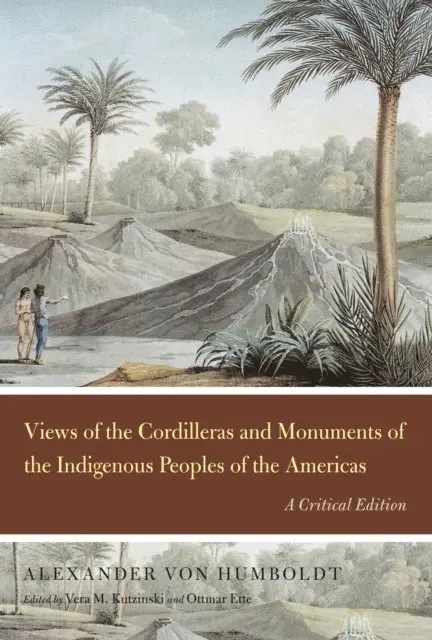
Alexander von Humboldt was the most celebrated modern chronicler of North and South America and the Caribbean, and this translation of his essay on New Spain--the first modern regional economic and political geography--covers his travels across today's Mexico in 1803-04. The work canvases both natural-scientific and cultural-scientific objects alike, combining the results of fieldwork with archival research and expert testimony. To show how people, plants, animals, goods, and ideas moved across the globe, Humboldt wrote in a variety of styles, bending and reshaping familiar writerly conventions to keep readers attentive to new inputs. Above all, he wanted his readers to keep an open mind when confronted with cultural and other differences in the Americas. Fueled by his comparative global perspective on politics, economics, and science, he used his writing to support Latin American independence and condemn slavery and other forms of colonial exploitation. It is these voluminous and innovative writings on the New World that made Humboldt the undisputed father of modern geography, early American studies, transatlantic cultural history, and environmental studies. This two-volume critical edition--the third installment in the Alexander von Humboldt in English series--is based on the full text, including all footnotes, tables, and maps, of the second, revised French edition of Essai politique sur le royaume de de Nouvelle Espagne from 1825-27, which has never been translated into English before. Extensive annotations and full-color atlases are available on the series website.
574 kr
Skickas inom 7-10 vardagar
Alexander von Humboldt was the most celebrated modern chronicler of North and South America and the Caribbean, and this translation of his essay on New Spain--the first modern regional economic and political geography--covers his travels across today's Mexico in 1803-04. The work canvases both natural-scientific and cultural-scientific objects alike, combining the results of fieldwork with archival research and expert testimony. To show how people, plants, animals, goods, and ideas moved across the globe, Humboldt wrote in a variety of styles, bending and reshaping familiar writerly conventions to keep readers attentive to new inputs. Above all, he wanted his readers to keep an open mind when confronted with cultural and other differences in the Americas. Fueled by his comparative global perspective on politics, economics, and science, he used his writing to support Latin American independence and condemn slavery and other forms of colonial exploitation. It is these voluminous and innovative writings on the New World that made Humboldt the undisputed father of modern geography, early American studies, transatlantic cultural history, and environmental studies. This two-volume critical edition--the third installment in the Alexander von Humboldt in English series--is based on the full text, including all footnotes, tables, and maps, of the second, revised French edition of Essai politique sur le royaume de de Nouvelle Espagne from 1825-27, which has never been translated into English before. Extensive annotations and full-color atlases are available on the series website.
Views of the Cordilleras and Monuments of the Indigenous Peoples of the Americas
A Critical Edition
Inbunden, Engelska, 2013
664 kr
Skickas inom 7-10 vardagar
In 1799, Alexander von Humboldt and Aime Bonpland set out to determine whether the Orinoco River connected with the Amazon. But what started as a trip to investigate a relatively minor geographical controversy became the basis of a five-year exploration throughout South America, Mexico, and Cuba. The discoveries amassed were staggering, and much of today's knowledge of tropical zoology, botany, geography, and geology can be traced back to von Humboldt's numerous records of these expeditions. One of these accounts, "Views of the Cordilleras and Monuments of the Indigenous Peoples of the Americas", firmly established von Humboldt as the founder of Mesoamerican studies. In Views of the Cordilleras, von Humboldt weaves together drawings and detailed texts to achieve multifaceted views of cultures and landscapes across the Americas. In doing so, he offers an alternative perspective on the New World, combating presumptions of its belatedness and inferiority by arguing that the "old" and the "new" world are of the same geological age.This critical edition contains a new, unabridged English translation of von Humboldt's French text, as well as annotations, a bibliography, and all sixty-nine plates from the original edition.
1 745 kr
Skickas inom 10-15 vardagar
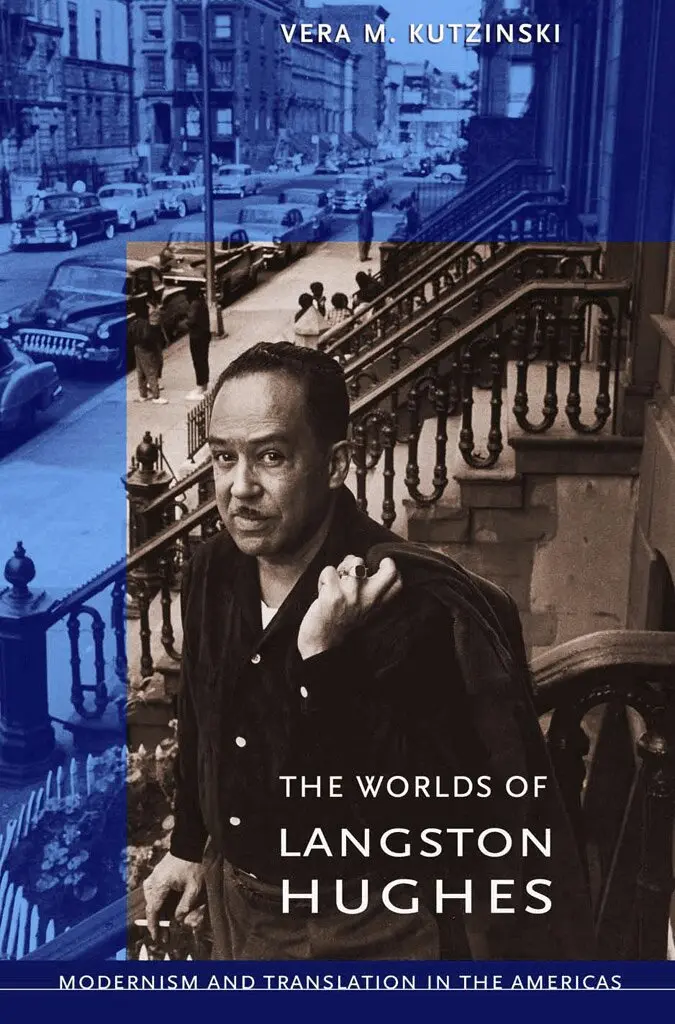
The poet Langston Hughes was a tireless world traveler and a prolific translator, editor, and marketer. Translations of his own writings traveled even more widely than he did, earning him adulation throughout Europe, Asia, and especially the Americas. In The Worlds of Langston Hughes, Vera Kutzinski contends that, for writers who are part of the African diaspora, translation is more than just a literary practice: it is a fact of life and a way of thinking. Focusing on Hughes's autobiographies, translations of his poetry, his own translations, and the political lyrics that brought him to the attention of the infamous McCarthy Committee, she shows that translating and being translated—and often mistranslated—are as vital to Hughes's own poetics as they are to understanding the historical network of cultural relations known as literary modernism. As Kutzinski maps the trajectory of Hughes's writings across Europe and the Americas, we see the remarkable extent to which the translations of his poetry were in conversation with the work of other modernist writers. Kutzinski spotlights cities whose role as meeting places for modernists from all over the world has yet to be fully explored: Madrid, Havana, Buenos Aires, Mexico City, and of course Harlem. The result is a fresh look at Hughes, not as a solitary author who wrote in a single language, but as an international figure at the heart of a global intellectual and artistic formation.
514 kr
Skickas inom 10-15 vardagar
The poet Langston Hughes was a tireless world traveler and a prolific translator, editor, and marketer. Translations of his own writings traveled even more widely than he did, earning him adulation throughout Europe, Asia, and especially the Americas. In The Worlds of Langston Hughes, Vera Kutzinski contends that, for writers who are part of the African diaspora, translation is more than just a literary practice: it is a fact of life and a way of thinking. Focusing on Hughes's autobiographies, translations of his poetry, his own translations, and the political lyrics that brought him to the attention of the infamous McCarthy Committee, she shows that translating and being translated—and often mistranslated—are as vital to Hughes's own poetics as they are to understanding the historical network of cultural relations known as literary modernism. As Kutzinski maps the trajectory of Hughes's writings across Europe and the Americas, we see the remarkable extent to which the translations of his poetry were in conversation with the work of other modernist writers. Kutzinski spotlights cities whose role as meeting places for modernists from all over the world has yet to be fully explored: Madrid, Havana, Buenos Aires, Mexico City, and of course Harlem. The result is a fresh look at Hughes, not as a solitary author who wrote in a single language, but as an international figure at the heart of a global intellectual and artistic formation.
434 kr
Skickas inom 10-15 vardagar
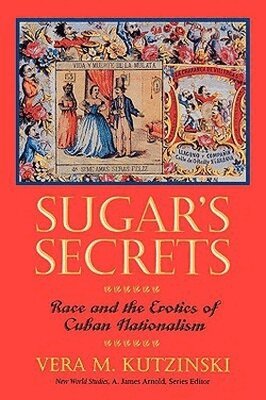
How and why has Cuba's national identity been cast in terms of a cross-cultural synthesis called ""mestizaje"", and what roles have race, gender, sexuality and class played in the construction of that synthesis? What specific cultural, political and economic interests does ""mestizaje"" represent? Exploring these and other questions, the author focuses on images of the ""mulata"" in 19th- and 20th-century Cuban poetry, fiction and visual arts. These images, she argues, are at the heart of Cuba's peculiar form of multiculturalism. ""Mestizaje"" and related cross-cultural paradigms that have developed in other parts of the Caribbean, in Hispanic America and Brazil, are controversially tied to nationalist interests and ideologies. But do they really mark the promise of a diverse cross-culture? Or do they constitute a form of ethnic ""lynching""? According to Kutzinski, ""mestizaje"" in Cuba and elsewhere celebrates racial diversity, while at the same time refusing to acknowledge a historical reality of racial conflict. In ""Sugar's Secrets"", she examines traces of this fundamental paradox in Cuban literature and popular culture. The foundation of the author's argument is that Cuban ""mestizaje"" is a distinctly masculine concept. It articulates itself through the female racial stereotype of the ""mulata"", which becomes a symbol for the reconciliation of Spanish and African elements in Cuban culture. Women, especially non-white women, are excluded from this inter-racial vision of cultural and political bonding. Though ""mestizaje"" assumes heterosexual disguises, the unifying fiction it projects is often the product of male homoerotic desire, across racial lines. Kutzinski is interested in how the ""mulata"" has been used by Cuban cultural institutions, as well as by writers of various racial affiliations, either to maintain or expose that fiction. This study focuses on constructions of inter-racial masculinity hidden behind racially mixed femininity; constructions that have had the effect of legitimising male social, economic and political power.
1 380 kr
Skickas inom 7-10 vardagar
Langston Hughes was among the most influential African American writers of the twentieth century. He inspired and challenged readers from Harlem to the Caribbean, Europe, South America, Asia, the African continent, and beyond. To study Langston Hughes is to develop a new sense of the twentieth century. He was more than a man of his times; emerging as a key member of the Harlem Renaissance, his poems, plays, journalism, translations, and prose fiction documented and shaped the world around him. The twenty-nine essays in this volume engage with his at times conflicting investments in populist and modernist literature, his investments in freedom in and beyond the US, and the many genres through which he wrote. Langston Hughes in Context considers the places and experiences that shaped him, the social and cultural contexts in which he wrote, thought and travelled, and the international networks that forged and secured his life and reputation.