Vera Tolz - Böcker
Visar alla böcker från författaren Vera Tolz. Handla med fri frakt och snabb leverans.
12 produkter
12 produkter
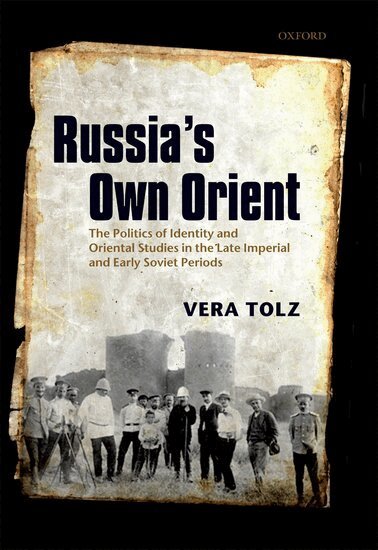
Russia's Own Orient
The Politics of Identity and Oriental Studies in the Late Imperial and Early Soviet Periods
Inbunden, Engelska, 2011
1 594 kr
Skickas inom 5-8 vardagar
Russia's own Orient examines how intellectuals in early twentieth-century Russia offered a new and radical critique of the ways in which Oriental cultures were understood at the time. Out of the ferment of revolution and war, a group of scholars in St. Petersburg articulated fresh ideas about the relationship between power and knowledge, and about Europe and Asia as mere political and cultural constructs. Their ideas anticipated the work of Edward Said and post-colonial scholarship by half a century. The similarities between the two groups were, in fact, genealogical. Said was indebted, via Arab intellectuals of the 1960s who studied in the Soviet Union, to the revisionist ideas of Russian Orientologists of the fin de siècle. But why did this body of Russian scholarship of the early twentieth century turn out to be so innovative? Should we agree with a popular claim of the Russian elites about their country's particular affinity with the 'Orient'? There is no single answer to this question. The early twentieth century was a period when all over Europe a fascination with things 'Oriental' engendered the questioning of many nineteenth-century assumptions and prejudices. In that sense, the revisionism of Russian Orientologists was part of a pan-European trend. And yet, Tolz also argues that a set of political, social, and cultural factors, which were specific to Russia, allowed its imperial scholars to engage in an unusual dialogue with representatives of the empire's non-European minorities. It is together that they were able to articulate a powerful long-lasting critique of modern imperialism and colonialism, and to shape ethnic politics in Russia across the divide of the 1917 revolutions.
809 kr
Skickas inom 10-15 vardagar
Throughout the history of the USSR, groups of like-minded people have gathered, without official permission, to discuss issues of common interest. They had their predecessors in prerevolutionary voluntary associations and political parties. During the 1960s it became easier and less dangerous than in the previous period of Stalin's rule to engage in activities outside government control. Indeed, since the de-Stalinization campaign in the 1950s, Soviet society has been slowly asserting its independence, at least in areas nominally nonpolitical. Nevertheless, until Gorbachev's drive for liberalization achieved some momentum, the creation of unsanctioned groups often continued to provoke persecution of their members. In this book, Vera Tolz studies these unsanctioned groups and reveals the effect they are having on the Soviet political system. In 1990, primarily because of pressure from these unofficial movements, the Communist party was forced to relinquish its constitutionally guaranteed monopoly on power. In other words, a multiparty system had emerged in the USSR by the end of the period under observation in this book.From the time that voluntary associations of Soviet people were permitted to emerge from the underground and openly participate in official public life (1987), their role in the political and social life of the country has been rapidly expanding. By 1989, new sociopolitical groups, especially in the Baltic republics and Transcaucasia, started to pose not only a challenge but also a threat to the power of the Communist party. The emergence of a multiparty system in the Soviet Union, with various political groups pursuing different--and at times opposing--goals, is coinciding with a period during which the central authorities are being inconsistent in implementing democratic reforms. Representatives of new movements are often politically inexperienced, and the Communist party is facing a serious crisis, which makes the political situation in the Soviet Union highly unpredictable and highlights the difficulties that the country faces in moving toward a more democratic system
368 kr
Skickas inom 10-15 vardagar
Throughout the history of the USSR, groups of like-minded people have gathered, without official permission, to discuss issues of common interest. They had their predecessors in prerevolutionary voluntary associations and political parties. During the 1960s it became easier and less dangerous than in the previous period of Stalin's rule to engage in activities outside government control. Indeed, since the de-Stalinization campaign in the 1950s, Soviet society has been slowly asserting its independence, at least in areas nominally nonpolitical. Nevertheless, until Gorbachev's drive for liberalization achieved some momentum, the creation of unsanctioned groups often continued to provoke persecution of their members. In this book, Vera Tolz studies these unsanctioned groups and reveals the effect they are having on the Soviet political system. In 1990, primarily because of pressure from these unofficial movements, the Communist party was forced to relinquish its constitutionally guaranteed monopoly on power. In other words, a multiparty system had emerged in the USSR by the end of the period under observation in this book.From the time that voluntary associations of Soviet people were permitted to emerge from the underground and openly participate in official public life (1987), their role in the political and social life of the country has been rapidly expanding. By 1989, new sociopolitical groups, especially in the Baltic republics and Transcaucasia, started to pose not only a challenge but also a threat to the power of the Communist party. The emergence of a multiparty system in the Soviet Union, with various political groups pursuing different--and at times opposing--goals, is coinciding with a period during which the central authorities are being inconsistent in implementing democratic reforms. Representatives of new movements are often politically inexperienced, and the Communist party is facing a serious crisis, which makes the political situation in the Soviet Union highly unpredictable and highlights the difficulties that the country faces in moving toward a more democratic system
833 kr
Skickas inom 10-15 vardagar
The question of national identity is central to the future of Russia. This extensive analysis, spans three centuries of Russian cultural history to place post-communist Russia within a broad historical background. The author focuses on three ways of defining Russia and Russians: Russia as a counterpart to the West; Russians as creators of a unique multi-ethnic community; and Russians as members of the community of Eastern Slavs. She then demonstrates how these three perspectives have dominated the views of Russia in the modern era and traces their origins back to writers and historians in the eighteenth century. Combining a rich historical study with a rigorous analytical framework, the book is an essential tool for understanding contemporary Russia.
1 343 kr
Skickas inom 10-15 vardagar
A unique, day-by-day chronology of important events and trends related to the USSR, this reference annual draws from a wide variety of sources, including Soviet and international media reports. The volume’s comprehensive indexes to persons and places provide easy access to specific information being sought. Entries are brief but substantial, providing the context necessary in order to understand current developments.
2 166 kr
Skickas inom 10-15 vardagar
This last volume in the annual series chronicles the developments that led up to the abortive August coup, the disintegration of the Soviet Union, and the establishment of the Commonwealth of Independent States. The book is arranged as a day-by-day chronology with boldface headlines identifying individual topics. Among the highlights are analyses of the crackdown in the Baltic republics, the miners' strikes, and the ongoing ethnic warfare in the Transcaucasus; the referendum on the future of the USSR and the prolonged negotiations between the center and the republics over the Union treaty; the emergence of Russia as an alternative center of power; and the banning of the Soviet Communist Party. The volume also documents in depth the failed coup and the political realignment that followed, the disastrous state of the economy, and the discussion of potential future cooperation among the newly independent republics.
457 kr
Skickas inom 10-15 vardagar
A unique, day-by-day chronology of important events and trends related to the USSR, this reference annual draws from a wide variety of sources, including Soviet and international media reports. The volume’s comprehensive indexes to persons and places provide easy access to specific information being sought. Entries are brief but substantial, providing the context necessary in order to understand current developments.
640 kr
Skickas inom 10-15 vardagar
This last volume in the annual series chronicles the developments that led up to the abortive August coup, the disintegration of the Soviet Union, and the establishment of the Commonwealth of Independent States. The book is arranged as a day-by-day chronology with boldface headlines identifying individual topics. Among the highlights are analyses of the crackdown in the Baltic republics, the miners' strikes, and the ongoing ethnic warfare in the Transcaucasus; the referendum on the future of the USSR and the prolonged negotiations between the center and the republics over the Union treaty; the emergence of Russia as an alternative center of power; and the banning of the Soviet Communist Party. The volume also documents in depth the failed coup and the political realignment that followed, the disastrous state of the economy, and the discussion of potential future cooperation among the newly independent republics.
Nation, Ethnicity and Race on Russian Television
Mediating Post-Soviet Difference
Häftad, Engelska, 2017
719 kr
Skickas inom 10-15 vardagar
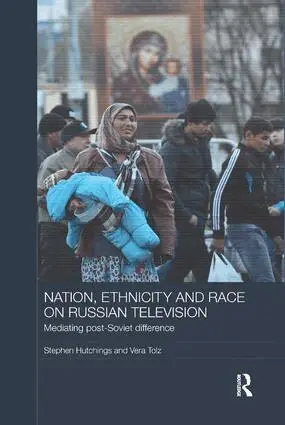
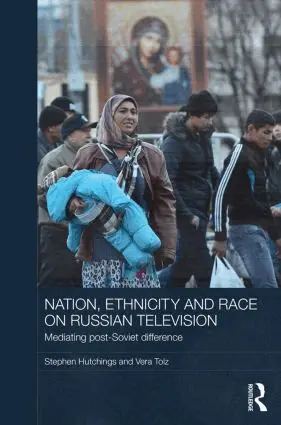
Russia, one of the most ethno-culturally diverse countries in the world, provides a rich case study on how globalisation and associated international trends are disrupting, and causing the radical rethinking of approaches to, inter-ethnic cohesion. The book highlights the importance of television broadcasting in shaping national discourse and the place of ethno-cultural diversity within it. It argues that television’s role here has been reinforced, rather than diminished, by the rise of new media technologies. Through an analysis of a wide range of news and other television programmes, the book shows how the covert meanings of discourse on a particular issue can diverge from the overt significance attributed to it, just as the impact of that discourse may not conform with the original aims of the broadcasters. The book discusses the tension between the imperative to maintain security through centralised government and overall national cohesion that Russia shares with other European states, and the need to remain sensitive to, and to accommodate, the needs and perspectives of ethnic minorities and labour migrants. It compares the increasingly isolationist popular ethnonationalism in Russia, which harks back to "old-fashioned" values, with the similar rise of the Tea Party in the United States and the UK Independence Party in Britain. Throughout, this extremely rich, well-argued book complicates and challenges received wisdom on Russia’s recent descent into authoritarianism. It points to a regime struggling to negotiate the dilemmas it faces, given its Soviet legacy of ethnic particularism, weak civil society, large native Muslim population and overbearing, yet far from entirely effective, state control of the media.
Nation, Ethnicity and Race on Russian Television
Mediating Post-Soviet Difference
Inbunden, Engelska, 2015
2 155 kr
Skickas inom 10-15 vardagar
Russia, one of the most ethno-culturally diverse countries in the world, provides a rich case study on how globalisation and associated international trends are disrupting, and causing the radical rethinking of approaches to, inter-ethnic cohesion. The book highlights the importance of television broadcasting in shaping national discourse and the place of ethno-cultural diversity within it. It argues that television’s role here has been reinforced, rather than diminished, by the rise of new media technologies. Through an analysis of a wide range of news and other television programmes, the book shows how the covert meanings of discourse on a particular issue can diverge from the overt significance attributed to it, just as the impact of that discourse may not conform with the original aims of the broadcasters. The book discusses the tension between the imperative to maintain security through centralised government and overall national cohesion that Russia shares with other European states, and the need to remain sensitive to, and to accommodate, the needs and perspectives of ethnic minorities and labour migrants. It compares the increasingly isolationist popular ethnonationalism in Russia, which harks back to "old-fashioned" values, with the similar rise of the Tea Party in the United States and the UK Independence Party in Britain. Throughout, this extremely rich, well-argued book complicates and challenges received wisdom on Russia’s recent descent into authoritarianism. It points to a regime struggling to negotiate the dilemmas it faces, given its Soviet legacy of ethnic particularism, weak civil society, large native Muslim population and overbearing, yet far from entirely effective, state control of the media.
551 kr
Skickas inom 10-15 vardagar
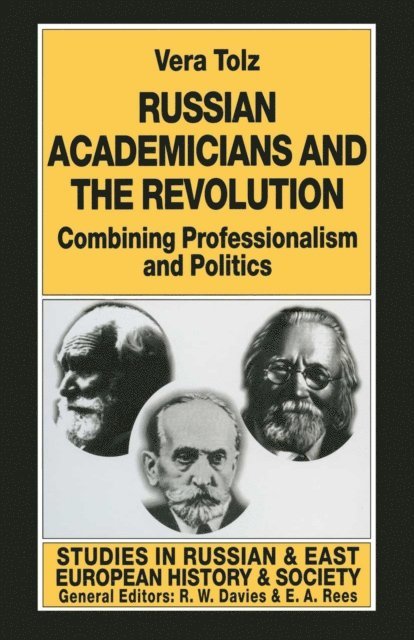
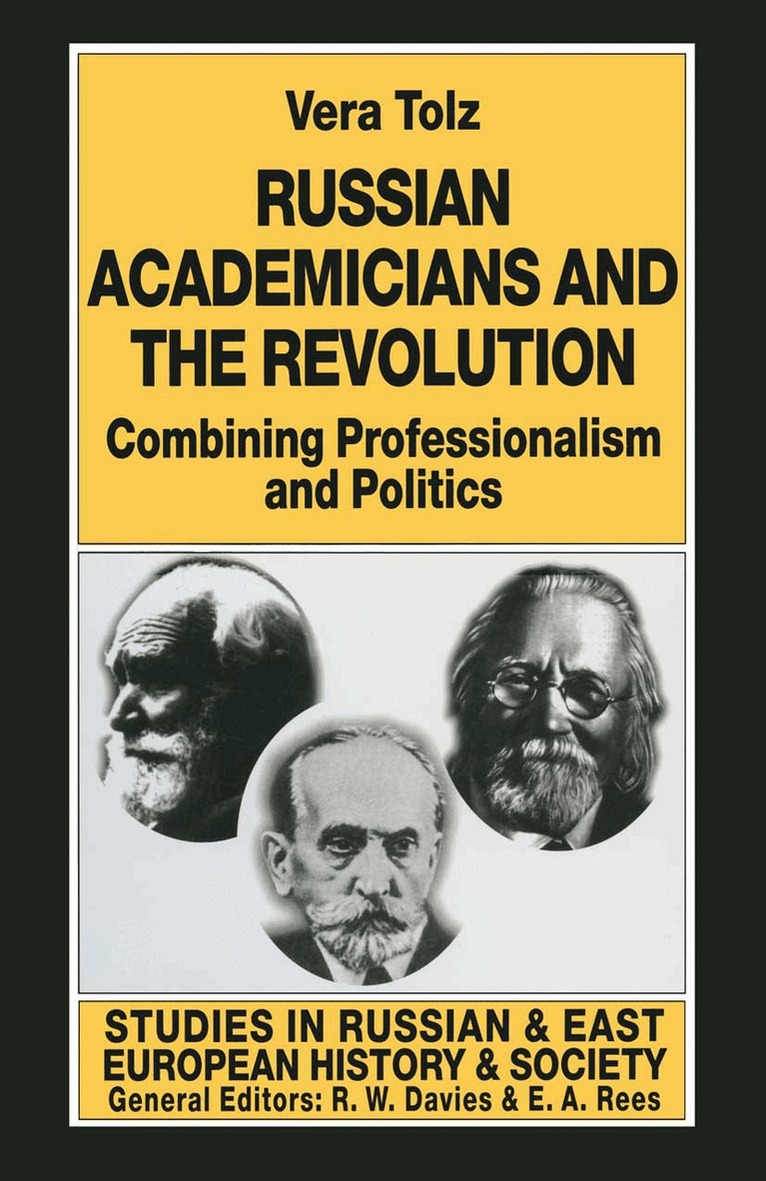
An examination of the early Soviet period of the Russian (Soviet) Academy of Sciences which focuses on the reactions of individual members of the academy to the new situation in which they found themselves after October 1917.
594 kr
Skickas inom 10-15 vardagar
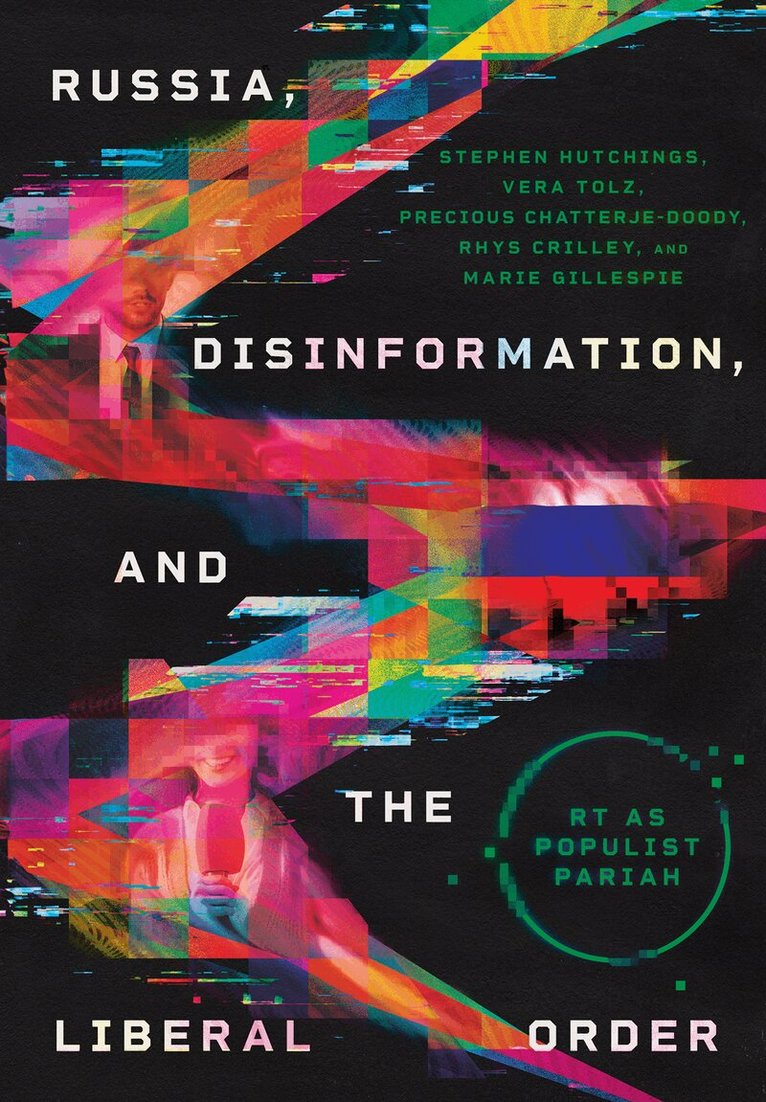
Through the prism of the first comprehensive account of RT, the Kremlin's primary tool of foreign propaganda, Russia, Disinformation and the Liberal Order sheds new light on the provenance and nature of disinformation's threat to democracy. Interrogating the communications strategies pursued by authoritarian states and grassroots populist movements, the book reveals the interlinked nature of today's global media-politics pathologies.Stephen Hutchings, Vera Tolz, Precious Chatterje-Doody, Rhys Crilley, and Marie Gillespie provide a systematic investigation into RT's history, institutional culture, and journalistic ethos; its activities across multiple languages and media platforms; its audience-targeting strategies and audiences' engagements with it; and its response to the war in Ukraine and associated bans on the network. The authors' analysis challenges commonplace notions of disinformation as something that Russia brings to the West, where passive publics are duped by the Kremlin's communications machine, and reveals the reciprocal processes through which Russia and disinformation infiltrate and challenge the liberal order. Russia, Disinformation and the Liberal Order provides provocative insights into the nature and extent of the challenge that Russia's propaganda operation poses to the West. The authors contend that the challenge will be met only if liberals reflect on liberalism's own internal tensions and blind spots and defend the values of open-minded impartiality.Open access edition funded by UKRI and the University of Manchester.