Verity Platt - Böcker
Visar alla böcker från författaren Verity Platt. Handla med fri frakt och snabb leverans.
5 produkter
5 produkter
1 668 kr
Skickas inom 5-8 vardagar
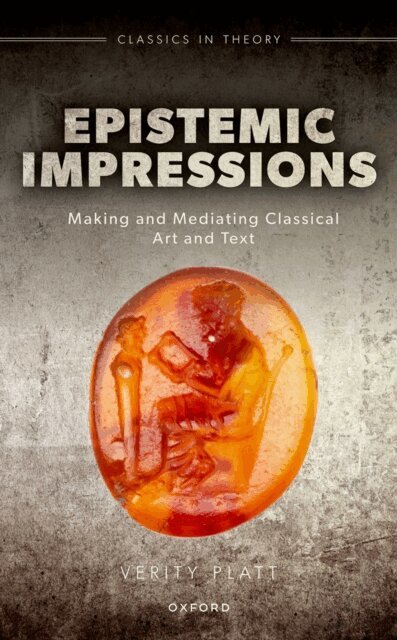
Epistemic Impressions advances a new history of image-making and art-text relations in classical antiquity. Moving away from a focus on imitation (mimēsis), it looks instead to the concept of the seal-impression (typos), which played a vital role in ancient philosophies of mind: seals were 'epistemic objects' in that they informed complex thinking about the relationship between form, matter, and medium. As an indexically produced image, the typos offered Greek thinkers a model of sense perception and knowledge transmission grounded in material processes of engraving and stamping, which were closely related to those of sculptural moulding and casting (plastikē). In turn, these had a profound influence on concepts of truth, representation, and replication, offering a materially embedded ontology of the image that has far-reaching implications for our understanding of Graeco-Roman aesthetics. Drawing on theories of media, Verity Platt explores how the concept of impressing (typōsis) was especially significant for literary engagements with artworks, informing Greek models of intermediality from archaic poetry to imperial Greek prose and early Christian exegesis. Advancing an 'object-oriented' approach that dislodges the trope of ekphrasisin favour of embodied processes of making, the book focuses on Hellenistic epigram, an especially medium-conscious genre, offering new readings of poems by the third-century BCE poet Posidippus, who drew on practices of engraving, stamping, and casting in his epigrams on precious gems (Lithika) and bronze statuary (Andriantopoiika). Posidippus' sophisticated engagement with materiality is set within the longer history of intermedial relations in ancient epigram, as these unfold through the Greek Anthologyin dialogue with shifting approaches to image-making and transmission under the Roman Empire and in early Byzantium. As a prehistory of analogue modes of reproduction (and thus the concept of 'type'), Epistemic Impressions demonstrates how, just as many ancient concerns with the visual may seem surprisingly modern, so many modern preoccupations are in fact more ancient than we might presume.
Facing the Gods
Epiphany and Representation in Graeco-Roman Art, Literature and Religion
Inbunden, Engelska, 2011
1 653 kr
Skickas inom 7-10 vardagar
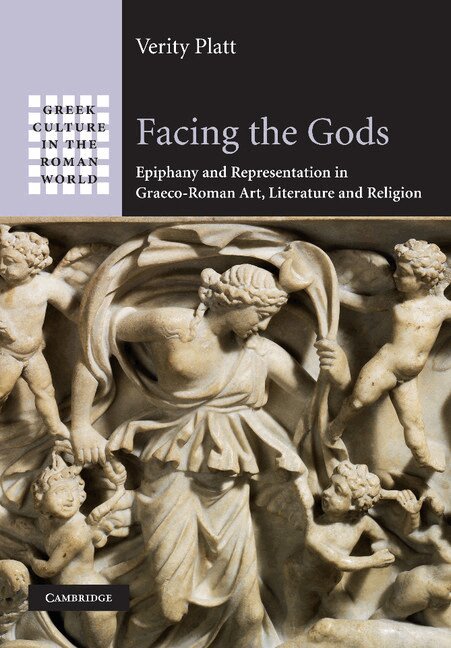
This is the first history of epiphany as both a phenomenon and a cultural discourse within the Graeco-Roman world. It explores divine manifestations and their representations both in art and in literary, historical and epigraphic accounts. The cultural analysis of epiphany is set within a historical framework that examines its development from the archaic period to the Roman Empire. In particular, a surprisingly large number of the images that have survived from antiquity are not only religious but epiphanically charged. Verity Platt argues that the enduring potential for divine incursions into mortal experience provides a reliable cognitive structure that supports both ancient religion and mythology. At the same time, Graeco-Roman culture exhibits a sophisticated awareness of the difficulties in apprehending deity and representing divine presence, and of the potential for the manmade sign to lead the worshipper back to an unmediated epiphanic encounter.
1 838 kr
Skickas inom 7-10 vardagar
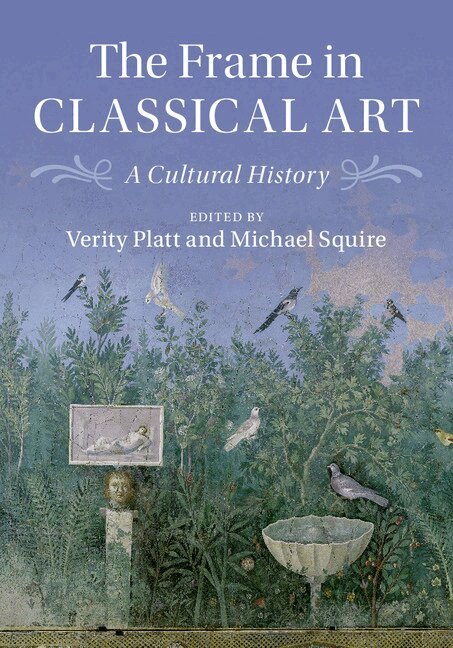
The frames of classical art are often seen as marginal to the images that they surround. Traditional art history has tended to view framing devices as supplementary 'ornaments'. Likewise, classical archaeologists have often treated them as tools for taxonomic analysis. This book not only argues for the integral role of framing within Graeco-Roman art, but also explores the relationship between the frames of classical antiquity and those of more modern art and aesthetics. Contributors combine close formal analysis with more theoretical approaches: chapters examine framing devices across multiple media (including vase and fresco painting, relief and free-standing sculpture, mosaics, manuscripts and inscriptions), structuring analysis around the themes of 'framing pictorial space', 'framing bodies', 'framing the sacred' and 'framing texts'. The result is a new cultural history of framing - one that probes the sophisticated and playful ways in which frames could support, delimit, shape and even interrogate the images contained within.
740 kr
Skickas inom 7-10 vardagar
The frames of classical art are often seen as marginal to the images that they surround. Traditional art history has tended to view framing devices as supplementary 'ornaments'. Likewise, classical archaeologists have often treated them as tools for taxonomic analysis. This book not only argues for the integral role of framing within Graeco-Roman art, but also explores the relationship between the frames of classical antiquity and those of more modern art and aesthetics. Contributors combine close formal analysis with more theoretical approaches: chapters examine framing devices across multiple media (including vase and fresco painting, relief and free-standing sculpture, mosaics, manuscripts and inscriptions), structuring analysis around the themes of 'framing pictorial space', 'framing bodies', 'framing the sacred' and 'framing texts'. The result is a new cultural history of framing - one that probes the sophisticated and playful ways in which frames could support, delimit, shape and even interrogate the images contained within.
Facing the Gods
Epiphany and Representation in Graeco-Roman Art, Literature and Religion
Häftad, Engelska, 2016
481 kr
Skickas inom 7-10 vardagar
This is the first history of epiphany as both a phenomenon and a cultural discourse within the Graeco-Roman world. It explores divine manifestations and their representations both in art and in literary, historical and epigraphic accounts. The cultural analysis of epiphany is set within a historical framework that examines its development from the archaic period to the Roman Empire. In particular, a surprisingly large number of the images that have survived from antiquity are not only religious but epiphanically charged. Verity Platt argues that the enduring potential for divine incursions into mortal experience provides a reliable cognitive structure that supports both ancient religion and mythology. At the same time, Graeco-Roman culture exhibits a sophisticated awareness of the difficulties in apprehending deity and representing divine presence, and of the potential for the manmade sign to lead the worshipper back to an unmediated epiphanic encounter.