Viacheslav Shpakovsky – författare
Visar alla böcker från författaren Viacheslav Shpakovsky. Handla med fri frakt och snabb leverans.
8 produkter
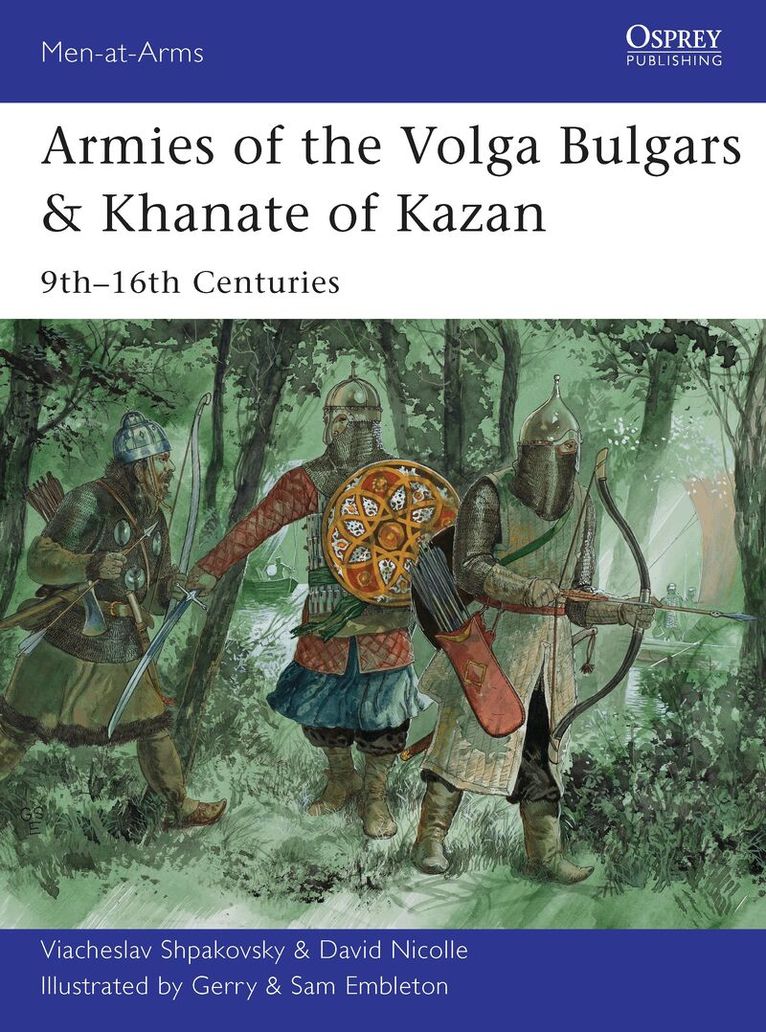
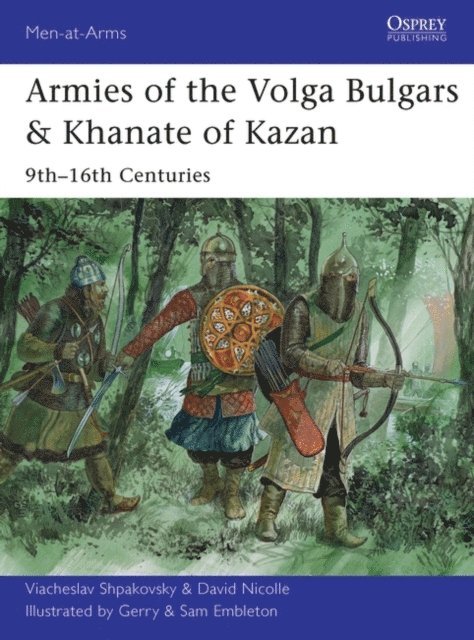
Armies of the Volga Bulgars & Khanate of Kazan
9th–16th centuries
Av Viacheslav Shpakovsky, David Nicolle
Häftad, 2013
3,0 utav 5 stjärnor. Totalt antal röster: (2)
161 kr
Lägg i varukorg
The Bulgars were a Turkic people who established a state north of the Black Sea.In the late 500s and early 600s AD their state fragmented under pressure from the Khazars; one group moved south into what became Bulgaria, but the rest moved north during the 7th and 8th centuries to the basin of the …
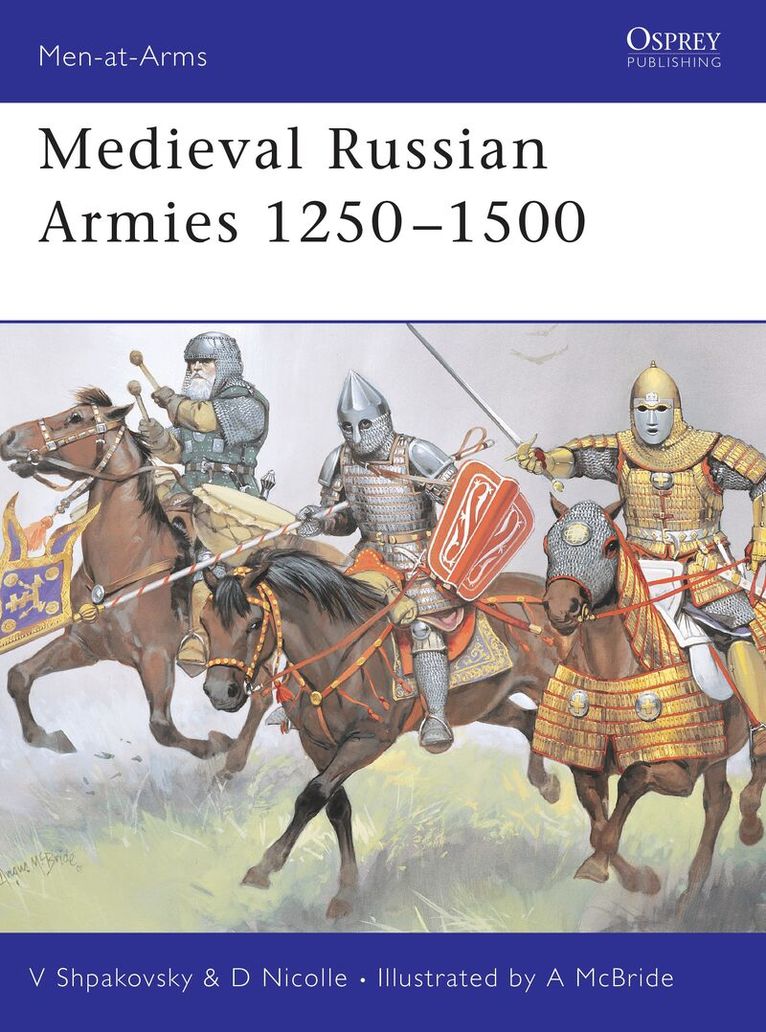
Medieval Russian Armies 1250–1500
Av David Nicolle, Viacheslav Shpakovsky
Häftad, 2002
161 kr
Lägg i varukorg
After disastrous defeats at the hands of the Mongols in the 13th century, the Russian principalities became vassals of the Khans of the Golden Horde for more then 200 years.At the same time the western princes faced the German crusaders of the Teutonic Order. Remarkably, Russia responded with a new …
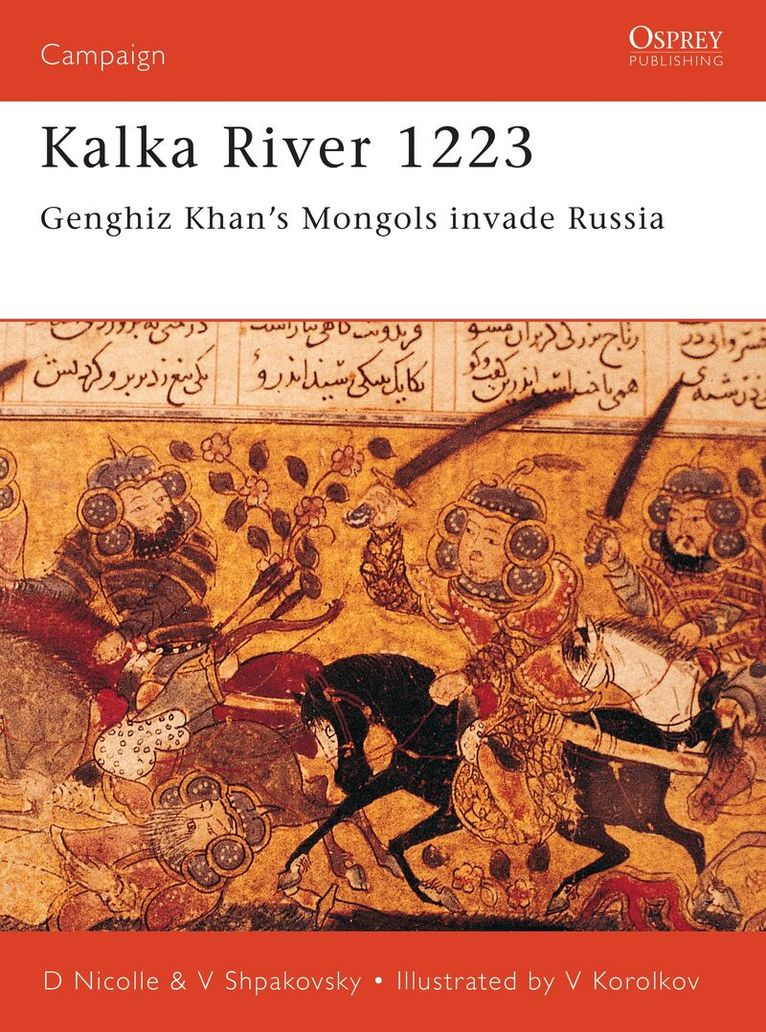
Kalka River 1223
Genghiz Khan's Mongols invade Russia
Av David Nicolle, Viacheslav Shpakovsky
Häftad, 2001
221 kr
Lägg i varukorg
A compact, illustrated guide to a key European conquest for one of history's most legendary leaders.In 1221, Genghiz, Great Khan of the Mongols, ordered an armed reconnaissance expedition into Russia commanded by Sübodei Bahadur and Jebei Noyon 'The Arrow'. The consequences for the history of …
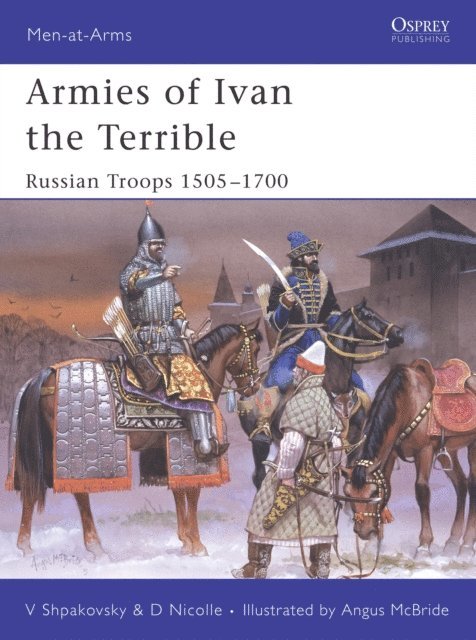
Armies of Ivan the Terrible
Russian Troops 1505–1700
Av David Nicolle, Viacheslav Shpakovsky
Häftad, 2006
161 kr
Lägg i varukorg
An insightful exploration of Russian military forces through the 16th and 17th centuries, accompanied by accurate, detailed illustrations.It is generally assumed that the military reforms which propelled Russia into the modern world were due solely to the genius of Peter the Great. In fact, his …
Armies of Ivan the Terrible
Russian Troops 1505–1700
Av David Nicolle, Viacheslav Shpakovsky
E-bok, 2024
182 kr
Lägg i varukorg
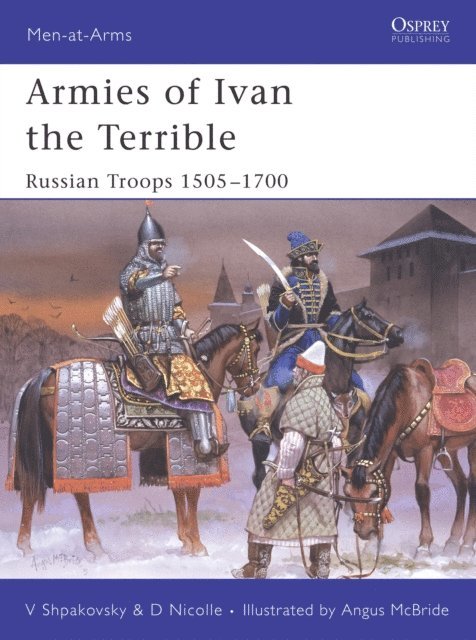
An insightful exploration of Russian military forces through the 16th and 17th centuries, accompanied by accurate, detailed illustrations. It is generally assumed that the military reforms which propelled Russia into the modern world were due solely to the genius of Peter the Great. In fact, his …
Armies of Ivan the Terrible
Russian Troops 1505–1700
Av David Nicolle, Viacheslav Shpakovsky
E-bok, 2024
174 kr
Lägg i varukorg
An insightful exploration of Russian military forces through the 16th and 17th centuries, accompanied by accurate, detailed illustrations. It is generally assumed that the military reforms which propelled Russia into the modern world were due solely to the genius of Peter the Great. In fact, his …
Armies of the Volga Bulgars & Khanate of Kazan
9th–16th Centuries
Av Viacheslav Shpakovsky, David Nicolle
E-bok, 2013
186 kr
Lägg i varukorg
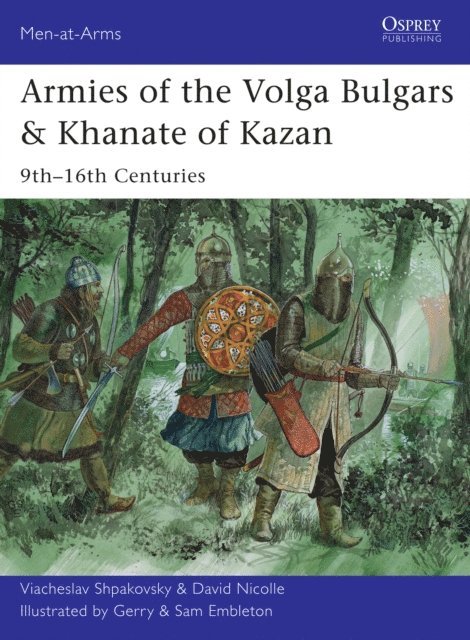
The Bulgars were a Turkic people who established a state north of the Black Sea. In the late 500s and early 600s AD their state fragmented under pressure from the Khazars; one group moved south into what became Bulgaria, but the rest moved north during the 7th and 8th centuries to the basin of the …
Armies of the Volga Bulgars & Khanate of Kazan
9th–16th Centuries
Av Viacheslav Shpakovsky, David Nicolle
E-bok, 2013
186 kr
Lägg i varukorg
The Bulgars were a Turkic people who established a state north of the Black Sea. In the late 500s and early 600s AD their state fragmented under pressure from the Khazars; one group moved south into what became Bulgaria, but the rest moved north during the 7th and 8th centuries to the basin of the …