Vicente Fenoll – författare
Visar alla böcker från författaren Vicente Fenoll. Handla med fri frakt och snabb leverans.
3 produkter
3 produkter
Inbunden, Engelska, 2021
1 524 kr
Skickas inom 10-15 vardagar
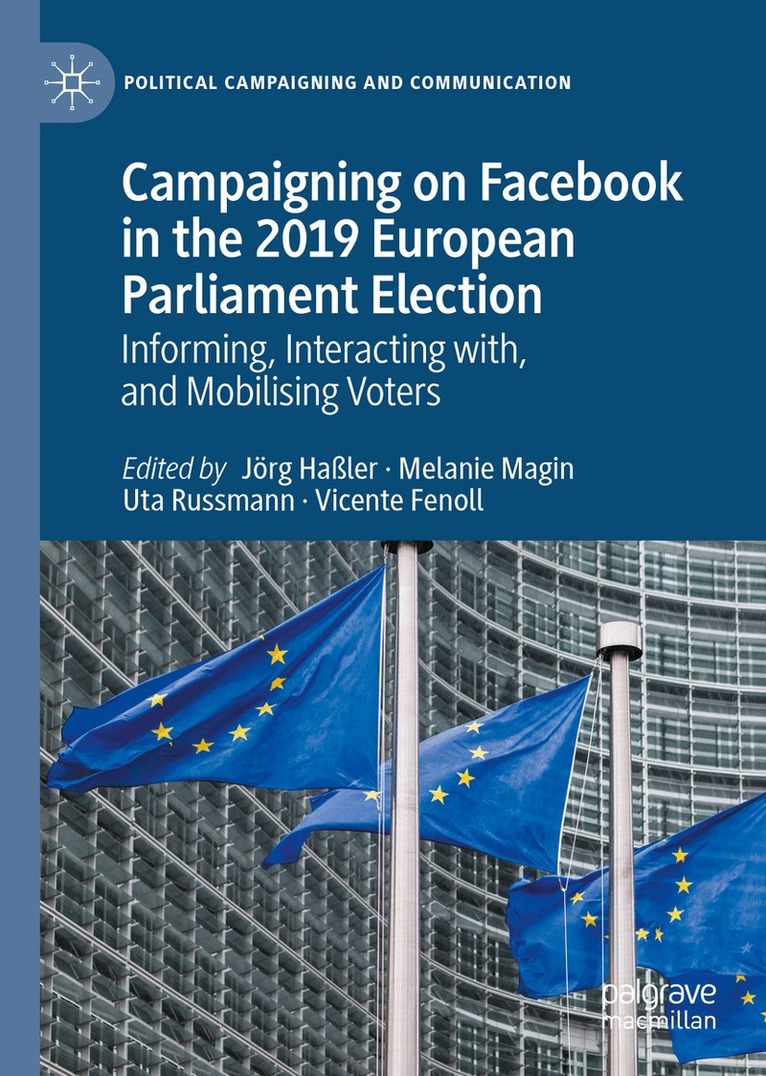
This book investigates how political parties from 12 European countries used Facebook to inform, interact with and mobilise voters at the 2019 European Parliament election. Following a joint theoretical framework and method, the results of a content analysis of more than 14,000 Facebook posts are presented. Country specific chapters are followed by analyses of European parties’ Facebook campaigning, the spread of populism and the use of Facebook ads by the parties. The final chapter compares all countries showing that campaigns are more strongly shaped by the national than by the European political context. Facebook is used for campaigning as usual; parties inform and persuade but neglect the platform’s mobilisation and particularly interactive affordances.
E-bok
Engelska, 20211 825 kr
Läs direkt efter köp
This book investigates how political parties from 12 European countries used Facebook to inform, interact with and mobilise voters at the 2019 European Parliament election. Following a joint theoretical framework and method, the results of a content analysis of more than 14,000 Facebook posts are presented. Country specific chapters are followed by analyses of European parties’ Facebook campaigning, the spread of populism and the use of Facebook ads by the parties. The final chapter compares all countries showing that campaigns are more strongly shaped by the national than by the European political context. Facebook is used for campaigning as usual; parties inform and persuade but neglect the platform’s mobilisation and particularly interactive affordances.
Häftad, Engelska, 2022
1 524 kr
Skickas inom 10-15 vardagar
This book investigates how political parties from 12 European countries used Facebook to inform, interact with and mobilise voters at the 2019 European Parliament election. Following a joint theoretical framework and method, the results of a content analysis of more than 14,000 Facebook posts are presented. Country specific chapters are followed by analyses of European parties’ Facebook campaigning, the spread of populism and the use of Facebook ads by the parties. The final chapter compares all countries showing that campaigns are more strongly shaped by the national than by the European political context. Facebook is used for campaigning as usual; parties inform and persuade but neglect the platform’s mobilisation and particularly interactive affordances.