Vicky Unruh - Böcker
Visar alla böcker från författaren Vicky Unruh. Handla med fri frakt och snabb leverans.
3 produkter
3 produkter
345 kr
Skickas inom 10-15 vardagar
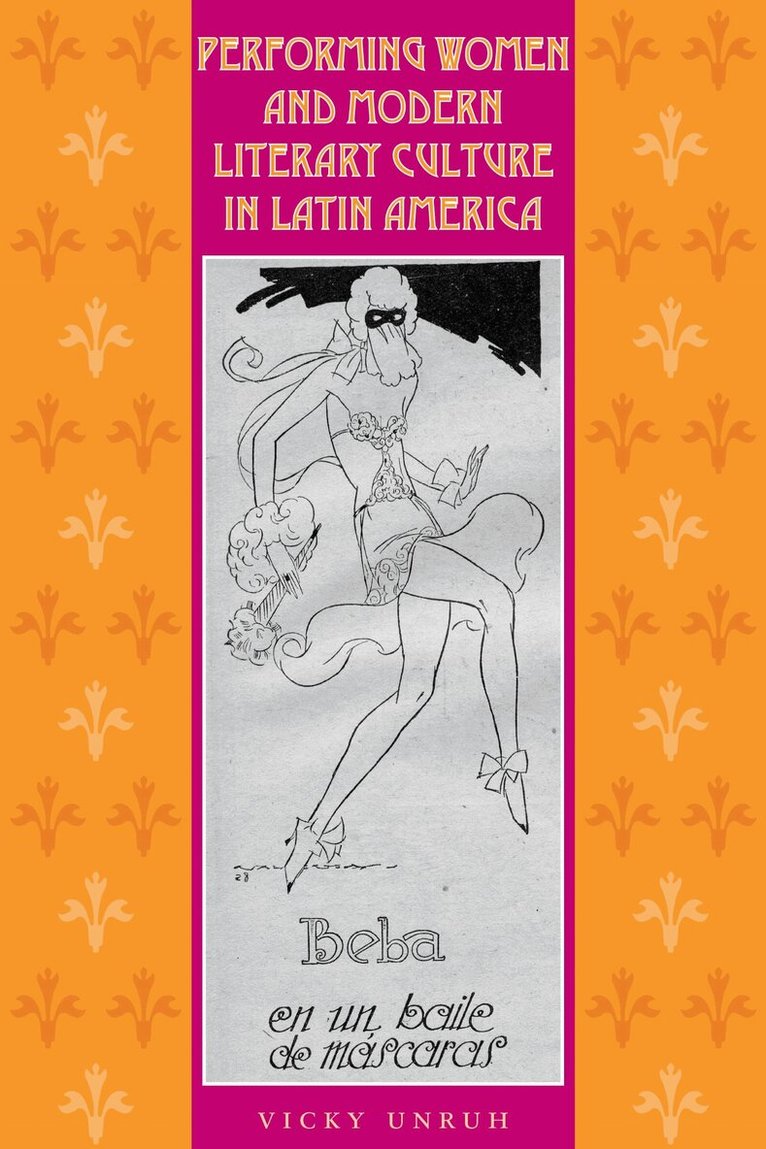
Women have always been the muses who inspire the creativity of men, but how do women become the creators of art themselves? This was the challenge faced by Latin American women who aspired to write in the 1920s and 1930s. Though women's roles were opening up during this time, women writers were not automatically welcomed by the Latin American literary avant-gardes, whose male members viewed women's participation in tertulias (literary gatherings) and publications as uncommon and even forbidding. How did Latin American women writers, celebrated by male writers as the "New Eve" but distrusted as fellow creators, find their intellectual homes and fashion their artistic missions? In this innovative book, Vicky Unruh explores how women writers of the vanguard period often gained access to literary life as public performers. Using a novel, interdisciplinary synthesis of performance theory, she shows how Latin American women's work in theatre, poetry declamation, song, dance, oration, witty display, and bold journalistic self-portraiture helped them craft their public personas as writers and shaped their singular forms of analytical thought, cultural critique, and literary style. Concentrating on eleven writers from Argentina, Brazil, Cuba, Mexico, Peru, and Venezuela, Unruh demonstrates that, as these women identified themselves as instigators of change rather than as passive muses, they unleashed penetrating critiques of projects for social and artistic modernization in Latin America.
Del 11 - Latin American Literature and Culture
Latin American Vanguards
The Art of Contentious Encounters
Häftad, Engelska, 1994
764 kr
Skickas inom 3-6 vardagar
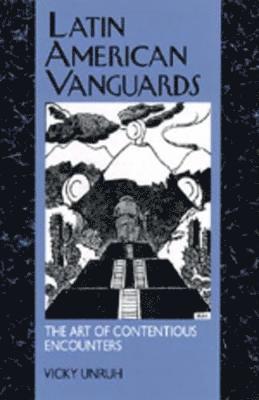
In this first comprehensive study of Latin America's literary vanguards of the 1920s and 1930s, Vicky Unruh explores the movement's provocative and polemic nature. Latin American vanguardism--a precursor to the widely acclaimed work of contemporary Latin American writers--was stimulated by the European avant-garde movements of the World War I era. But as Unruh's wide-ranging study attests, the vanguards of Latin America--emerging from the continent's own historical circumstances--developed a very distinct character and voice. Through manifestos, experimental texts, and ribald public performance, the vanguardists' work intertwined art, culture, and the politics of the day to produce a powerful brand of aesthetic activism, one that sparked an entire rethinking of the meaning of art and culture throughout Latin America.
1 723 kr
Skickas inom 7-10 vardagar
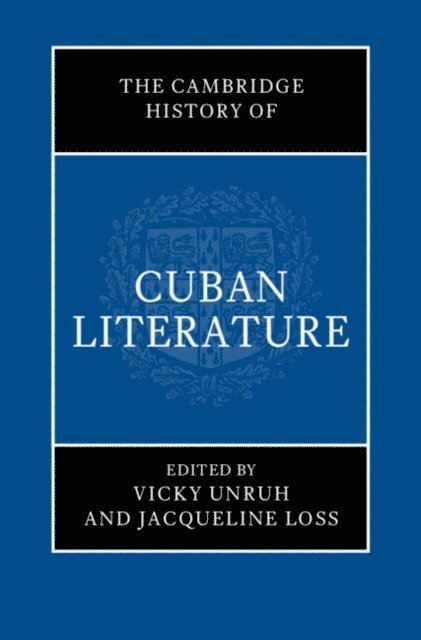
Extending from the seventeenth to the twenty-first century, The Cambridge History of Cuban Literature is the first book in English to tell the intricate story of Cuban literary-intellectual culture from the seventeenth-century to the twenty-first century. This landmark book highlights the intricacies of linguistic and cultural translation embodied in telling a story in English about a body of work expressed predominantly in Spanish, but also French, Haitian Krey-l, Angolan Portuguese, and English. Broad in its scope, this book encompasses such major figures as Gómez de Avellaneda, Heredia, Plácido, Manzano, Villaverde, Martí, Casal, Carpentier, L. Cabrera, Mañach, Loynaz, Piñera, Lezama Lima, and Cabrera Infante, as well as theatre and performance groups, film, post-revolutionary projects, post-1989 Special Period writers, and literature of Cuba's diasporas. It highlights four key features weaving through Cuban literary history: its engagement with international networks; its key role in cultural identity debates throughout Latin America; persistent debates about race, gender, and class; and the tropes of travel and movement-voluntary, exploratory, enslaved, migratory, or exilic.