Victor Terras - Böcker
Visar alla böcker från författaren Victor Terras. Handla med fri frakt och snabb leverans.
3 produkter
3 produkter
Karamazov Companion
Commentary on the Genesis, Language and Style of Dostoevsky's Novel
Häftad, Engelska, 1981
360 kr
Skickas inom 10-15 vardagar
The text of The Brothers Karamazov is removed from English-speaking readers today not only by time but also by linguistic and cultural boundaries. Victor Terras’s companion work provides readers with a richer understanding of the Dostoevsky novel as the expression of a philosophy and a work of art.In his introduction, Terras outlines the genesis, main ideas, and structural peculiarities of the novel as well as Dostoevsky’s political, philosophical, and aesthetic stance. The detailed commentary takes the reader through the novel, clarifying aspects of Russian life, the novel’s sociopolitical background, and a number of polemic issues. Terras identifies and explains hundreds of literary and biblical quotations and allusions. He discusses symbols, recurrent images, and structural stylistic patterns, including those lost in English translation.
1 236 kr
Skickas inom 3-6 vardagar
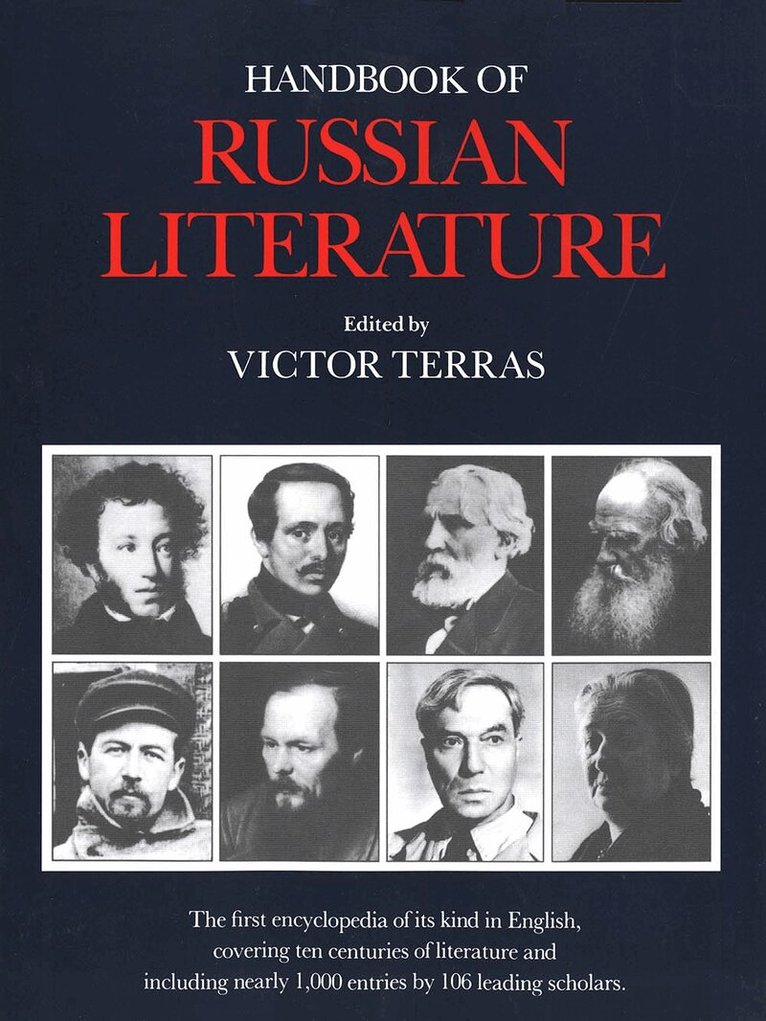
This first encyclopedia of its kind in English covers ten centuries of Russian literature and includes nearly 1,000 entries by leading scholars. It will be an indispensable guide for students or the general reader.“The Handbook is an Eden for browsers… a dependable, illuminating guide.”—Robert Taylor, Boston Globe“A comprehensive survey in one volume of one of the world’s richest national literatures. The volume includes entries on authors, genres, literary movements, and period studies, together with reviews of notable journals. The lengthiest entries run to more than 6,000 words, the shortest have been kept to a single paragraph, giving the book value both for ready reference and as a collection of history and criticism.”—Booklist“The achievement here is grand, the knowledge collected invaluable.”—Theoharis C. Theoharis, Christian Science Monitor“A vast and informative compilation…. The magnificent panorama of Russian literature accumulatively unfolds, from its ancient folklore and earliest written texts… to our present century’s structuralism, modernism, and socialist realism.”—Gordon McVay, Times Higher Education Supplement“For anyone interested in Russian literature, this new Handbook is the single most useful book to own.”—J. Thomas Shaw, Slavic and East European Journal“An indispensable source of concise information for all students of literature for years to come.”—Ray Parrott, Philological Quarterly
1 404 kr
Skickas inom 3-6 vardagar
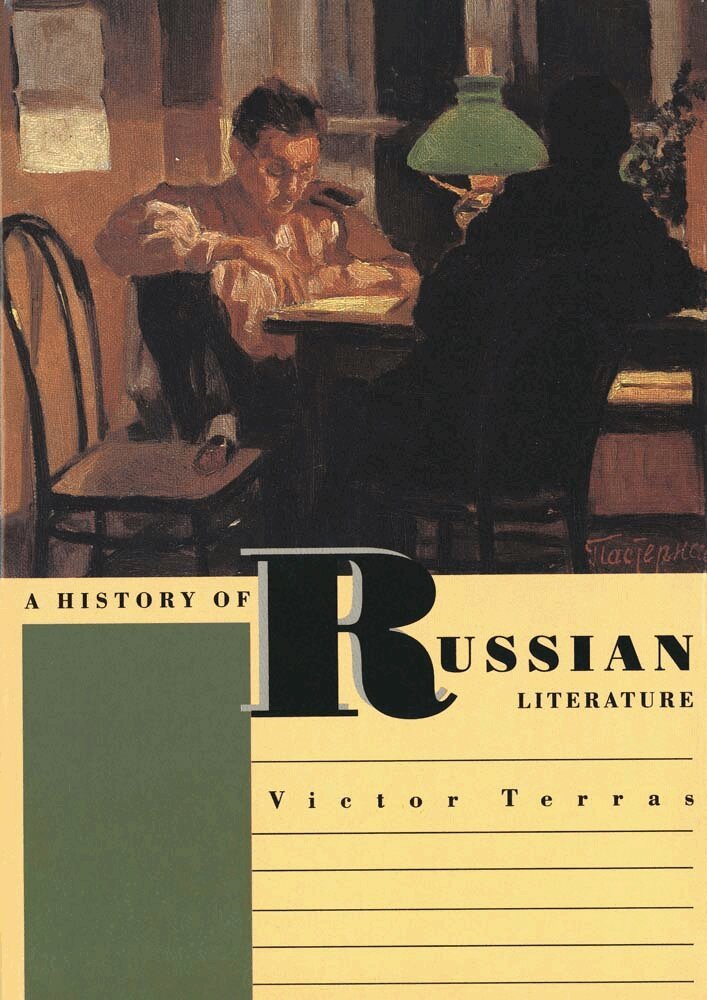
This magisterial work, written by one of the world’s foremost Slavic scholars, presents a survey of Russian literature from its beginning in the eleventh century to modern times. Victor Terras argues eloquently that Russian literature has reflected, defined, and shaped the nation’s beliefs and goals, and he sets his survey against a background of social and political developments and religious and philosophic thought. Terras traces a rich literary heritage that encompasses Russian folklore of the eleventh, twelfth, and thirteenth centuries, medieval literature that in style and substance drew on the Byzantine tradition, and literature of the seventeenth and eighteenth centuries, when Russia passed through a succession of literary schools—neoclassicism, sentimentalism, romanticism, and realism—imported from the West. Terras then moves on to the masterful realist fiction of Turgenev, Dostoevsky, and Tolstoi during the second half of the nineteenth century, showing how it was a catalyst for the social and cultural advances following the reforms of Alexander II. In discussing the period preceding the revolution of 1917, Terras links the literary movements with parallel developments in the theater, music, and the visual arts, explaining that these all placed Russia in the forefront of European modernism. Terras divides Russian literature after the revolution into émigré and Soviet writing, and he demonstrates how the latter acted as a propaganda tool of the Communist party. He concludes his survey with the dissident movement that followed Stalin’s death, arguing that the movement again made literature a leader in the struggle for freedom of thought, genuine relevance, and communion with Western culture.