Victoria de Grazia - Böcker
Visar alla böcker från författaren Victoria de Grazia. Handla med fri frakt och snabb leverans.
8 produkter
8 produkter
Soft-Power Internationalism
Competing for Cultural Influence in the 21st-Century Global Order
Inbunden, Engelska, 2021
1 186 kr
Skickas inom 7-10 vardagar
The term “soft power” was coined in 1990 to foreground a capacity in statecraft analogous to military might and economic coercion: getting others to want what you want. Emphasizing the magnetism of values, culture, and communication, this concept promised a future in which cultural institutes, development aid, public diplomacy, and trade policies replaced nuclear standoffs. From its origins in an attempt to envision a United States–led liberal international order for a post–Cold War world, it soon made its way to the foreign policy toolkits of emerging powers looking to project their own influence.This book is a global comparative history of how soft power came to define the interregnum between the celebration of global capitalism in the 1990s and the recent resurgence of nationalism and authoritarianism. It brings together case studies from the European Union, China, Brazil, Turkey, and the United States, examining the genealogy of soft power in the Euro-Atlantic and its evolution in the hands of other states seeking to counter U.S. hegemony by nonmilitaristic means. Contributors detail how global and regional powers created a variety of new ways of conducting foreign policy, sometimes to build new solidarities outside Western colonial legacies and sometimes with more self-interested purposes. Offering a critical history of soft power as an intellectual project as well as a diplomatic practice, Soft-Power Internationalism provides new perspectives on the potential and limits of a multilateral liberal global order.
Soft-Power Internationalism
Competing for Cultural Influence in the 21st-Century Global Order
Häftad, Engelska, 2021
306 kr
Skickas inom 7-10 vardagar
The term “soft power” was coined in 1990 to foreground a capacity in statecraft analogous to military might and economic coercion: getting others to want what you want. Emphasizing the magnetism of values, culture, and communication, this concept promised a future in which cultural institutes, development aid, public diplomacy, and trade policies replaced nuclear standoffs. From its origins in an attempt to envision a United States–led liberal international order for a post–Cold War world, it soon made its way to the foreign policy toolkits of emerging powers looking to project their own influence.This book is a global comparative history of how soft power came to define the interregnum between the celebration of global capitalism in the 1990s and the recent resurgence of nationalism and authoritarianism. It brings together case studies from the European Union, China, Brazil, Turkey, and the United States, examining the genealogy of soft power in the Euro-Atlantic and its evolution in the hands of other states seeking to counter U.S. hegemony by nonmilitaristic means. Contributors detail how global and regional powers created a variety of new ways of conducting foreign policy, sometimes to build new solidarities outside Western colonial legacies and sometimes with more self-interested purposes. Offering a critical history of soft power as an intellectual project as well as a diplomatic practice, Soft-Power Internationalism provides new perspectives on the potential and limits of a multilateral liberal global order.
338 kr
Tillfälligt slut
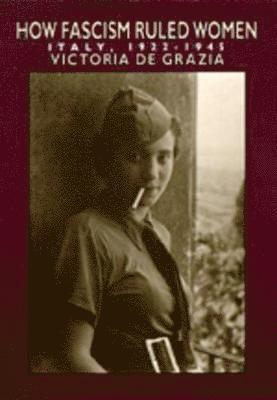
'Italy has been made; now we need to make the Italians', goes a familiar Italian saying. Mussolini was the first head of state to include women in this mandate. How the fascist dictatorship defined the place of women in modern Italy and how women experienced the Duce's rule are the subjects of Victoria de Grazia's new work. De Grazia draws on an array of sources - memoirs and novels, the images, songs, and events of mass culture, as well as government statistics and archival reports. She offers a broad yet detailed characterization of Italian women's ambiguous and ambivalent experience of a regime that promised modernity, yet denied women emancipation. Always attentive to the great diversity among women and careful to distinguish fascist rhetoric from the practices that really shaped daily existence, the author moves with ease from the public discourse about femininity to the images of women in propaganda and commercial culture. She analyzes fascist attempts to organize women and the ways in which Mussolini's intentions were received by women as social actors.The first study of women's experience under Italian fascism, this is also a history of the making of contemporary Italian society.
282 kr
Skickas inom 7-10 vardagar
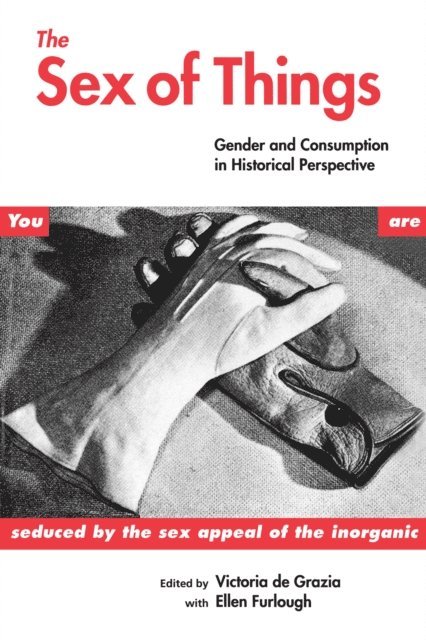
This volume brings together the most innovative historical work on the conjoined themes of gender and consumption. In thirteen pioneering essays, some of the most important voices in the field consider how Western societies think about and use goods, how goods shape female, as well as male, identities, how labor in the family came to be divided between a male breadwinner and a female consumer, and how fashion and cosmetics shape women's notions of themselves and the society in which they live. Together these essays represent the state of the art in research and writing about the development of modern consumption practices, gender roles, and the sexual division of labor in both the United States and Europe. Covering a period of two centuries, the essays range from Marie Antoinette's Paris to the burgeoning cosmetics culture of mid-century America. They deal with topics such as blue-collar workers' survival strategies in the interwar years, the anxieties of working-class consumers, and the efforts of the state to define women's - especially wives' and mothers' - consumer identity.Generously illustrated, this volume also includes extensive introductions and a comprehensive annotated bibliography. Drawing on social, economic, and art history as well as cultural studies, it provides a rich context for the current discourse around consumption, particularly in relation to feminist discussions of gender.
577 kr
Skickas inom 7-10 vardagar
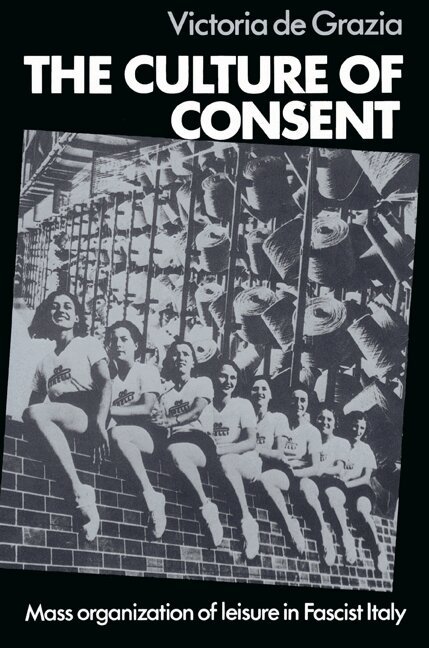
The efforts of fascism to form a 'culture of consent,' or shape depoliticized activities, in Italy between the world wars, make a unique portrait of fascist political tactics. Professor de Grazia focuses on the dopolavoro or fascist leisure-time organization, the largest of the regime's mass institutions. She traces its gradual rise in importance for the consolidation of fascist rule; its spread in the form of thousands of local clubs into every domain of urban and rural life; and its overwhelming impact on the distribution, consumption, and character of all kinds of recreational pursuits - from sports and adult education to movies, traveling theaters, radio, and tourism. The author shows how fascism was able, between 1926 and 1939, to build a new definition of the public sphere. Recasting the public sphere entailed dispensing with traditional class and politically defined modes of organizing those social roles and desires existing outside the workplace.
299 kr
Skickas inom 7-10 vardagar
The most significant conquest of the twentieth century may well have been the triumph of American consumer society over Europe’s bourgeois civilization. It is this little-understood but world-shaking campaign that unfolds in Irresistible Empire, Victoria de Grazia’s brilliant account of how the American standard of living defeated the European way of life and achieved the global cultural hegemony that is both its great strength and its key weakness today.De Grazia describes how, as America’s market empire advanced with confidence through Europe, spreading consumer-oriented capitalism, all alternative strategies fell before it—first the bourgeois lifestyle, then the Third Reich’s command consumption, and finally the grand experiment of Soviet-style socialist planning. Tracing the peculiar alliance that arrayed New World salesmanship, statecraft, and standardized goods against the Old World’s values of status, craft, and good taste, Victoria de Grazia follows the United States’ market-driven imperialism through a vivid series of cross-Atlantic incursions by the great inventions of American consumer society. We see Rotarians from Duluth in the company of the high bourgeoisie of Dresden; working-class spectators in ramshackle French theaters conversing with Garbo and Bogart; Stetson-hatted entrepreneurs from Kansas in the midst of fussy Milanese shoppers; and, against the backdrop of Rome’s Spanish Steps and Paris’s Opera Comique, Fast Food in a showdown with advocates for Slow Food. Demonstrating the intricacies of America’s advance, de Grazia offers an intimate and historical dimension to debates over America’s exercise of soft power and the process known as Americanization. She raises provocative questions about the quality of the good life, democracy, and peace that issue from the vaunted victory of mass consumer culture.
201 kr
Skickas inom 7-10 vardagar
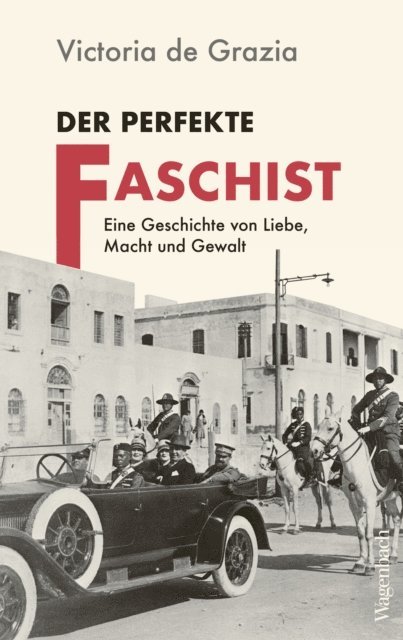
A New Statesman Book of the YearWinner of the Helen and Howard R. Marraro PrizeWinner of the Aldo and Jeanne Scaglione Prize for Italian Studies“Extraordinary…I could not put it down.”—Margaret MacMillan“Reveals how ideology corrupts the truth, how untrammeled ambition destroys the soul, and how the vanity of white male supremacy distorts emotion, making even love a matter of state.”—Sonia Purnell, author of A Woman of No ImportanceWhen Attilio Teruzzi, a decorated military officer and early convert to the Fascist cause, married a rising American opera star, his good fortune seemed settled. The wedding was blessed by Mussolini himself. Yet only three years later, Teruzzi, now commander of the Black Shirts, renounced his wife. Lilliana was Jewish, and fascist Italy would soon introduce its first race laws.The Perfect Fascist pivots from the intimate story of a tempestuous courtship and inconvenient marriage to the operatic spectacle of Mussolini’s rise and fall. It invites us to see in the vain, unscrupulous, fanatically loyal Attilio Teruzzi an exemplar of fascism’s New Man. Victoria De Grazia’s landmark history shows how the personal was always political in the fascist quest for manhood and power. In his self-serving pieties and intimate betrayals, his violence and opportunism, Teruzzi is a forefather of the illiberal politicians of today.“The brilliance of de Grazia’s book lies in the way that she has made a page-turner of Teruzzi’s chaotic life, while providing a scholarly and engrossing portrait of the two decades of Fascist rule.”—Caroline Moorhead, Wall Street Journal“Original and important…A probing analysis of the fascist ‘strong man.’ De Grazia’s attention to Teruzzi’s private life, his behavior as suitor and husband, deepens and enriches our understanding of the nature of leadership in Mussolini’s regime and of masculinity, virility, and honor in Italian fascist culture.”—Robert O. Paxton, author of The Anatomy of Fascism“This is a perfect book!…Its two entwined narratives—one political and public, the other personal and private—help us understand why the personal is political for those who insist on reshaping people and society.”—Azar Nafisi, author of Reading Lolita in Tehran
442 kr
Skickas inom 3-6 vardagar