Victoria E Bynum - Böcker
Visar alla böcker från författaren Victoria E Bynum. Handla med fri frakt och snabb leverans.
4 produkter
4 produkter
643 kr
Skickas inom 5-8 vardagar
460 kr
Skickas inom 10-15 vardagar
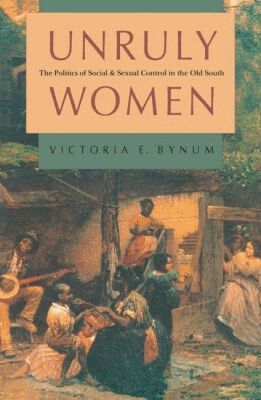
In this richly detailed and imaginatively researched study, Victoria Bynum investigates ""unruly"" women in central North Carolina before and during the Civil War. Analyzing the complex and interrelated impact of gender, race, class, and region on the lives of black and white women, she shows how their diverse experiences and behavior reflected and influenced the changing social order and political economy of the state and region. Her work expands our knowledge of black and white women by studying them outside the plantation setting. Bynum searched local and state court records, public documents, and manuscript collections to locate and document the lives of these otherwise ordinary, obscure women. Some appeared in court as abused, sometimes abusive, wives, as victims and sometimes perpetrators of violent assaults, or as participants in ilicit, interracial relationships. During the Civil War, women freqently were cited for theft, trespassing, or rioting, usually in an effort to gain goods made scarce by war. Some women were charged with harboring evaders or deserters of the Confederacy, an act that reflected their conviction that the Confederacy was destroying them. These politically powerless unruly women threatened to disrupt the underlying social structure of the Old South, which depended on the services and cooperation of all women. Bynum examines the effects of women's social and sexual behavior on the dominant society and shows the ways in which power flowed between private and public spheres. Whether wives or unmarried, enslaved or free, women were active agents of the society's ordering and dissolution.
377 kr
Skickas inom 10-15 vardagar
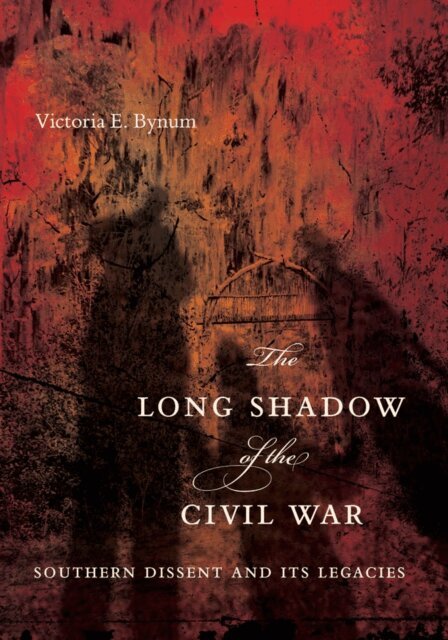
In The Long Shadow of the Civil War , Victoria Bynum relates uncommon narratives about common Southern folks who fought not with the Confederacy, but against it. Focusing on regions in three Southern states--North Carolina, Mississippi, and Texas--Bynum introduces Unionist supporters, guerrilla soldiers, defiant women, socialists, populists, free blacks, and large interracial kin groups that belie stereotypes of the South and of Southerners as uniformly supportive of the Confederate cause. Examining regions within the South where the inner civil wars of deadly physical conflict and intense political debate continued well into the era of Reconstruction and beyond, Bynum explores three central questions. How prevalent was support for the Union among ordinary Southerners during the Civil War? How did Southern Unionists and freedpeople experience both the Union's victory and the emancipation of slaves during and after Reconstruction? And what were the legacies of the Civil War--and Reconstruction--for relations among classes and races and between the sexes, both then and now? Centered on the concepts of place, family, and community, Bynum's insightful and carefully documented work effectively counters the idea of a unified South caught in the grip of the Lost Cause. |Bynum relates uncommon narratives about common Southern folks who fought not with the Confederacy, but against it. Focusing on regions in three Southern states--North Carolina, Mississippi, and Texas--Bynum introduces Unionist supporters, guerrilla soldiers, defiant women, socialists, populists, free blacks, and large interracial kin groups that belie stereotypes of the South and of Southerners as uniformly supportive of the Confederate cause. Centered on the concepts of place, family, and community, Bynum's insightful and carefully documented work effectively counters the idea of a unified South caught in the grip of the Lost Cause.

295 kr
Skickas inom 10-15 vardagar
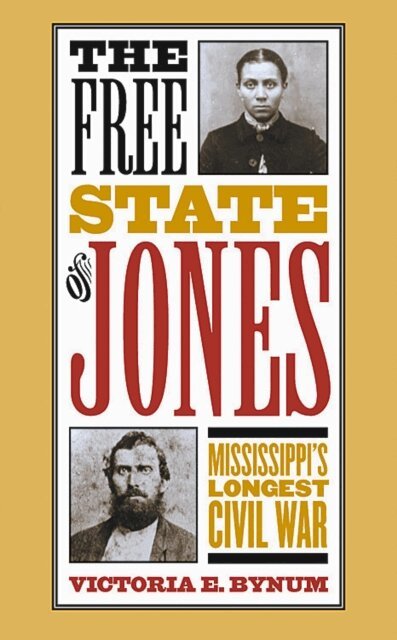
Between late 1863 and mid-1864, an armed band of Confederate deserters battled Confederate cavalry in the Piney Woods region of Jones County, Mississippi. Calling themselves the Knight Company after their captain, Newton Knight, they set up headquarters in the swamps of the Leaf River, where they declared their loyalty to the U.S. government.The story of the Jones County rebellion is well known among Mississippians, and debate over whether the county actually seceded from the state during the war has smoldered for more than a century. Adding further controversy to the legend is the story of Newt Knight's interracial romance with his wartime accomplice, Rachel, a slave. From their relationship there developed a mixed-race community that endured long after the Civil War had ended, and the ambiguous racial identity of their descendants confounded the rules of segregated Mississippi well into the twentieth century.Victoria Bynum traces the origins and legacy of the Jones County uprising from the American Revolution to the modern civil rights movement. In bridging the gap between the legendary and the real Free State of Jones, she shows how the legend--what was told, what was embellished, and what was left out--reveals a great deal about the South's transition from slavery to segregation; the racial, gender, and class politics of the period; and the contingent nature of history and memory.In a new afterword, Bynum updates readers on recent scholarship, current issues of race and Southern heritage, and the coming movie that make this Civil War story essential reading.The Free State of Jones film, starring Matthew McConaughey, Gugu Mbatha-Raw, and Keri Russell, will be released in May 2016.