Victoria Lawson - Böcker
Visar alla böcker från författaren Victoria Lawson. Handla med fri frakt och snabb leverans.
7 produkter
7 produkter
620 kr
Skickas inom 10-15 vardagar
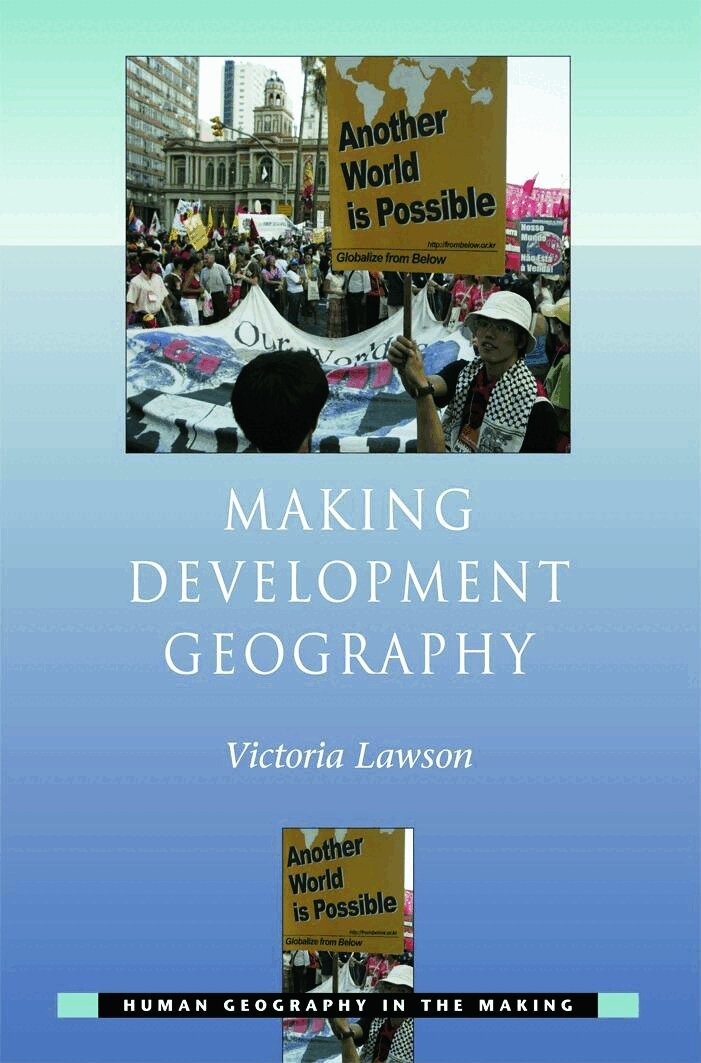
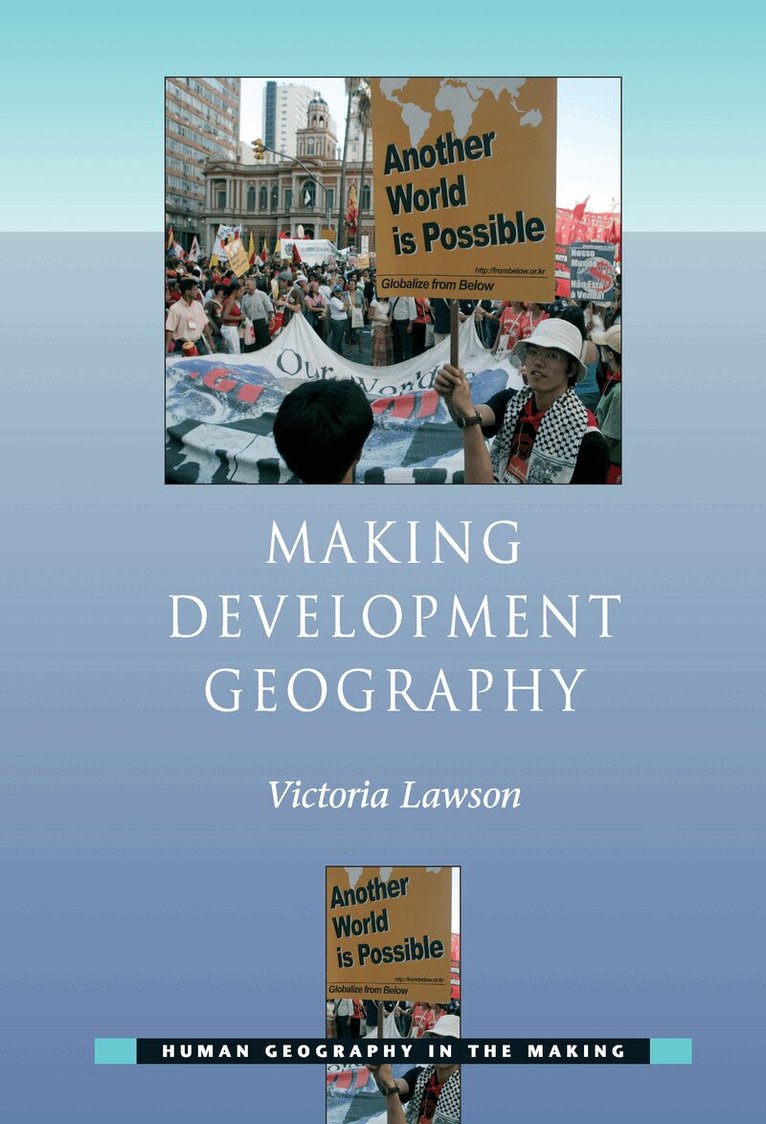
Making Development Geography is a timely new book which introduces readers to the major themes and debates in development geography. It argues cogently that the field is engaged in an ongoing process of reinventing itself as critical development geography, and highlights issues such as identity, globalization, social movements and sexuality. Readers are guided through the key concepts and developments of the last 50 years, surveying the themes of Keynesianism, Marxism and post-colonialism. At the same time, each chapter uses international examples to discuss important contemporary issues so that the real-world applications of theory can be understood.This enlightening book offers a comprehensive introduction to the fundamental debates for anyone with an interest in development issues.
1 355 kr
Skickas inom 5-8 vardagar
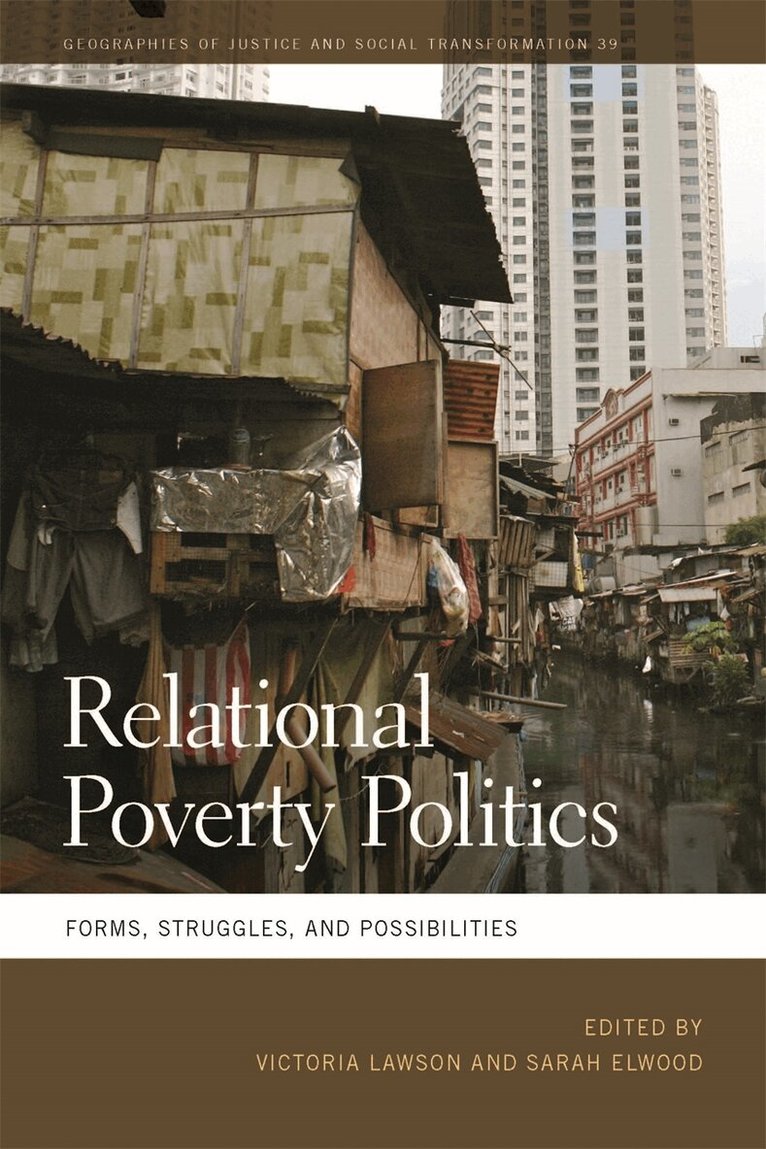
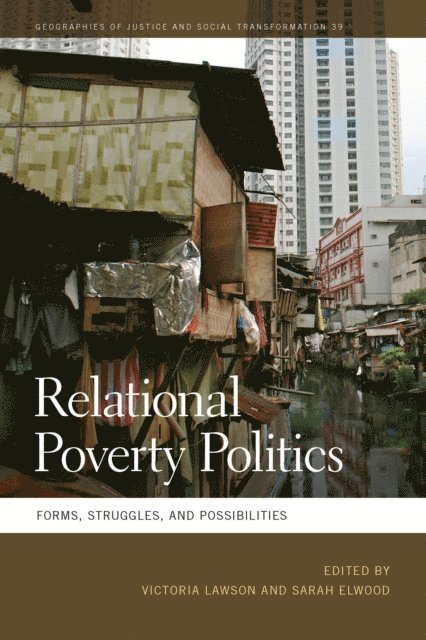
This collection examines the power and transformative potential of movements that fight against poverty and inequality. Broadly, poverty politics are struggles to define who is poor, what it means to be poor, what actions might be taken, and who should act. These movements shape the sociocultural and political economic structures that constitute poverty and privilege as material and social relations. Editors Victoria Lawson and Sarah Elwood focus on the politics of insurgent movements against poverty and inequality in seven countries (Argentina, India, Brazil, South Africa, Thailand, Singapore, and the United States).The contributors explore theory and practice in alliance politics, resistance movements, the militarized repression of justice movements, global counterpublics, and political theater. These movements reflect the diversity of poverty politics and the relations between bureaucracies and antipoverty movements. They discuss work done by mass and other types of mobilizations across multiple scales; forms of creative and political alliance across axes of difference; expressions and exercises of agency by people named as poor; and the kinds of rights and other claims that are made in different spaces and places.Relational Poverty Politics advocates for poverty knowledge grounded in relational perspectives that highlight the adversarial relationship of poverty to privilege, as well as the possibility for alliances across different groups. It incorporates current research in the field and demonstrates how relational poverty knowledge is best seen as a model for understanding how theory is derivative of action as much as the other way around. The book lays a foundation for realistic change that can directly attack poverty at its roots.Contributors: Antonádia Borges, Dia Da Costa, Sarah Elwood, David Boarder Giles, Jim Glassman, Victoria Lawson, Felipe Magalhães, Jeff Maskovsky, Richa Nagar, Genevieve Negrón-Gonzales, LaShawnDa Pittman, Frances Fox Piven, Preeti Sampat, Thomas Swerts, and Junjia Ye.
487 kr
Skickas inom 5-8 vardagar
This collection examines the power and transformative potential of movements that fight against poverty and inequality. Broadly, poverty politics are struggles to define who is poor, what it means to be poor, what actions might be taken, and who should act. These movements shape the sociocultural and political economic structures that constitute poverty and privilege as material and social relations. Editors Victoria Lawson and Sarah Elwood focus on the politics of insurgent movements against poverty and inequality in seven countries (Argentina, India, Brazil, South Africa, Thailand, Singapore, and the United States).The contributors explore theory and practice in alliance politics, resistance movements, the militarized repression of justice movements, global counterpublics, and political theater. These movements reflect the diversity of poverty politics and the relations between bureaucracies and antipoverty movements. They discuss work done by mass and other types of mobilizations across multiple scales; forms of creative and political alliance across axes of difference; expressions and exercises of agency by people named as poor; and the kinds of rights and other claims that are made in different spaces and places.Relational Poverty Politics advocates for poverty knowledge grounded in relational perspectives that highlight the adversarial relationship of poverty to privilege, as well as the possibility for alliances across different groups. It incorporates current research in the field and demonstrates how relational poverty knowledge is best seen as a model for understanding how theory is derivative of action as much as the other way around. The book lays a foundation for realistic change that can directly attack poverty at its roots.Contributors: Antonádia Borges, Dia Da Costa, Sarah Elwood, David Boarder Giles, Jim Glassman, Victoria Lawson, Felipe Magalhães, Jeff Maskovsky, Richa Nagar, Genevieve Negrón-Gonzales, LaShawnDa Pittman, Frances Fox Piven, Preeti Sampat, Thomas Swerts, and Junjia Ye.
1 980 kr
Skickas inom 3-6 vardagar
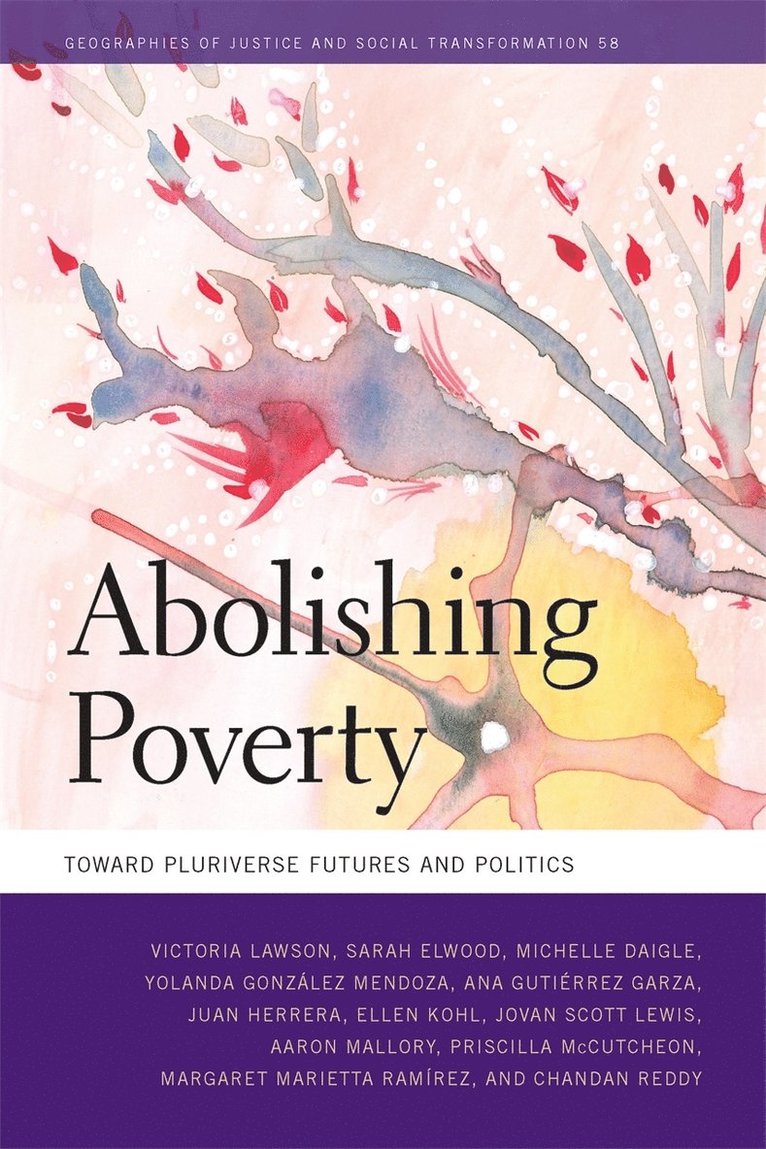
Abolishing Poverty argues for a project of relationality that refuses the whiteness of liberal poverty studies and instead centers critiques of the poverty relation and political futures disavowed under liberal governance. In disrupting poverty thinking, the author collective opens space for diverse frameworks for understanding impoverishment and articulating antiracist knowledges and political visions. The book explores new infrastructures of possibilities and political solidarities rooted in accountable relations to each other and from flights to the future that animate diverse communities.This book is boundary and genre crossing, with broad appeal to scholars of such disciplines as human geography, ethnic studies, decolonial theory, and feminist studies. As a volume, the work is unique in its primary field of human geography in the form of its making, its collective authorship, and its investigation of politics that abolish poverty thinking and engage in activism against the poverty relation produced through settler colonialism, heteropatriarchy, white supremacy, and capitalist exploitation.
488 kr
Skickas inom 3-6 vardagar
Abolishing Poverty argues for a project of relationality that refuses the whiteness of liberal poverty studies and instead centers critiques of the poverty relation and political futures disavowed under liberal governance. In disrupting poverty thinking, the author collective opens space for diverse frameworks for understanding impoverishment and articulating antiracist knowledges and political visions. The book explores new infrastructures of possibilities and political solidarities rooted in accountable relations to each other and from flights to the future that animate diverse communities.This book is boundary and genre crossing, with broad appeal to scholars of such disciplines as human geography, ethnic studies, decolonial theory, and feminist studies. As a volume, the work is unique in its primary field of human geography in the form of its making, its collective authorship, and its investigation of politics that abolish poverty thinking and engage in activism against the poverty relation produced through settler colonialism, heteropatriarchy, white supremacy, and capitalist exploitation.
7 607 kr
Skickas inom 3-6 vardagar
Superb! How refreshing to see a Handbook that eschews convention and explores the richness and diversity of the geographical imagination in such stimulating and challenging ways. - Peter Dicken, University of Manchester "Stands out as an innovative and exciting contribution that exceeds the genre." - Sallie A. Marston, University of Arizona "Captures wonderfully the richness and complexity of the worlds that human beings inhabit... This is a stand-out among handbooks!" - Lily Kong, National University of Singapore "This wonderfully unconventional book demonstrates human geography’s character and significance not by marching through traditional themes, but by presenting a set of geographical essays on basic ideas, practices, and concerns." - Alexander B. Murphy, University of Oregon "This SAGE Handbook stands out for its capacity to provoke the reader to think anew about human geography ... essays that offer some profoundly original insights into what it means to engage geographically with the world." - Eric Sheppard, UCLA Published in association with the journal Progress in Human Geography, edited and written by the principal scholars in the discipline, this Handbook demonstrates the difference that thinking about the world geographically makes. Each section considers how human geography shapes the world, interrogates it, and intervenes in it. It includes a major retrospective and prospective introductory essay, with three substantive sections on: Imagining Human Geographies Practising Human Geographies Living Human Geographies The Handbook also has an innovative multimedia component of conversations about key issues in human geography – as well as an overview of human geography from the Editors. A key reference for any scholar interested in questions about what difference it makes to think spatially or geographically about the world, this Handbook is a rich and textured statement about the geographical imagination.
2 267 kr
Skickas inom 10-15 vardagar
Making Development Geography is a timely new book which introduces readers to the major themes and debates in development geography. It argues cogently that the field is engaged in an ongoing process of reinventing itself as critical development geography, and highlights issues such as identity, globalization, social movements and sexuality. Readers are guided through the key concepts and developments of the last 50 years, surveying the themes of Keynesianism, Marxism and post-colonialism. At the same time, each chapter uses international examples to discuss important contemporary issues so that the real-world applications of theory can be understood.This enlightening book offers a comprehensive introduction to the fundamental debates for anyone with an interest in development issues.