Victoria Pitts-Taylor - Böcker
Visar alla böcker från författaren Victoria Pitts-Taylor. Handla med fri frakt och snabb leverans.
7 produkter
7 produkter
1 063 kr
Tillfälligt slut
There are Many books apply neuroscience to social issues, using neuroscience to explain behaviors and human experiences (hate and love, criminal behavior, learning, and so on.) These are books that show the relevance of neuroscience for other fields in the social sciences and humanities. However there are still very few books that apply sociological and cultural frameworks to understand the social impact of neuroscience, and even fewer that try to understand ‘practical’ neuroscience or neuroscience as it is being used and experienced in everyday life. This book examines how the self is affected by the age of the brain. It offers a critical perspective on the rise of neuroscience.
283 kr
Tillfälligt slut
There are Many books apply neuroscience to social issues, using neuroscience to explain behaviors and human experiences (hate and love, criminal behavior, learning, and so on.) These are books that show the relevance of neuroscience for other fields in the social sciences and humanities. However there are still very few books that apply sociological and cultural frameworks to understand the social impact of neuroscience, and even fewer that try to understand ‘practical’ neuroscience or neuroscience as it is being used and experienced in everyday life. This book examines how the self is affected by the age of the brain. It offers a critical perspective on the rise of neuroscience.
381 kr
Skickas inom 5-8 vardagar
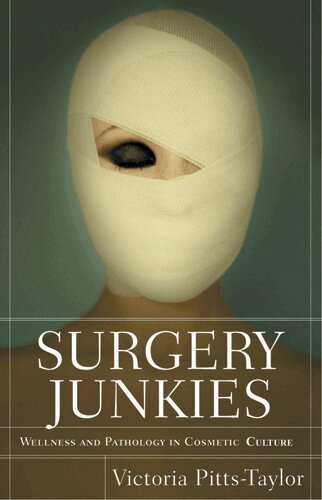
Despite the increasing prevalence of cosmetic surgery, there are still those who identify individuals who opt for bodily modifications as dupes of beauty culture, as being in conflict with feminist ideals, or as having some form of psychological weakness. In this ground-breaking book, Victoria Pitts-Taylor examines why we consider some cosmetic surgeries to be acceptable or even beneficial and others to be unacceptable and possibly harmful. Drawing on years of research, in-depth interviews with surgeons and psychiatrists, analysis of newspaper articles, legal documents, and television shows, and her own personal experience with cosmetic surgery, Pitts-Taylor brings new perspectives to the promotion of "extreme" makeovers on television, the medicalization of "surgery addiction," the moral and political interrogation that many patients face, and feminist debates on the topic. Pitts-Taylor makes a compelling argument that the experience, meanings, and motivations for cosmetic surgery are highly social and, in doing so, provides a much needed "makeover" of our cultural understanding of cosmetic surgery.
1 306 kr
Skickas inom 7-10 vardagar
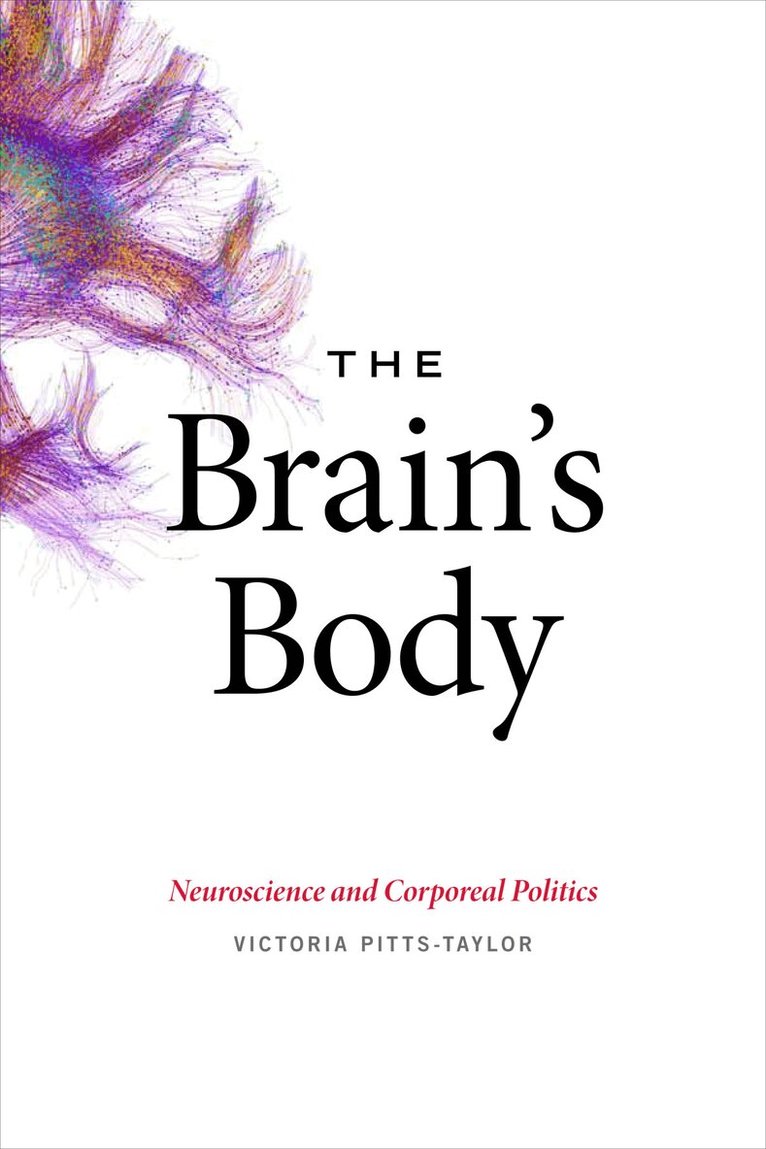
In The Brain's Body Victoria Pitts-Taylor brings feminist and critical theory to bear on new development in neuroscience to demonstrate how power and inequality are materially and symbolically entangled with neurobiological bodies. Pitts-Taylor is interested in how the brain interacts with and is impacted by social structures, especially in regard to race, class, gender, sexuality, and disability, as well as how those social structures shape neuroscientific knowledge. Pointing out that some brain scientists have not fully abandoned reductionist or determinist explanations of neurobiology, Pitts-Taylor moves beyond debates over nature and nurture to address the politics of plastic, biosocial brains. She highlights the potential of research into poverty's effects on the brain to reinforce certain notions of poor subjects and to justify particular forms of governance, while her queer critique of kinship research demonstrates the limitations of hypotheses based on heteronormative assumptions. In her exploration of the embodied mind and the "embrained" body, Pitts-Taylor highlights the inextricability of nature and culture and shows why using feminist and queer thought is essential to understanding the biosociality of the brain.
322 kr
Skickas inom 7-10 vardagar
In The Brain's Body Victoria Pitts-Taylor brings feminist and critical theory to bear on new development in neuroscience to demonstrate how power and inequality are materially and symbolically entangled with neurobiological bodies. Pitts-Taylor is interested in how the brain interacts with and is impacted by social structures, especially in regard to race, class, gender, sexuality, and disability, as well as how those social structures shape neuroscientific knowledge. Pointing out that some brain scientists have not fully abandoned reductionist or determinist explanations of neurobiology, Pitts-Taylor moves beyond debates over nature and nurture to address the politics of plastic, biosocial brains. She highlights the potential of research into poverty's effects on the brain to reinforce certain notions of poor subjects and to justify particular forms of governance, while her queer critique of kinship research demonstrates the limitations of hypotheses based on heteronormative assumptions. In her exploration of the embodied mind and the "embrained" body, Pitts-Taylor highlights the inextricability of nature and culture and shows why using feminist and queer thought is essential to understanding the biosociality of the brain.
1 058 kr
Skickas inom 10-15 vardagar
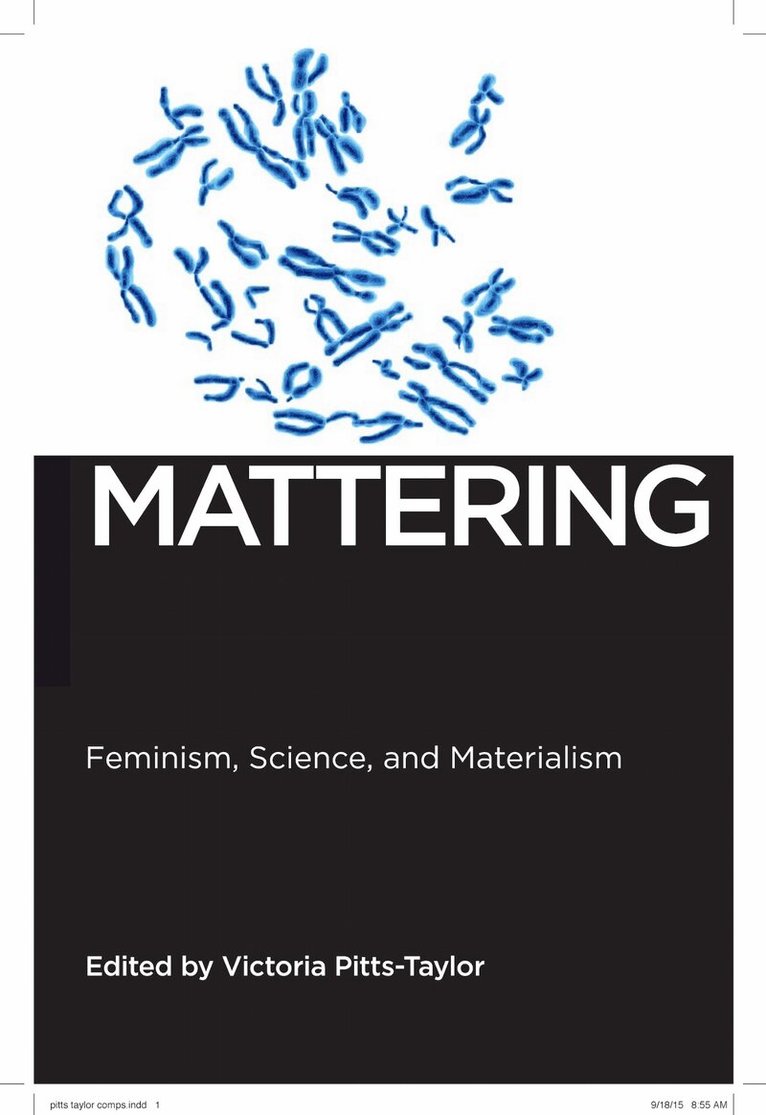
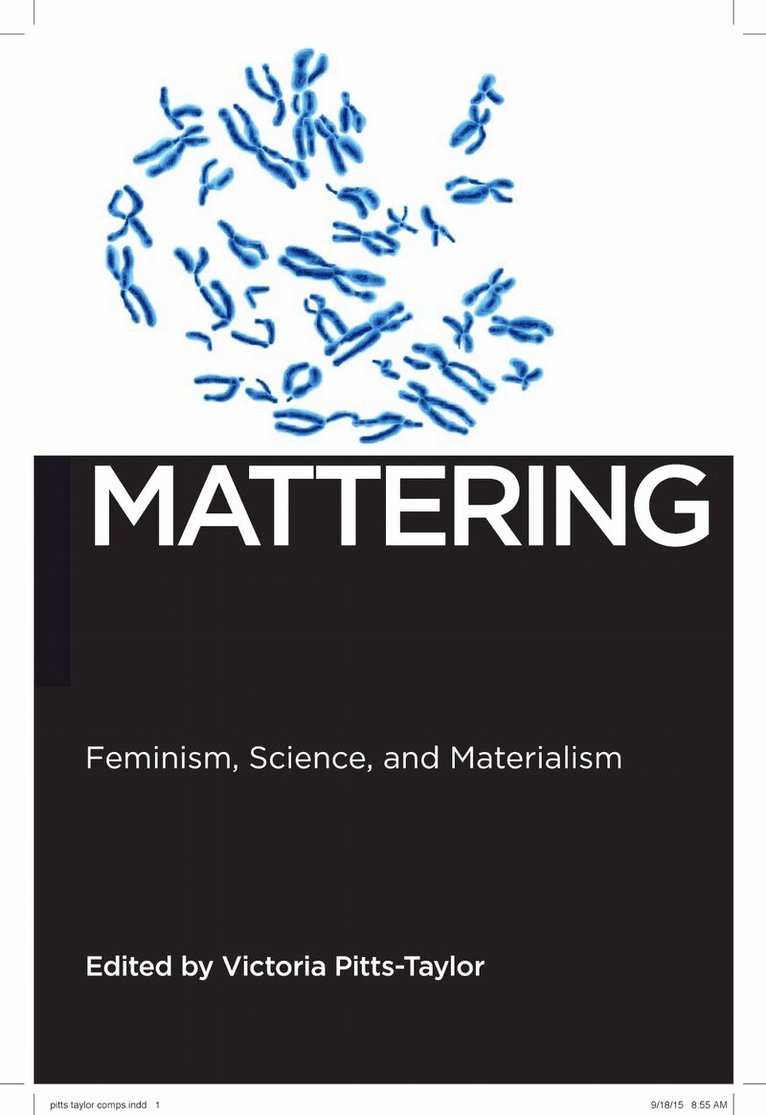
Feminists today are re-imagining nature, biology, and matter in feminist thought and critically addressing new developments in biology, physics, neuroscience, epigenetics and other scientific disciplines. Mattering, edited by noted feminist scholar Victoria Pitts-Taylor, presents contemporary feminist perspectives on the materialist or 'naturalizing' turn in feminist theory, and also represents the newest wave of feminist engagement with science. The volume addresses the relationship between human corporeality and subjectivity, questions and redefines the boundaries of human/non-human and nature/culture, elaborates on the entanglements of matter, knowledge, and practice, and addresses biological materialization as a complex and open process. This volume insists that feminist theory can take matter and biology seriously while also accounting for power, taking materialism as a point of departure to rethink key feminist issues. The contributors, an international group of feminist theorists, scientists and scholars, apply concepts in contemporary materialist feminism to examine an array of topics in science, biotechnology, biopolitics, and bioethics. These include neuralplasticity and the brain-machine interface; the use of biometrical identification technologies for transnational border control; epigenetics and the intergenerational transmission of the health effects of social stigma; ADHD and neuropharmacology; and randomized controlled trials of HIV drugs.A unique and interdisciplinary collection, Mattering presents in grounded, concrete terms the need for rethinking disciplinary boundaries and research methodologies in light of the shifts in feminist theorizing and transformations in the sciences.
352 kr
Skickas inom 7-10 vardagar
Feminists today are re-imagining nature, biology, and matter in feminist thought and critically addressing new developments in biology, physics, neuroscience, epigenetics and other scientific disciplines. Mattering, edited by noted feminist scholar Victoria Pitts-Taylor, presents contemporary feminist perspectives on the materialist or 'naturalizing' turn in feminist theory, and also represents the newest wave of feminist engagement with science. The volume addresses the relationship between human corporeality and subjectivity, questions and redefines the boundaries of human/non-human and nature/culture, elaborates on the entanglements of matter, knowledge, and practice, and addresses biological materialization as a complex and open process. This volume insists that feminist theory can take matter and biology seriously while also accounting for power, taking materialism as a point of departure to rethink key feminist issues. The contributors, an international group of feminist theorists, scientists and scholars, apply concepts in contemporary materialist feminism to examine an array of topics in science, biotechnology, biopolitics, and bioethics. These include neuralplasticity and the brain-machine interface; the use of biometrical identification technologies for transnational border control; epigenetics and the intergenerational transmission of the health effects of social stigma; ADHD and neuropharmacology; and randomized controlled trials of HIV drugs.A unique and interdisciplinary collection, Mattering presents in grounded, concrete terms the need for rethinking disciplinary boundaries and research methodologies in light of the shifts in feminist theorizing and transformations in the sciences.