Vincent Bladen – författare
Visar alla böcker från författaren Vincent Bladen. Handla med fri frakt och snabb leverans.
3 produkter
3 produkter
482 kr
Skickas inom 7-10 vardagar
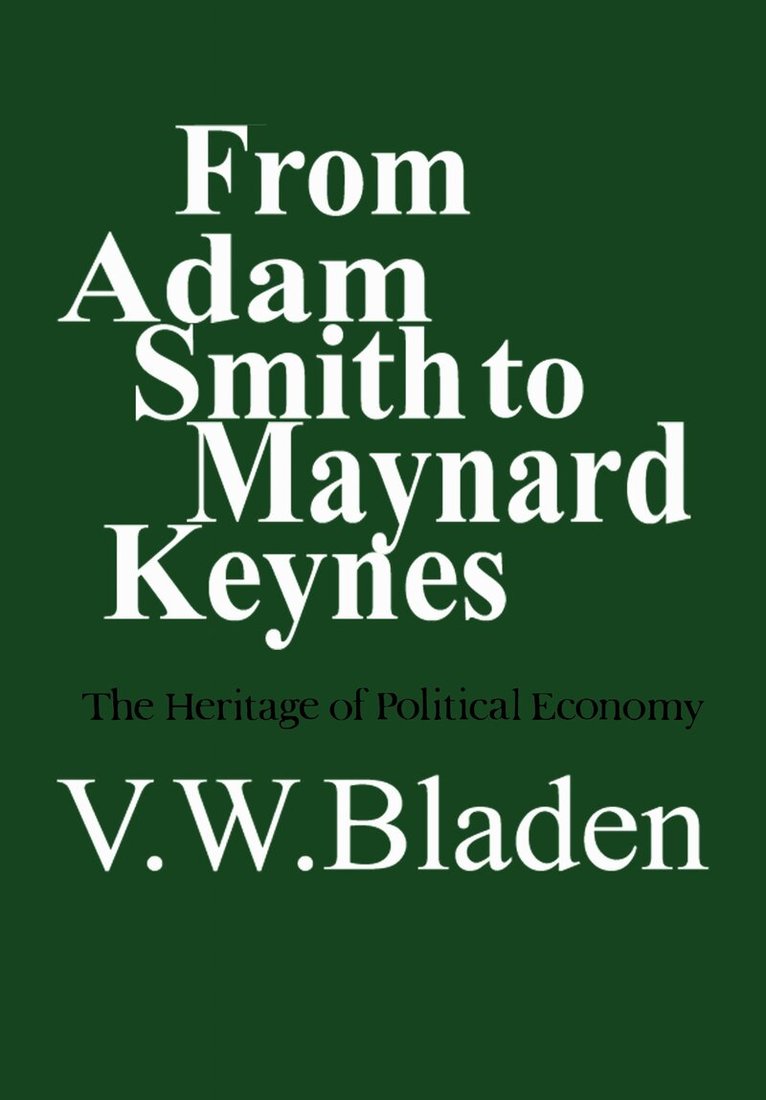
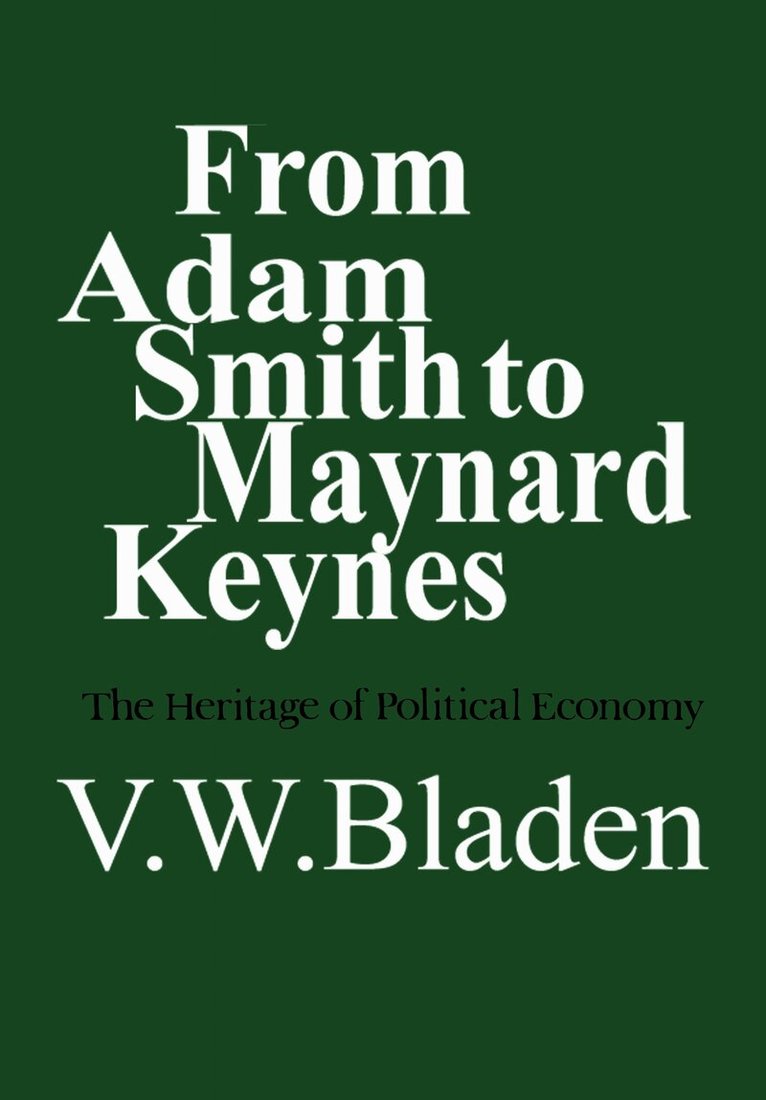
In this survey of the great exponents of the classical tradition, Vincent Bladen examines the thought and works of Adam Smith, T.R. Malthus, Henry Thornton, David Ricardo, J.S. Mill, Karl Marx, W.S. Jevons, Alfred Marshall, and John Maynard Keynes, and relates their views to modern situations. This is a personal introduction by one of Canada’s senior economists to some of the great books in the English literature of political economy. Vincent Bladen wrote it to induce an interest in and an understanding of the economic classics, in the belief that contemplation of those works will increase our understanding of current economic writing and current economic problems.For the purpose of discussing the development of ‘wealth’-the major concern of economists-Bladen defines four periods within the classical tradition, and demonstrates that in each there appeared a characteristic preoccupation with a particular area of economics. From Adam Smith to John Stuart Mill the principal concern was productivity and growth; the neoclassical economists represented by Jevons and Marshall emphasized the problems of allocation of given productive resources; depressions in the twenties and thirties and the impact of Keynesian theory led to a preoccupation with ‘employment,’ and after World War II attention shifted to ‘growth.’ Bladen is critical of previous histories of economic thought: ‘by isolating the treatment of one element in a complex and integrated system of thought they frequently misrepresent each author’s treatment of the particular element.’ In this work he attempts to show each aspect of the work of the economists he has selected in the context of an integrated whole.
231 kr
Skickas inom 7-10 vardagar
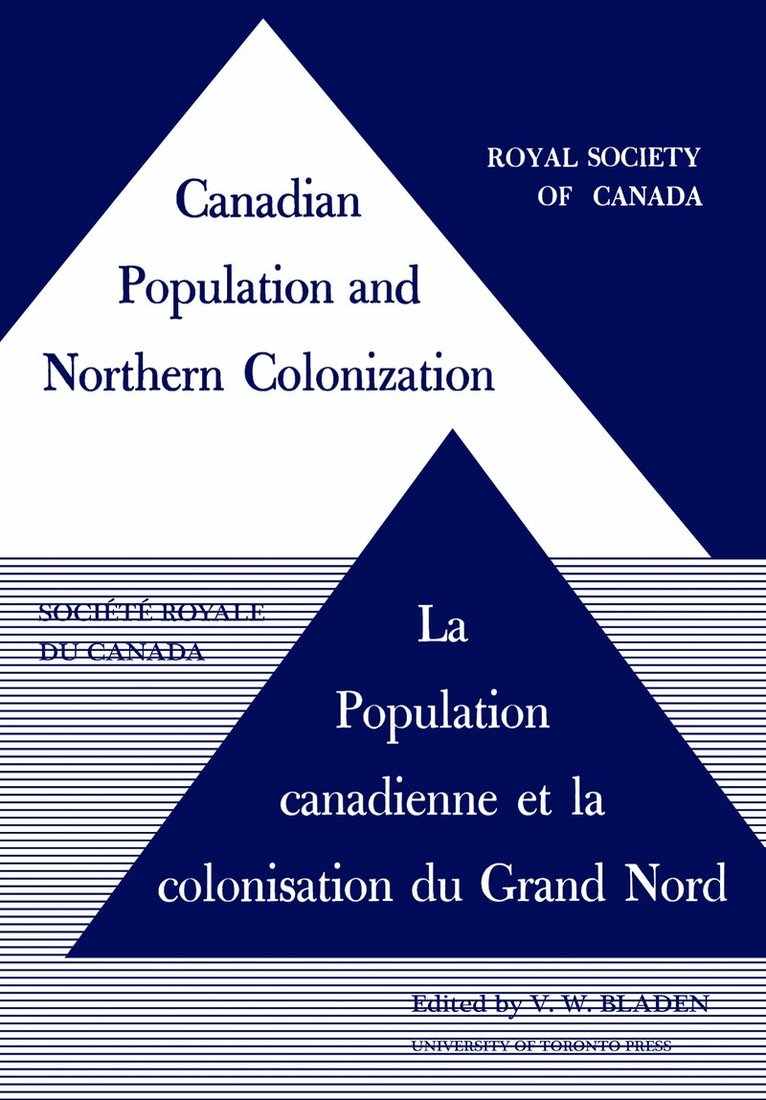
In their annual sessions the various Sections of the Royal Society are accustomed to take up for general discussion a topic of current interest and this gives Fellows and special guests from the natural sciences, the social sciences, and the humanities an opportunity for useful communication across the disciplines on an important subject.In 1961 the topic was an especially vital issue, the population explosion, and this volume, based on the papers given at the meeting, has much valuable information and many pertinent and provocative comments on this phenomenon particularly as it affects Canada.T.W.M. Cameron leads off with a general background on the causes and consequences of the population increase around the world. Then come a group of papers presenting various aspects of the population in Canada’s settled areas. Pierre Dagenais studies the growth in that population in recent years; Guy Rocher presents developments in our labour force in the 1900’s with particular reference to the older age group, to women, and to the unemployed; Jacques Henripin describes ethnic and linguistic patterns over the country; Nathan Keyfitz outlines new patterns in the birth rate and their significance. A.R.M. Lower concludes this portion of the book with a lively historical study of the effects of natural increase and waves of immigration in the French and English periods, leading on to our present “bold experiment” in Canada which assumes the “risks of a non-homogeneous, non-integral society with every value fighting it out for survival.”The second part of the book turns to those largely unsettled areas stretching away in Canada’s north and considers the potentialities of these areas as a more permanent habitat for man. With an introduction by RenÉ Pomerleau, various problems of settlement are brought forward. W. Keith Buck and D.J.F. Henderson discuss economic aspects of mineral development in the north; E.W. Humphrys, the possible use of atomic energy as a way of coping with fuel and supply; M.J. Dunbar, the prospects of support for a new population in the use natural resources contributed by the land and the sea; G. Malcolm Brown, problems of man’s acclimatization to life in a colder climate; Trevor Lloyd, the kind of settlement in the Far North which is desirable and possible given its special conditions of subsistence and transportation and economic activity. All these authors stress that any planning for a northern future “must be based on a broad, systematic and thorough scientific appraisal.”This is an important and absorbing book and it will give both specialist and general reader much to think about.
363 kr
Skickas inom 7-10 vardagar
Newly revised by the author (1956), this text-book for beginning students is also designed for general readers who want to know what economics is and how economists think. It analyses the size and composition of the wage-earner in modern industry, Canadian public policy in relation to combines, and the the social problems of the special problems of the Canadian wheat-growing and newsprint industries. "...an interesting, instructive, and valuable book full of essential information."