Vinodh Venkatesh - Böcker
Visar alla böcker från författaren Vinodh Venkatesh. Handla med fri frakt och snabb leverans.
6 produkter
6 produkter
601 kr
Skickas inom 3-6 vardagar
Analyzes contemporary superhero-themed cinema, television, and web series in Latin America.Capitán Latinoamérica is the first study to examine the unique contribution of Latin American cinema, television, and web series to the global superhero boom. Through an analysis of superhero-themed media from Mexico to Argentina, Vinodh Venkatesh argues that contemporary Latin American superheroes are a hybrid of regional tropes and figures such as the famed luchador, El Chapulín Colorado, and North American blockbuster characters from the DC and Marvel universes. These superheroes channel anxieties specific to their respective national contexts. In Chile, for example, Mirageman rehashes and works through the Pinochet dictatorship and its traumatic aftermath; in Honduras, Chinche Man confronts neoliberalism and gang violence. In Colombia's El Man, in turn, rapid urbanization and drug cartels are the central concerns, whereas corruption and the political machinations of the state feature most prominently in the television and web series Capitán Centroamérica. While the Latin American superhero genre may be superficially characterized by low budgets and kitsch aesthetics, it also poses profound challenges to the social, political, and economic status quo. Covering a wide variety of media bookended by wrestling films from the early 1960s and multimedia productions from the 2010s, Capitán Latinoamérica offers a comprehensive introduction to, and assessment of, the state of the superhero in Latin America.
1 545 kr
Skickas inom 3-6 vardagar
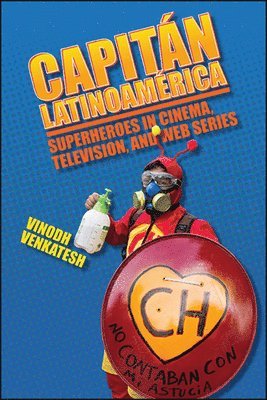
Analyzes contemporary superhero-themed cinema, television, and web series in Latin America.Capitán Latinoamérica is the first study to examine the unique contribution of Latin American cinema, television, and web series to the global superhero boom. Through an analysis of superhero-themed media from Mexico to Argentina, Vinodh Venkatesh argues that contemporary Latin American superheroes are a hybrid of regional tropes and figures such as the famed luchador, El Chapulín Colorado, and North American blockbuster characters from the DC and Marvel universes. These superheroes channel anxieties specific to their respective national contexts. In Chile, for example, Mirageman rehashes and works through the Pinochet dictatorship and its traumatic aftermath; in Honduras, Chinche Man confronts neoliberalism and gang violence. In Colombia's El Man, in turn, rapid urbanization and drug cartels are the central concerns, whereas corruption and the political machinations of the state feature most prominently in the television and web series Capitán Centroamérica. While the Latin American superhero genre may be superficially characterized by low budgets and kitsch aesthetics, it also poses profound challenges to the social, political, and economic status quo. Covering a wide variety of media bookended by wrestling films from the early 1960s and multimedia productions from the 2010s, Capitán Latinoamérica offers a comprehensive introduction to, and assessment of, the state of the superhero in Latin America.
1 499 kr
Skickas inom 3-6 vardagar
Wide-ranging, in-depth analysis of Spanish-language television fiction after the 2008 global financial crisis.Crisis TV addresses the motif of crisis that has come to dominate contemporary Hispanic televisual production since 2008 and the onset of the global financial crisis. In almost unprecedented fashion, the global economy came to a standstill, reshaping both geopolitical organizations and, more importantly, the lives of billions across the globe. The Great Recession, sociopolitical instabilities, the rise of extremist political parties and governments, and a worldwide pandemic have resulted in a mode of crisis that pervades contemporary television fiction. 2008 also marks a revolution in television, as local and global streaming services began to gain market share and even overtake traditional over-the-air transmission. The essays in Crisis TV identify and analyze the narrative tropes and aesthetic qualities of Hispanic television post-2008 to understand how different regions and genres have negotiated these intersecting crises and changing dynamics in production, dissemination, and consumption.
371 kr
Skickas
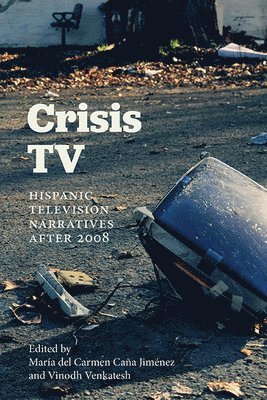
Wide-ranging, in-depth analysis of Spanish-language television fiction after the 2008 global financial crisis.Crisis TV addresses the motif of crisis that has come to dominate contemporary Hispanic televisual production since 2008 and the onset of the global financial crisis. In almost unprecedented fashion, the global economy came to a standstill, reshaping both geopolitical organizations and, more importantly, the lives of billions across the globe. The Great Recession, sociopolitical instabilities, the rise of extremist political parties and governments, and a worldwide pandemic have resulted in a mode of crisis that pervades contemporary television fiction. 2008 also marks a revolution in television, as local and global streaming services began to gain market share and even overtake traditional over-the-air transmission. The essays in Crisis TV identify and analyze the narrative tropes and aesthetic qualities of Hispanic television post-2008 to understand how different regions and genres have negotiated these intersecting crises and changing dynamics in production, dissemination, and consumption.
1 054 kr
Skickas inom 10-15 vardagar
Recent critically and commercially acclaimed Latin American films such as XXY, Contracorriente, and Plan B create an affective and bodily connection with viewers that elicits in them an emotive and empathic relationship with queer identities. Referring to these films as New MaricÓn Cinema, Vinodh Venkatesh argues that they represent a distinct break from what he terms MaricÓn Cinema, or a cinema that deals with sex and gender difference through an ethically and visually disaffected position, exemplified in films such as Fresa y chocolate, No se lo digas a nadie, and El lugar sin lÍmites.Covering feature films from Argentina, Chile, Cuba, Ecuador, Mexico, Peru, the United States, and Venezuela, New MaricÓn Cinema is the first study to contextualize and analyze recent homo-/trans-/intersexed-themed cinema in Latin America within a broader historical and aesthetic genealogy. Working with theories of affect, circulation, and orientations, Venkatesh examines key scenes in the work of auteurs such as Marco Berger, Javier Fuentes-LeÓn, and Julia Solomonoff and in films including Antes que anochezca and Y tu mamÁ tambiÉn to show how their use of an affective poetics situates and regenerates viewers in an ethically productive cinematic space. He further demonstrates that New MaricÓn Cinema has encouraged the production of “gay friendly” commercial films for popular audiences, which reflects wider sociocultural changes regarding gender difference and civil rights that are occurring in Latin America.
319 kr
Skickas inom 7-10 vardagar
Recent critically and commercially acclaimed Latin American films such as XXY, Contracorriente, and Plan B create an affective and bodily connection with viewers that elicits in them an emotive and empathic relationship with queer identities. Referring to these films as New MaricÓn Cinema, Vinodh Venkatesh argues that they represent a distinct break from what he terms MaricÓn Cinema, or a cinema that deals with sex and gender difference through an ethically and visually disaffected position, exemplified in films such as Fresa y chocolate, No se lo digas a nadie, and El lugar sin lÍmites.Covering feature films from Argentina, Chile, Cuba, Ecuador, Mexico, Peru, the United States, and Venezuela, New MaricÓn Cinema is the first study to contextualize and analyze recent homo-/trans-/intersexed-themed cinema in Latin America within a broader historical and aesthetic genealogy. Working with theories of affect, circulation, and orientations, Venkatesh examines key scenes in the work of auteurs such as Marco Berger, Javier Fuentes-LeÓn, and Julia Solomonoff and in films including Antes que anochezca and Y tu mamÁ tambiÉn to show how their use of an affective poetics situates and regenerates viewers in an ethically productive cinematic space. He further demonstrates that New MaricÓn Cinema has encouraged the production of “gay friendly” commercial films for popular audiences, which reflects wider sociocultural changes regarding gender difference and civil rights that are occurring in Latin America.