Violeta Davoliūtė - Böcker
Visar alla böcker från författaren Violeta Davoliūtė. Handla med fri frakt och snabb leverans.
5 produkter
5 produkter
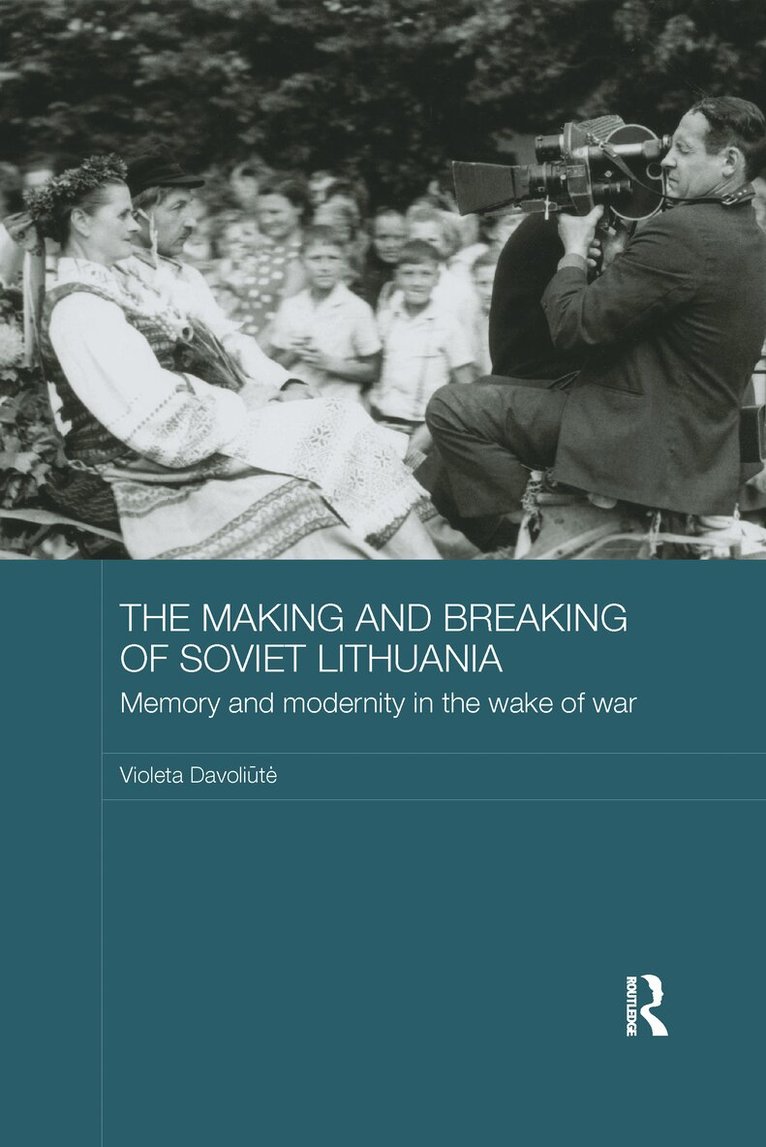
Making and Breaking of Soviet Lithuania
Memory and Modernity in the Wake of War
Inbunden, Engelska, 2013
2 236 kr
Skickas inom 10-15 vardagar
Appearing on the world stage in 1918, Lithuania suffered numerous invasions, border changes and large scale population displacements.The successive occupations of Stalin in 1940 and Hitler in 1941, mass deportations to the Gulag and the elimination of the Jewish community in the Holocaust gave the horrors of World War II a special ferocity. Moreover, the fighting continued after 1945 with the anti-Soviet insurrection, crushed through mass deportations and forced collectivization in 1948-1951. At no point, however, did the process of national consolidation take a pause, making Lithuania an improbably representative case study of successful nation-building in this troubled region. As postwar reconstruction gained pace, ethnic Lithuanians from the countryside – the only community to remain after the war in significant numbers – were mobilized to work in the cities. They streamed into factory and university alike, creating a modern urban society, with new elites who had a surprising degree of freedom to promote national culture. This book describes how the national cultural elites constructed a Soviet Lithuanian identity against a backdrop of forced modernization in the fifties and sixties, and how they subsequently took it apart by evoking the memory of traumatic displacement in the seventies and eighties, later emerging as prominent leaders of the popular movement against Soviet rule.
Making and Breaking of Soviet Lithuania
Memory and Modernity in the Wake of War
Häftad, Engelska, 2016
690 kr
Skickas inom 10-15 vardagar
Appearing on the world stage in 1918, Lithuania suffered numerous invasions, border changes and large scale population displacements.The successive occupations of Stalin in 1940 and Hitler in 1941, mass deportations to the Gulag and the elimination of the Jewish community in the Holocaust gave the horrors of World War II a special ferocity. Moreover, the fighting continued after 1945 with the anti-Soviet insurrection, crushed through mass deportations and forced collectivization in 1948-1951. At no point, however, did the process of national consolidation take a pause, making Lithuania an improbably representative case study of successful nation-building in this troubled region. As postwar reconstruction gained pace, ethnic Lithuanians from the countryside – the only community to remain after the war in significant numbers – were mobilized to work in the cities. They streamed into factory and university alike, creating a modern urban society, with new elites who had a surprising degree of freedom to promote national culture. This book describes how the national cultural elites constructed a Soviet Lithuanian identity against a backdrop of forced modernization in the fifties and sixties, and how they subsequently took it apart by evoking the memory of traumatic displacement in the seventies and eighties, later emerging as prominent leaders of the popular movement against Soviet rule.
1 422 kr
Skickas inom 10-15 vardagar
This book analyses photographic and cinematographic representations of war and its memorialisation rituals in the period of late modernity from the perspectives of cultural sociology, philosophy, art theory and film studies. It reveals how the experience of war trauma takes root in everydayness and shows how artists try to question the ‘normality’ of the everyday, to actualise the memory of war trauma, to rethink the contrasting experiences of the time of war and everydayness, and to oppose the imposed historical narratives. The new representations are analysed by developing theories of war as a ‘magic spectacle’, also by using such concepts as spectres, triumph and trauma, collective social catastrophes, forensic architecture and others.
1 422 kr
Skickas inom 10-15 vardagar
It reveals how the experience of war trauma takes root in everydayness and shows how artists try to question the ‘normality’ of the everyday, to actualise the memory of war trauma, to rethink the contrasting experiences of the time of war and everydayness, and to oppose the imposed historical narratives.
1 860 kr
Skickas inom 10-15 vardagar
This collected volume offers an original perspective on the Baltic region by examining the intricate relationships between its diverse ethnic groups from the mid-nineteenth century to the present. Rather than focusing solely on national narratives or comparisons of historical development, the book analyzes ethnic relations through the lenses of identity, governance, empire, and violence. The nearly constant redrawing of geographic borders and boundaries among communities during this period destabilized fixed identities, generating novel, hybrid ways of self-identification along with a hardening of oppositions. Innovative forms of coexistence came with violent, sometimes genocidal conflicts. The contributors explore topics such as evolving senses of belonging, the impact of imperial and Soviet rule, instances of cooperation and conflict, and the legacies of historical trauma. By incorporating new sources and interdisciplinary approaches, they update traditional understandings of nations and nationalism in the Baltic region and provide insights relevant to similar regions.