Vladimir Grechka – författare
Visar alla böcker från författaren Vladimir Grechka. Handla med fri frakt och snabb leverans.
2 produkter
2 produkter
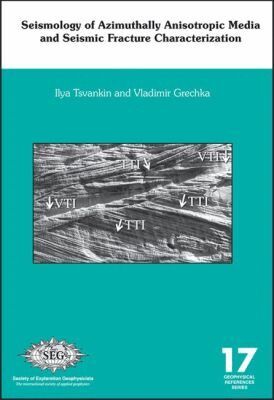
Seismology of Azimuthally Anisotropic Media and Seismic Fracture Characterization
Inbunden, Engelska, 2011
1 526 kr
Skickas inom 5-8 vardagar
Because most sedimentary rocks encountered in oil and gas exploration are effectively anisotropic, it is imperative to properly estimate seismic anisotropy and incorporate it into data-processing and imaging algorithms. Seismology of Azimuthally Anisotropic Media and Seismic Fracture Characterization (SEG Geophysical References Series No. 17) presents a systematic analysis of seismic signatures for azimuthally anisotropic media and describes anisotropic inversion/processing methods for wide-azimuth reflection data and VSP (vertical seismic profiling) surveys. The main focus is on kinematic parameter-estimation techniques operating with P-waves as well as with the combination of PP and PS (mode-converted) data. The part devoted to prestack amplitudes includes azimuthal AVO (amplitude variation with offset) analysis and a concise treatment of attenuation coefficients, which are highly sensitive to the presence of anisotropy. Discussion of fracture characterization is based on modern effective media theories and illustrates both the potential and limitations of seismic methods. Field-data examples highlight the improvements achieved by accounting for anisotropy in seismic processing, imaging, and fracture detection.
1 593 kr
Skickas inom 5-8 vardagar
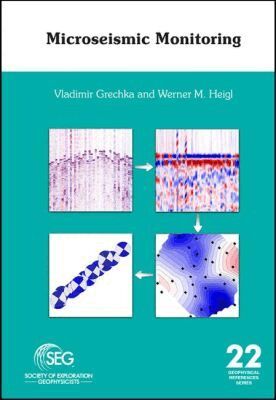
Over the past decade, microseismic monitoring, a technology used to evaluate the completions of wells drilled to produce hydrocarbons from unconventional reservoirs, has grown increasingly popular among oil and gas companies. Microseismic Monitoring, by Vladimir Grechka and Werner M. Heigl, presents a thorough description of how to process microseismic data and the underlying theory, of what can and cannot be inferred, and to what level of certainty. The layout of the book follows the passage of a seismic wave – from a source triggered by hydraulic stimulation, through hydrocarbon-bearing formations, towards motion sensors. The analysis of various approaches to harvesting the source-related information from microseismic records has singled out the accuracy of the velocity model as the most critical ingredient for the quality of microseismic deliverables and our understanding of the information contained in those. An accurate velocity model, fully accounting for the strong elastic anisotropy of hydraulically fractured shales, is a prerequisite for obtaining precise event hypocenters and interpretable seismic moment tensors. The ray theory complemented by its modern extensions, the paraxial ray tracing and Frechet ray tracing, provides the only practical means available today for building such models. This book was written for geophysicists interested in learning advanced microseismic data-processing techniques.