
Vladimir I. Bakhmutov – författare
Visar alla böcker från författaren Vladimir I. Bakhmutov. Handla med fri frakt och snabb leverans.
6 produkter
6 produkter
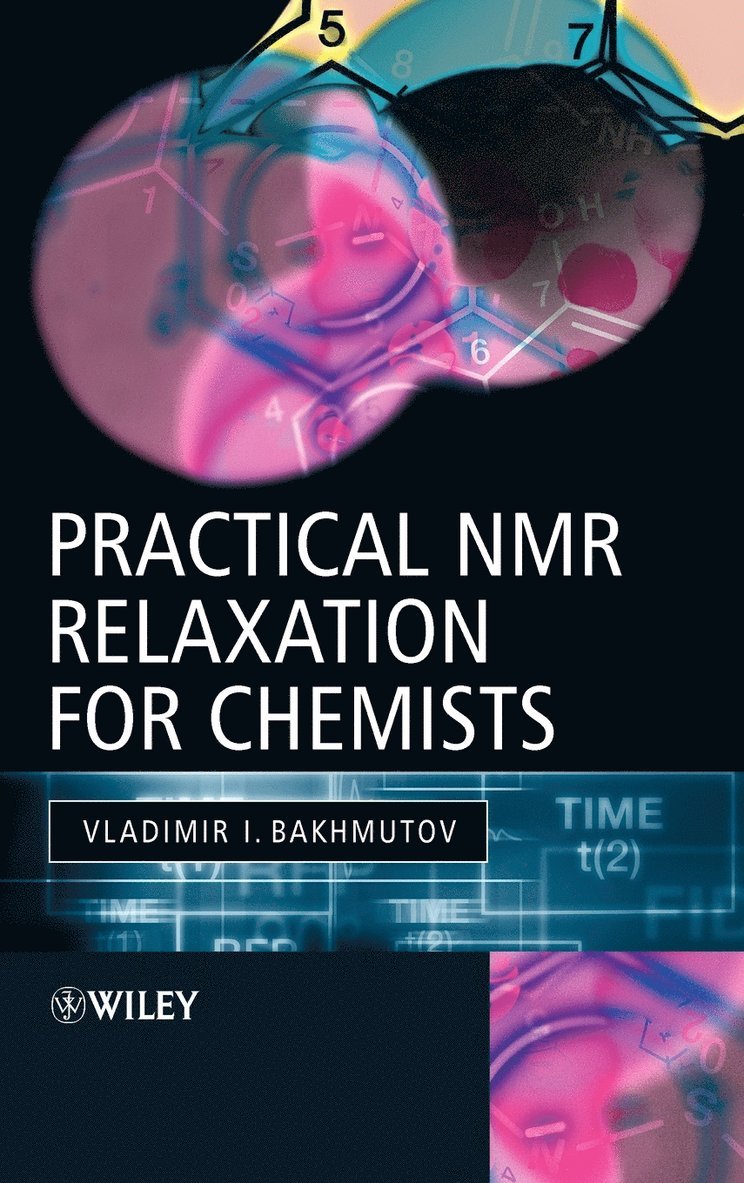
2 480 kr
Skickas inom 5-8 vardagar
This book demonstrates how NMR relaxation can be applied for structural diagnostics of chemical compounds, recognition of weak intermolecular interactions, determinations of internuclear distances and lengths of chemical bonds when compounds under investigation can exist only in solutions. Written as a textbook for chemists, demanding little background in physics and NMRIts practical approach helps the reader to apply the techniques in the labFirst book to teach NMR Relaxation techniques to chemists
1 065 kr
Skickas inom 5-8 vardagar
This book demonstrates how NMR relaxation can be applied for structural diagnostics of chemical compounds, recognition of weak intermolecular interactions, determinations of internuclear distances and lengths of chemical bonds when compounds under investigation can exist only in solutions. Written as a textbook for chemists, demanding little background in physics and NMRIts practical approach helps the reader to apply the techniques in the labFirst book to teach NMR Relaxation techniques to chemists
2 156 kr
Skickas inom 5-8 vardagar
This definitive reference consolidates current knowledge on dihydrogen bonding, emphasizing its role in organizing interactions in different chemical reactions and molecular aggregations. After an overview, it analyzes the differences between dihydrogen bonds, classical hydrogen bonds, and covalent bonds. It describes dihydrogen bonds as intermediates in intramolecular and intermolecular proton transfer reactions. It describes dihydrogen bonding in the solid-state, the gas phase, and in solution. This is the premier reference for physical chemists, biochemists, biophysicists, and chemical engineers.
2 752 kr
Skickas inom 10-15 vardagar
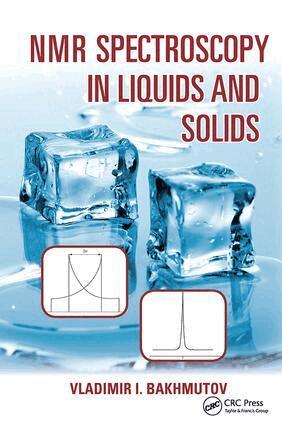
NMR Spectroscopy in Liquids and Solids provides an introduction of the general concepts behind Nuclear Magnetic Resonance (NMR) and its applications, including how to perform adequate NMR experiments and interpret data collected in liquids and solids to characterize molecule systems in terms of their structure and dynamics. The book is composed of ten chapters. The first three chapters consider the theoretical basis of NMR spectroscopy, the theory of NMR relaxation, and the practice of relaxation measurements. The middle chapters discuss the general aspects of molecular dynamics and their relationships to NMR, NMR spectroscopy and relaxation studies in solutions, and special issues related to NMR in solutions. The remaining chapters introduce general principles and strategies involved in solid-state NMR studies, provide examples of applications of relaxation for the determination of molecular dynamics in diamagnetic solids, and discuss special issues related to solid state NMR including NMR relaxation in paramagnetic solids. All chapters are accompanied by references and recommended literature for further reading. Many practical examples of multinuclear NMR and relaxation experiments and their interpretations are also presented. The book is ideal for scientists new to NMR, students, and investigators working in the areas of chemistry, biochemistry, biology, pharmaceutical sciences, or materials science.
1 929 kr
Skickas inom 10-15 vardagar
Solid-state NMR is a powerful physical method widely applied in modern fundamental and applied science, medicine, and industry. Its role is particularly valuable in materials chemistry due to the capability of solid-state NMR to rapidly solve tasks connected with structural descriptions of complex systems on macro and/or molecular levels, and the identification of the dynamics often responsible for complex systems mechanical properties. Written for non-specialists, Solid-State NMR in Materials Science: Principles and Applications introduces the general physical principles of pulsed NMR, by including elements of the theory and practice in the registration of NMR signals, and by explaining different NMR equipment. After the preliminaries, the book covers: The theory and features of solid-state NMR and nuclear relaxation in solids, including dynamics of materialsDifferent materials, diamagnetic and paramagnetic, from metals and metal clusters to amorphous compositesThe methodology of collection and interpretations of solid-state NMR data, including strategies and criteria for structural characterizations of different materials Practical examples of multinuclear NMR and relaxation experiments as well as interpretations of data obtained Numerous solid-state NMR experiments performed for various materials to evaluate their structure and dynamicsWritten in clear and simple language, this book includes clear illustrations, numerous examples, and detailed bibliographies. It an excellent reference not only for young and experienced researchers, but also for students interested in a future in materials science.
940 kr
Skickas inom 10-15 vardagar
NMR Spectroscopy in Liquids and Solids provides an introduction of the general concepts behind Nuclear Magnetic Resonance (NMR) and its applications, including how to perform adequate NMR experiments and interpret data collected in liquids and solids to characterize molecule systems in terms of their structure and dynamics.The book is composed of ten chapters. The first three chapters consider the theoretical basis of NMR spectroscopy, the theory of NMR relaxation, and the practice of relaxation measurements. The middle chapters discuss the general aspects of molecular dynamics and their relationships to NMR, NMR spectroscopy and relaxation studies in solutions, and special issues related to NMR in solutions. The remaining chapters introduce general principles and strategies involved in solid-state NMR studies, provide examples of applications of relaxation for the determination of molecular dynamics in diamagnetic solids, and discuss special issues related to solid state NMR— including NMR relaxation in paramagnetic solids. All chapters are accompanied by references and recommended literature for further reading. Many practical examples of multinuclear NMR and relaxation experiments and their interpretations are also presented. The book is ideal for scientists new to NMR, students, and investigators working in the areas of chemistry, biochemistry, biology, pharmaceutical sciences, or materials science.