Vladimir Slivker - Böcker
Visar alla böcker från författaren Vladimir Slivker. Handla med fri frakt och snabb leverans.
4 produkter
4 produkter
2 115 kr
Skickas inom 10-15 vardagar
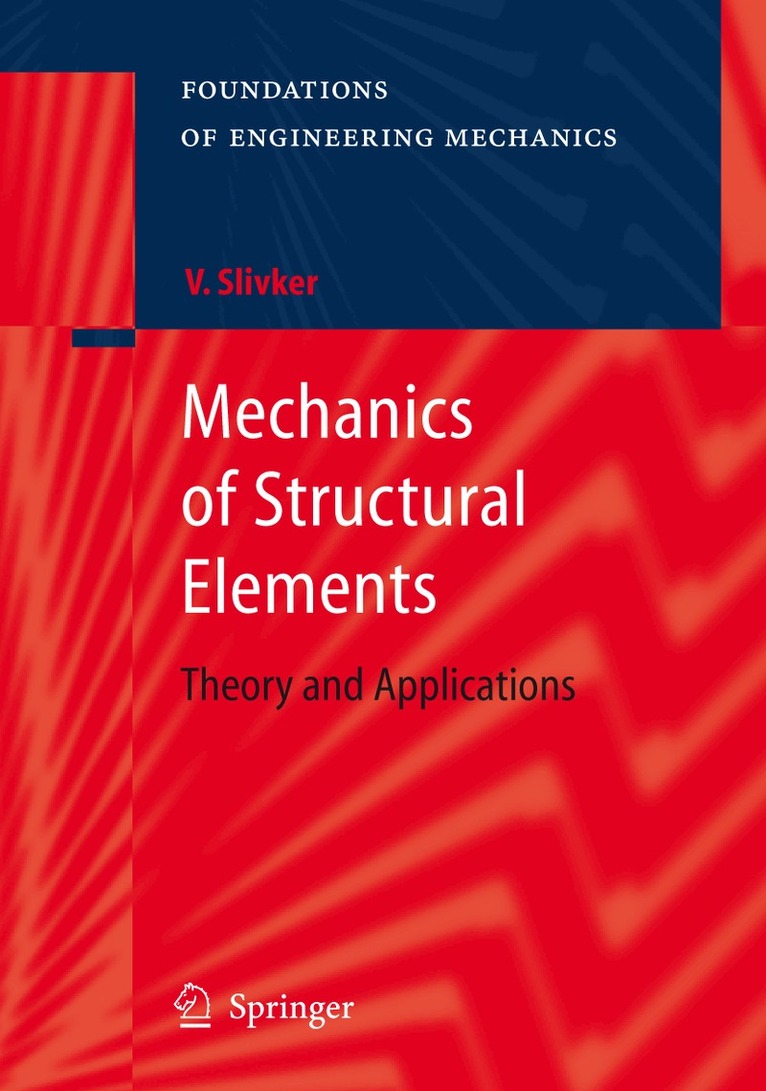
The book addresses software design issues related to methods for the analysis of construction engineering by means of modern CAD (computer-aided design) systems and provides validation for their use. Special attention is paid to the importance of the relevant mechanical models, their validity, and their external and internal coordination. There is a great deal of practical advice with examples of typical and atypical problems and errors, as well as tips for engineers to identify and avoid traps and pitfalls. Written for professional engineers and scientists, especially, for high-level developers and for CAD users, this book is also aimed at university professors and students preparing to work in this field.
2 115 kr
Skickas inom 10-15 vardagar
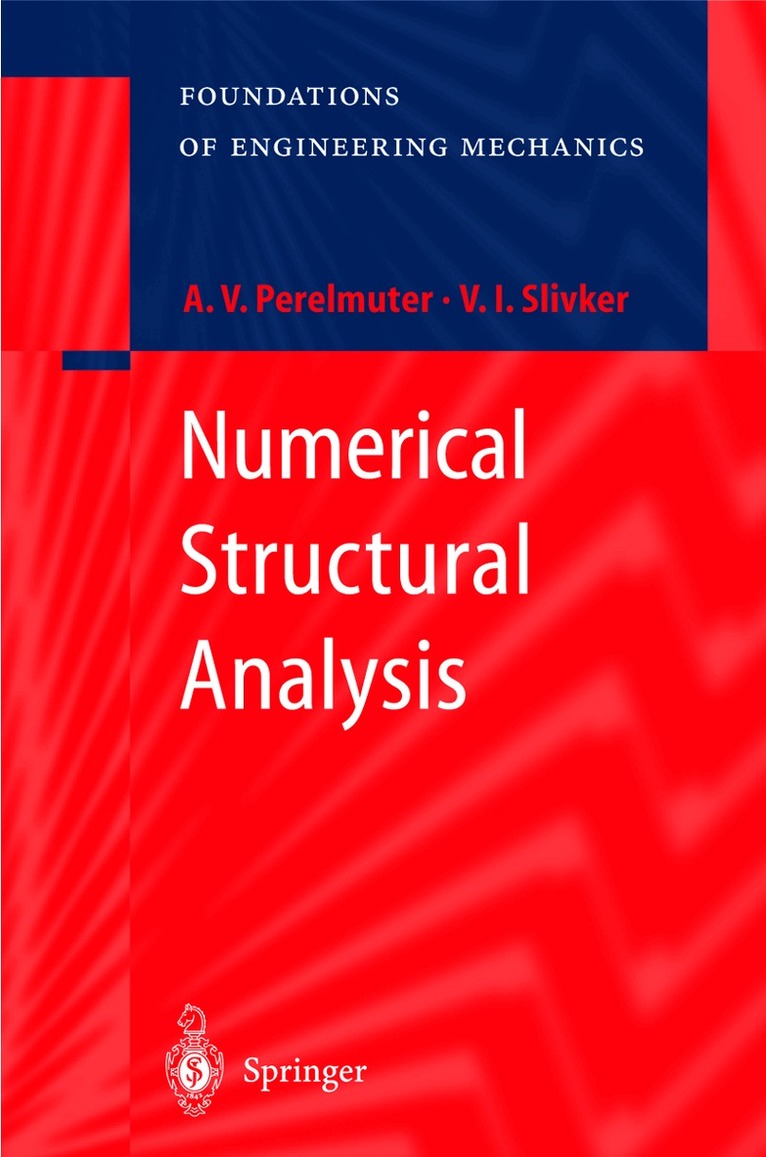
The presentment should be as simple as possible, but not a bit simpler. Albert Einstein Introduction The power of the variational approach in mechanics of solids and structures follows from its versatility: the approach is used both as a universal tool for describing physical relationships and as a basis for qualitative methods of analysis [1]. And there is yet another important advantage inherent in the variational approach – the latter is a crystal clear, pure and unsophisticated source of ideas that help build and establish numerical techniques for mechanics. This circumstance was realized thoroughly and became especially important after the advanced numerical techniques of structural mechanics, first of all the finite element method, had become a helpful tool of the modern engineer. Certainly, it took some time after pioneering works by Turner, Clough and Melos until the finite element method was understood as a numerical technique for solving mathematical physics problems; nowadays no one would attempt to question an eminent role played by the variational approach in the process of this understanding. It is a combination of intuitive engineer thinking and a thoroughly developed mathematical theory of variational calculus which gave the finite element method an impulse so strong that its influence can still be felt. It would be too rash to say that there are few publications or books on the subject matter discussed in this book.
2 121 kr
Skickas inom 10-15 vardagar
The book addresses software design issues related to methods for the analysis of construction engineering by means of modern CAD (computer-aided design) systems and provides validation for their use. Special attention is paid to the importance of the relevant mechanical models, their validity, and their external and internal coordination. There is a great deal of practical advice with examples of typical and atypical problems and errors, as well as tips for engineers to identify and avoid traps and pitfalls. Written for professional engineers and scientists, especially, for high-level developers and for CAD users, this book is also aimed at university professors and students preparing to work in this field.
2 121 kr
Skickas inom 10-15 vardagar
The presentment should be as simple as possible, but not a bit simpler. Albert Einstein Introduction The power of the variational approach in mechanics of solids and structures follows from its versatility: the approach is used both as a universal tool for describing physical relationships and as a basis for qualitative methods of analysis [1]. And there is yet another important advantage inherent in the variational approach – the latter is a crystal clear, pure and unsophisticated source of ideas that help build and establish numerical techniques for mechanics. This circumstance was realized thoroughly and became especially important after the advanced numerical techniques of structural mechanics, first of all the finite element method, had become a helpful tool of the modern engineer. Certainly, it took some time after pioneering works by Turner, Clough and Melos until the finite element method was understood as a numerical technique for solving mathematical physics problems; nowadays no one would attempt to question an eminent role played by the variational approach in the process of this understanding. It is a combination of intuitive engineer thinking and a thoroughly developed mathematical theory of variational calculus which gave the finite element method an impulse so strong that its influence can still be felt. It would be too rash to say that there are few publications or books on the subject matter discussed in this book.