Vladimir Solonari - Böcker
Visar alla böcker från författaren Vladimir Solonari. Handla med fri frakt och snabb leverans.
2 produkter
2 produkter
745 kr
Skickas inom 10-15 vardagar
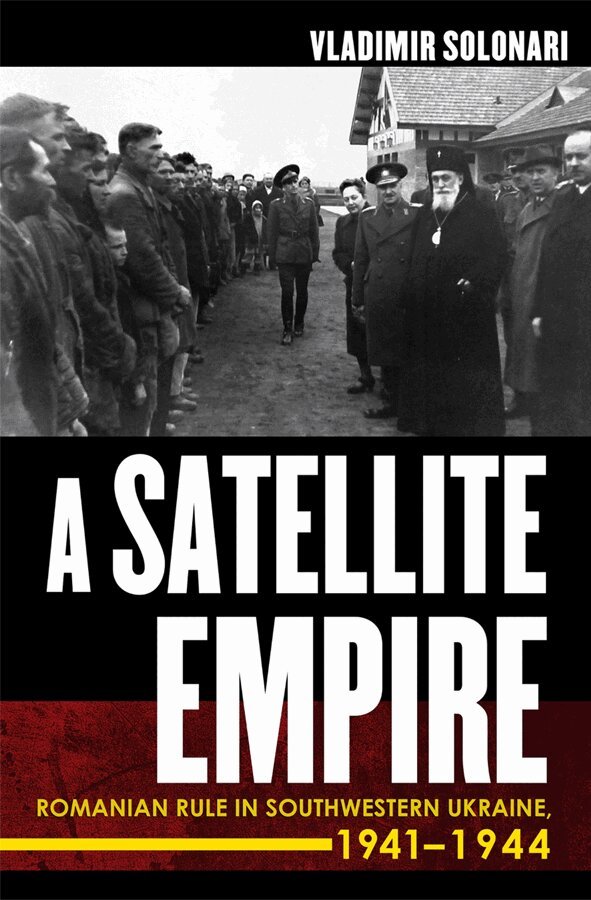
A Satellite Empire is an in-depth investigation of the political and social history of the area in southwestern Ukraine under Romanian occupation during World War II. Transnistria was the only occupied Soviet territory administered by a power other than Nazi Germany, a reward for Romanian participation in Operation Barbarossa.Vladimir Solonari's invaluable contribution to World War II history focuses on three main aspects of Romanian rule of Transnistria: with fascinating insights from recently opened archives, Solonari examines the conquest and delimitation of the region, the Romanian administration of the new territory, and how locals responded to the occupation. What did Romania want from the conquest? The first section of the book analyzes Romanian policy aims and its participation in the invasion of the USSR. Solonari then traces how Romanian administrators attempted, in contradictory and inconsistent ways, to make Transnistria "Romanian" and "civilized" while simultaneously using it as a dumping ground for 150,000 Jews and 20,000 Roma deported from a racially cleansed Romania. The author shows that the imperatives of total war eventually prioritized economic exploitation of the region over any other aims the Romanians may have had. In the final section, he uncovers local responses in terms of collaboration and resistance, in particular exploring relationships with the local Christian population, which initially welcomed the occupiers as liberators from Soviet oppression but eventually became hostile to them. Ever increasing hostility towards the occupying regime buoyed the numbers and efficacy of pro-Soviet resistance groups.
608 kr
Kommande
Uniformed Murderers investigates the causes, logistics, motivations, and legal awareness of the Romanian servicemen – both military and gendarmerie – who massacred or otherwise caused the death of more than three thousand Jews, Roma, and others in 1941 and 1942. Vladimir Solonari addresses and revises the framework that Romanian decision makers largely followed in the footsteps of their German counterparts.Solonari describes how Romanian leaders never completely acceded to the project of total annihilation of European Jewry and that although Romanian fascist dictator Ion Antonescu was viscerally antisemitic, he was determined to avoid making his country and his regime be seen as criminal in the eyes of the Western powers. Consequently, he preferred to avoid commanding his servicemen to kill, and when ordering them to do so, he tried to leave no paper trail. While some officers were reluctant to implicate themselves in criminal behavior, others demonstrated eagerness to kill perceived enemies of the Romanian nation. Uniformed Murderers integrates these factors and assumptions to reveal how they led to the bewildering inconsistency of the Romanian record of mass murder, which reached its apex earlier than that of the Germans.