Volker Langbehn - Böcker
Visar alla böcker från författaren Volker Langbehn. Handla med fri frakt och snabb leverans.
4 produkter
4 produkter
2 341 kr
Skickas inom 3-6 vardagar
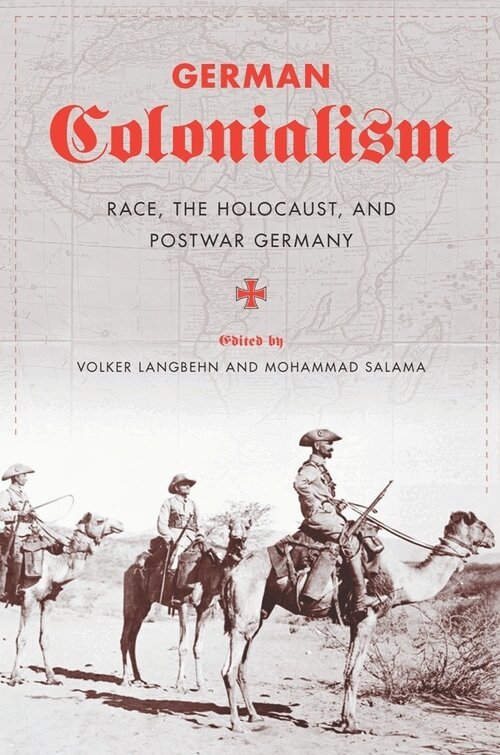
More than half a century before the mass executions of the Holocaust, Germany devastated the peoples of southwestern Africa. While colonialism might seem marginal to German history, new scholarship compares these acts to Nazi practices on the Eastern and Western fronts. With some of the most important essays from the past five years exploring the "continuity thesis," this anthology debates the links between German colonialist activities and the behavior of Germany during World War II. Some contributors argue the country's domination of southwestern Africa gave rise to perceptions of racial difference and superiority at home, building upon a nascent nationalism that blossomed into National Socialism and the Holocaust. Others remain skeptical and challenge the continuity thesis. The contributors also examine Germany's colonial past with debates over the country's identity and history and compare its colonial crimes with other European ventures. Other issues explored include the denial or marginalization of German genocide and the place of colonialism and the Holocaust within German and Israeli postwar relations.
307 kr
Skickas inom 7-10 vardagar
More than half a century before the mass executions of the Holocaust, Germany devastated the peoples of southwestern Africa. While colonialism might seem marginal to German history, new scholarship compares these acts to Nazi practices on the Eastern and Western fronts. With some of the most important essays from the past five years exploring the "continuity thesis," this anthology debates the links between German colonialist activities and the behavior of Germany during World War II. Some contributors argue the country's domination of southwestern Africa gave rise to perceptions of racial difference and superiority at home, building upon a nascent nationalism that blossomed into National Socialism and the Holocaust. Others remain skeptical and challenge the continuity thesis. The contributors also examine Germany's colonial past with debates over the country's identity and history and compare its colonial crimes with other European ventures. Other issues explored include the denial or marginalization of German genocide and the place of colonialism and the Holocaust within German and Israeli postwar relations.
716 kr
Skickas inom 10-15 vardagar
There is no overarching master narrative in understanding the history of German colonialism, and over the past decade, the study of Germany’s colonial past has experienced a dramatic transformation in its scope of inquiry. Influenced by new theoretical and methodological approaches to the study of race, nationalism, and globalization, these new studies initiate a process of reevaluating and redefining the parameters within which German Colonialism is understood. The role of visual materials, in particular, is ideal for exploring the porousness of disciplinary boundaries, though visual culture studies pertaining to German history – and especially German colonialism – have previously been almost completely neglected. Investigating visual communication and mass culture, print culture and suggestive racial politics, racial aesthetics, racial politics and early German film, racial continuity and German film, and photography, German Colonialism, Visual Culture, and Modern Memory offers compelling evidence of a German society between 1884 and 1919 that produced vibrant and heterogeneous – and at times contradictory – cultures of colonialism. This collection of new essays illustrates the dramatic changes and vast array of perspectives that have recently emerged in the study of German colonialism. In documenting the latest cutting-edge research of German colonial history, the contributors to this volume prove wrong the persistent assumptions that the creation of Germany’s colonial empire did not have any lasting impact on German political and cultural life. Their essays document how colonialism in its various forms was entwined with the inner workings of modern German life and society, especially through the cultural and technical innovations of its time. In contrast to existing research, these studies show that colonial Germany played a significant role in shaping German perceptions of racial difference, influenced German support for World War I, and facilitated the construction of German nationalism. German Colonialism, Visual Culture, and Modern Memory uniquely demonstrates that the visual culture of colonialism is closely linked to the fascination with new modes of seeing and the enigma of visual experience that have become trademarks of modernity.
2 371 kr
Skickas inom 10-15 vardagar
There is no overarching master narrative in understanding the history of German colonialism, and over the past decade, the study of Germany’s colonial past has experienced a dramatic transformation in its scope of inquiry. Influenced by new theoretical and methodological approaches to the study of race, nationalism, and globalization, these new studies initiate a process of reevaluating and redefining the parameters within which German Colonialism is understood. The role of visual materials, in particular, is ideal for exploring the porousness of disciplinary boundaries, though visual culture studies pertaining to German history – and especially German colonialism – have previously been almost completely neglected. Investigating visual communication and mass culture, print culture and suggestive racial politics, racial aesthetics, racial politics and early German film, racial continuity and German film, and photography, German Colonialism, Visual Culture, and Modern Memory offers compelling evidence of a German society between 1884 and 1919 that produced vibrant and heterogeneous – and at times contradictory – cultures of colonialism. This collection of new essays illustrates the dramatic changes and vast array of perspectives that have recently emerged in the study of German colonialism. In documenting the latest cutting-edge research of German colonial history, the contributors to this volume prove wrong the persistent assumptions that the creation of Germany’s colonial empire did not have any lasting impact on German political and cultural life. Their essays document how colonialism in its various forms was entwined with the inner workings of modern German life and society, especially through the cultural and technical innovations of its time. In contrast to existing research, these studies show that colonial Germany played a significant role in shaping German perceptions of racial difference, influenced German support for World War I, and facilitated the construction of German nationalism. German Colonialism, Visual Culture, and Modern Memory uniquely demonstrates that the visual culture of colonialism is closely linked to the fascination with new modes of seeing and the enigma of visual experience that have become trademarks of modernity.