Volney P. Gay - Böcker
Visar alla böcker från författaren Volney P. Gay. Handla med fri frakt och snabb leverans.
3 produkter
3 produkter
675 kr
Skickas inom 10-15 vardagar
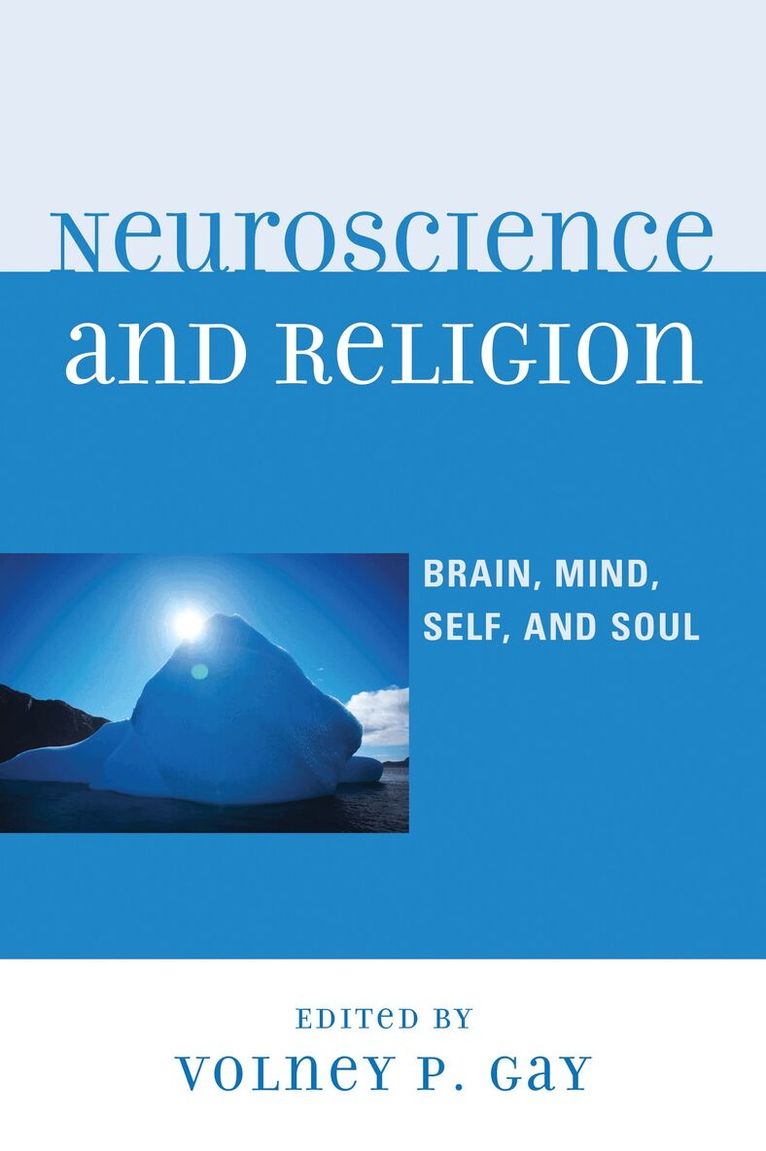
For religious persons, the notion of human being is tied inextricably to the notion of God (or the gods) and turns on this question: what is human being? How did we, with our almost infinite capacities for thought, change, and domination, come to be? Imbued with powers far beyond any other animal, humans are too faulty to be considered gods themselves. Yet, the idea of God (or the gods) appears in all distinctive human cultures: it names the other pole of human—it designates a being who realizes perfectly our imperfectly realized nature. With the rise of new sciences come ancient anxieties about how we should define human being. In the nineteenth century, electricity and magnetism fascinated experts and captivated the lay public. In the twenty-first century, advances in neuroscience open up vast new possibilities of mimicking, and perhaps emulating human being. In this book twelve scholars and scientists ask what—if anything—distinguishes Brain from Mind, and Mind from Self and Soul.
391 kr
Tillfälligt slut
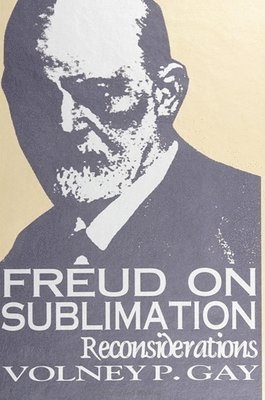
This book is the only full-length treatment of the relationship between aesthetic truths and psychoanalytic discoveries-of art, artists, and a new concept of sublimation. It provides a radical and unique study of the concept of sublimation and proposes a modest replacement for it. In the first third of the book the author reviews critically the psychoanalytic sources of the concept of sublimation. In the second third he shows how the concept developed from Freud's nineteenth-century notions of perception. In the last third he revises a concept of sublimation using a contemporary theory of perception. In the final chapter he examines four works of literature: short stories of John Cheever, a Japanese novel, portions of Hamlet, and sublimation and perversion in Orson Welles' Citizen Kane.
511 kr
Skickas inom 3-6 vardagar
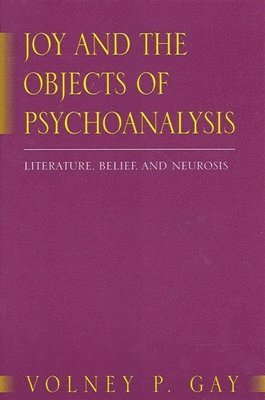
Shows how literature can aid psychoanalysts in the understanding of psychological conflicts.For more than a hundred years, psychoanalysts have applied their theories of neurosis to objects of culture, including literature. In this book, psychoanalyst, anthropologist, and scholar of religion Volney P. Gay reverses field and uses literature to reevaluate psychoanalysis. Arguing that neurosis occurs when we cannot recollect joy, Gay focuses upon the nature of joy as articulated in drama and literature. It is the absence of joy, he suggests, that evokes in children a lifelong quest for repair and restitution, usually through the stories they tell themselves. Therefore, Gay argues, literary accounts of joy are essential to contemporary psychoanalysts because they illuminate the nature of an "object" that, when absent, produces the form of human suffering that Freud named "neurosis." Throughout the book, case studies are juxtaposed with analyses of works by Plato, Homer, Shakespeare, Tolstoy, Hawthorne, Wharton, and others in order to explore the notion that the objects of psychoanalysis (and similar psychotherapies) are structured like narratives rather than organisms or other natural objects.