
Häftad, Engelska, 2003
765 kr
Skickas inom 3-6 vardagar
765 kr
Skickas inom 3-6 vardagar
656 kr
Skickas inom 5-8 vardagar
663 kr
Läs direkt efter köp
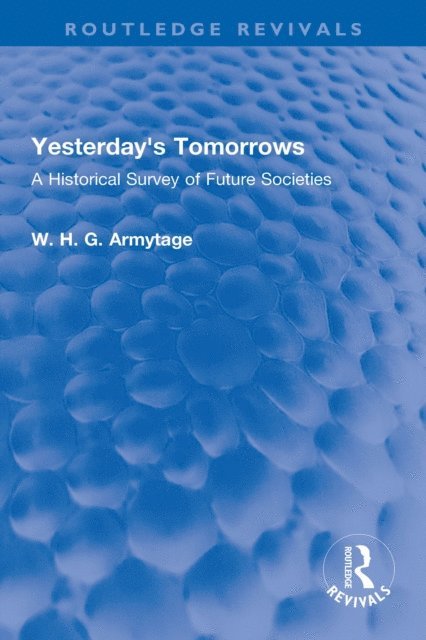
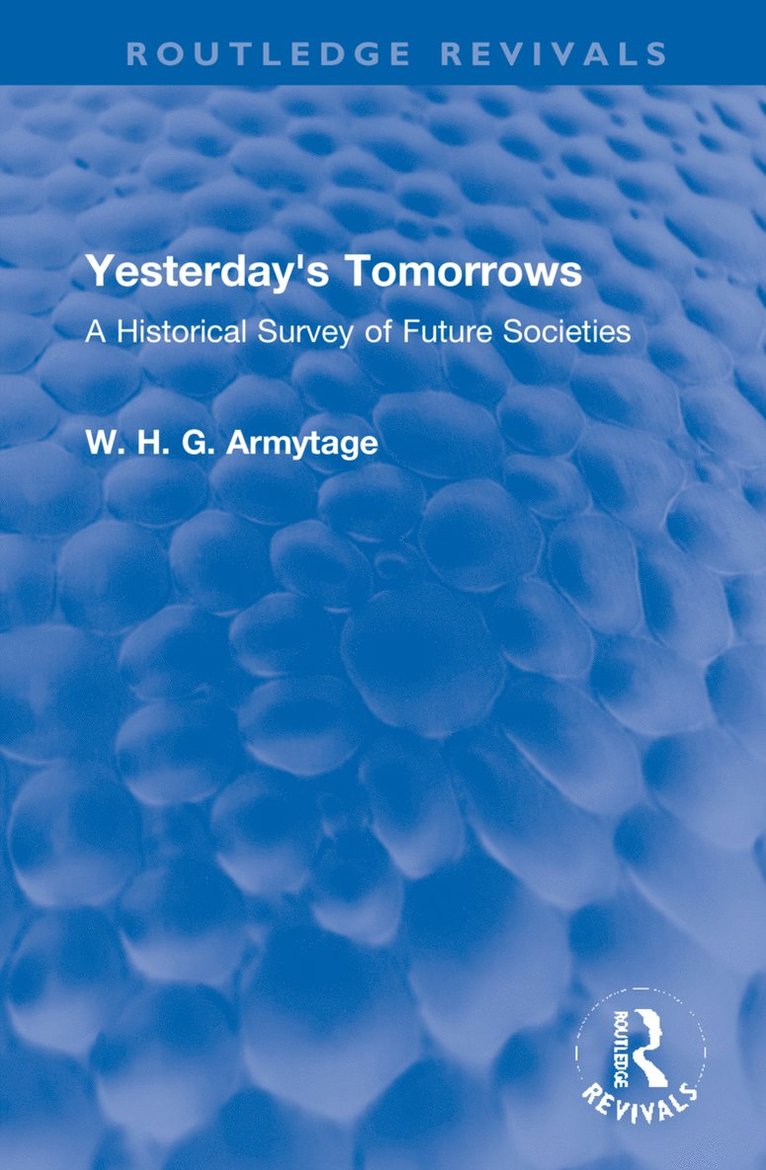
First published in 1968, Yesterday’s Tomorrows elucidates on the favourite occupation of man: forecasting the future. By man’s predictions, he mirrors his own wish-fulfilments, displacements, projections, denials, evasions and withdrawals. These predications can take the form of countries of the imagination, ‘mirror worlds’ like Rabelais’ Ever-Ever lands or the Erewhon of Butler. Alternatively, they may spring from panic, reflecting fear rather than hope, often manifesting themselves, in our technological age, as reports of ‘flying saucers’ or invasions from another planet. In either form, they provide philosophers, scientists, doctors and sociologists with material for evaluating man’s future needs, offering both criticism of our present society, plans for our future, and release from tension and disequilibrium.
Professor Armytage shows in this book how such ‘visions’ can, and do, refresh minds for renewed grappling with the present by arming them with ideas for man’s future needs. He indicates that, out of an apparent welter of futuristic fantasies, a constructive debate about tomorrow is emerging, providing us with operational models of what tomorrow could be. This book will hold special interest for students of philosophy and of English literature.
663 kr
Läs direkt efter köp
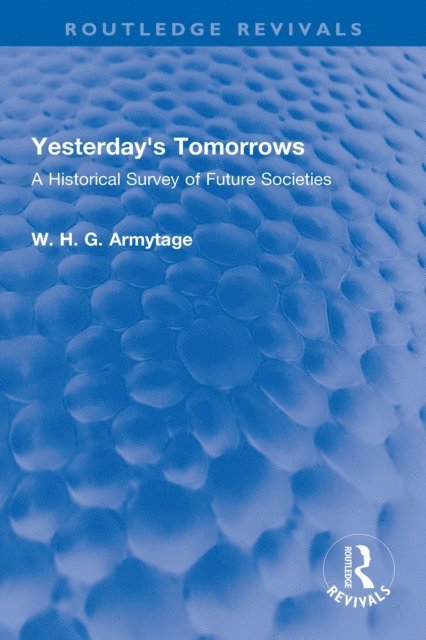
First published in 1968, Yesterday’s Tomorrows elucidates on the favourite occupation of man: forecasting the future. By man’s predictions, he mirrors his own wish-fulfilments, displacements, projections, denials, evasions and withdrawals. These predications can take the form of countries of the imagination, ‘mirror worlds’ like Rabelais’ Ever-Ever lands or the Erewhon of Butler. Alternatively, they may spring from panic, reflecting fear rather than hope, often manifesting themselves, in our technological age, as reports of ‘flying saucers’ or invasions from another planet. In either form, they provide philosophers, scientists, doctors and sociologists with material for evaluating man’s future needs, offering both criticism of our present society, plans for our future, and release from tension and disequilibrium.
Professor Armytage shows in this book how such ‘visions’ can, and do, refresh minds for renewed grappling with the present by arming them with ideas for man’s future needs. He indicates that, out of an apparent welter of futuristic fantasies, a constructive debate about tomorrow is emerging, providing us with operational models of what tomorrow could be. This book will hold special interest for students of philosophy and of English literature.
2 063 kr
Skickas inom 10-15 vardagar
567 kr
Skickas inom 10-15 vardagar
1 744 kr
Skickas inom 10-15 vardagar
521 kr
Skickas inom 10-15 vardagar
639 kr
Läs direkt efter köp
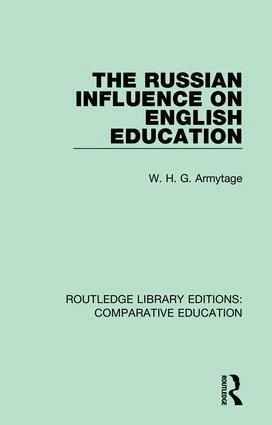
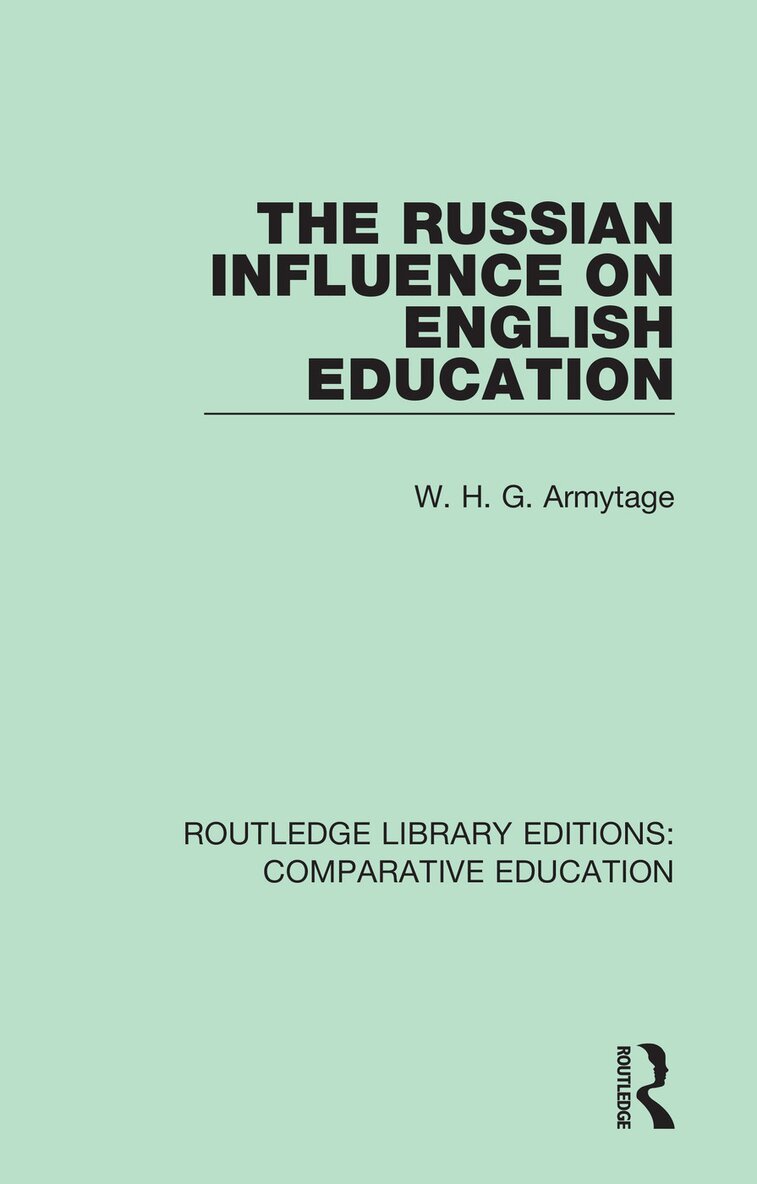
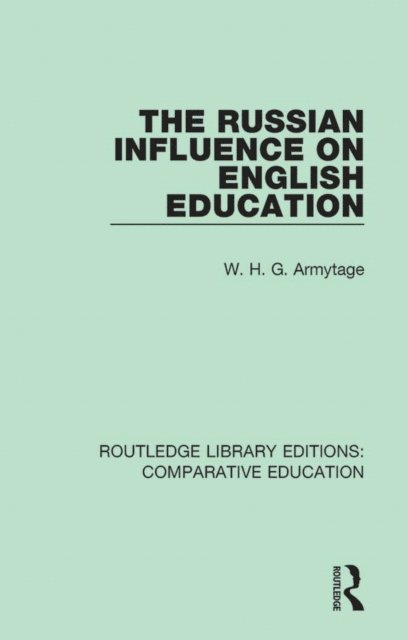
Originally published in 1969. British merchants first penetrated to Moscow in the early 16th century. From that time until today developments in Russia have influenced Britain in innumerable ways - sometimes unexpectedly. In this volume Professor Armytage traces this influence, showing how Tolstoy, Kropotkin and others better known for their activities in fields other than education, have, in fact, had their effect on education in Britain. The lively account of the way in which these ideas have found their way into the British system shows that recent influences have been more direct. In particular the rapid development of higher technological education owes a great deal to the Russian example.
609 kr
Läs direkt efter köp
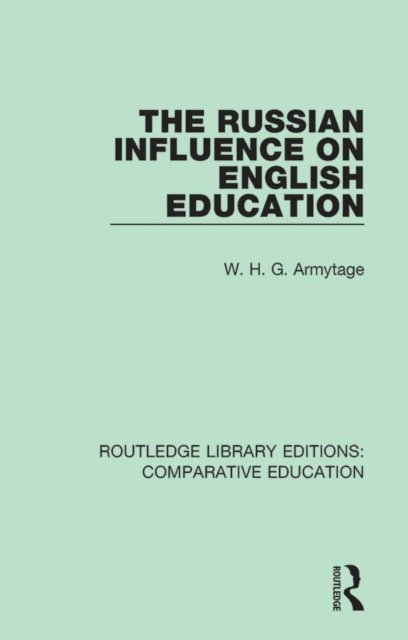
Originally published in 1969. British merchants first penetrated to Moscow in the early 16th century. From that time until today developments in Russia have influenced Britain in innumerable ways - sometimes unexpectedly. In this volume Professor Armytage traces this influence, showing how Tolstoy, Kropotkin and others better known for their activities in fields other than education, have, in fact, had their effect on education in Britain. The lively account of the way in which these ideas have found their way into the British system shows that recent influences have been more direct. In particular the rapid development of higher technological education owes a great deal to the Russian example.
765 kr
Skickas inom 3-6 vardagar
656 kr
Skickas inom 5-8 vardagar
663 kr
Läs direkt efter köp
First published in 1968, Yesterday’s Tomorrows elucidates on the favourite occupation of man: forecasting the future. By man’s predictions, he mirrors his own wish-fulfilments, displacements, projections, denials, evasions and withdrawals. These predications can take the form of countries of the imagination, ‘mirror worlds’ like Rabelais’ Ever-Ever lands or the Erewhon of Butler. Alternatively, they may spring from panic, reflecting fear rather than hope, often manifesting themselves, in our technological age, as reports of ‘flying saucers’ or invasions from another planet. In either form, they provide philosophers, scientists, doctors and sociologists with material for evaluating man’s future needs, offering both criticism of our present society, plans for our future, and release from tension and disequilibrium.
Professor Armytage shows in this book how such ‘visions’ can, and do, refresh minds for renewed grappling with the present by arming them with ideas for man’s future needs. He indicates that, out of an apparent welter of futuristic fantasies, a constructive debate about tomorrow is emerging, providing us with operational models of what tomorrow could be. This book will hold special interest for students of philosophy and of English literature.
663 kr
Läs direkt efter köp
First published in 1968, Yesterday’s Tomorrows elucidates on the favourite occupation of man: forecasting the future. By man’s predictions, he mirrors his own wish-fulfilments, displacements, projections, denials, evasions and withdrawals. These predications can take the form of countries of the imagination, ‘mirror worlds’ like Rabelais’ Ever-Ever lands or the Erewhon of Butler. Alternatively, they may spring from panic, reflecting fear rather than hope, often manifesting themselves, in our technological age, as reports of ‘flying saucers’ or invasions from another planet. In either form, they provide philosophers, scientists, doctors and sociologists with material for evaluating man’s future needs, offering both criticism of our present society, plans for our future, and release from tension and disequilibrium.
Professor Armytage shows in this book how such ‘visions’ can, and do, refresh minds for renewed grappling with the present by arming them with ideas for man’s future needs. He indicates that, out of an apparent welter of futuristic fantasies, a constructive debate about tomorrow is emerging, providing us with operational models of what tomorrow could be. This book will hold special interest for students of philosophy and of English literature.
2 063 kr
Skickas inom 10-15 vardagar
567 kr
Skickas inom 10-15 vardagar
1 744 kr
Skickas inom 10-15 vardagar
521 kr
Skickas inom 10-15 vardagar
639 kr
Läs direkt efter köp
Originally published in 1969. British merchants first penetrated to Moscow in the early 16th century. From that time until today developments in Russia have influenced Britain in innumerable ways - sometimes unexpectedly. In this volume Professor Armytage traces this influence, showing how Tolstoy, Kropotkin and others better known for their activities in fields other than education, have, in fact, had their effect on education in Britain. The lively account of the way in which these ideas have found their way into the British system shows that recent influences have been more direct. In particular the rapid development of higher technological education owes a great deal to the Russian example.
609 kr
Läs direkt efter köp
Originally published in 1969. British merchants first penetrated to Moscow in the early 16th century. From that time until today developments in Russia have influenced Britain in innumerable ways - sometimes unexpectedly. In this volume Professor Armytage traces this influence, showing how Tolstoy, Kropotkin and others better known for their activities in fields other than education, have, in fact, had their effect on education in Britain. The lively account of the way in which these ideas have found their way into the British system shows that recent influences have been more direct. In particular the rapid development of higher technological education owes a great deal to the Russian example.