W. Henry Mosley – författare
Visar alla böcker från författaren W. Henry Mosley. Handla med fri frakt och snabb leverans.
5 produkter
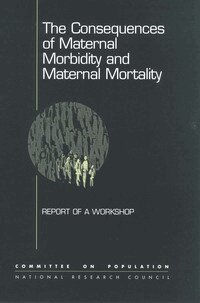
Consequences of Maternal Morbidity and Maternal Mortality
Report of a Workshop
Av Committee on Population, Commission on Behavioral and Social Sciences and Education m. fl.
E-bok, 2000
303 kr
Lägg i varukorg
In 1997 the committee published Reproductive Health in Developing Countries: Expanding Dimensions, Building Solutions , a report that recommended actions to improve reproductive health for women around the world. As a follow- on activity, the committee proposed an investigation into the social and …
Consequences of Maternal Morbidity and Maternal Mortality
Report of a Workshop
Av Committee on Population, Commission on Behavioral and Social Sciences and Education m. fl.
E-bok, 2000
206 kr
Lägg i varukorg
In 1997 the committee published Reproductive Health in Developing Countries: Expanding Dimensions, Building Solutions , a report that recommended actions to improve reproductive health for women around the world. As a follow- on activity, the committee proposed an investigation into the social and …
Child Survival
Strategies for Research
Av W. Henry Mosley, Lincoln C. Chen m. fl.
Häftad, 2008
667 kr
Lägg i varukorg
In all poor countries, malnutrition and infectious diseases are the major biological processes leading to child deaths, but the social, economic, and environmental determinants of the variations in these conditions in different societies are poorly understood. This 1985 volume contains papers by …
Child Survival
Strategies for Research
Av W. Henry Mosley, Lincoln C. Chen
Inbunden, 1985
1807 kr
Lägg i varukorg
In all poor countries, malnutrition and infectious diseases are the major biological processes leading to child deaths, but the social, economic, and environmental determinants of the variations in these conditions in different societies are poorly understood. This 1985 volume contains papers by …
Consequences of Maternal Morbidity and Maternal Mortality
Report of a Workshop
Av National Research Council, Commission on Behavioral and Social Sciences and Education m. fl.
Häftad, 2000
1132 kr
Tillfälligt slut
In 1997 the committee published Reproductive Health in Developing Countries: Expanding Dimensions, Building Solutions, a report that recommended actions to improve reproductive health for women around the world. As a follow- on activity, the committee proposed an investigation into the social and …