W. Krajewski - Böcker
Visar alla böcker från författaren W. Krajewski. Handla med fri frakt och snabb leverans.
3 produkter
3 produkter
2 110 kr
Skickas inom 10-15 vardagar
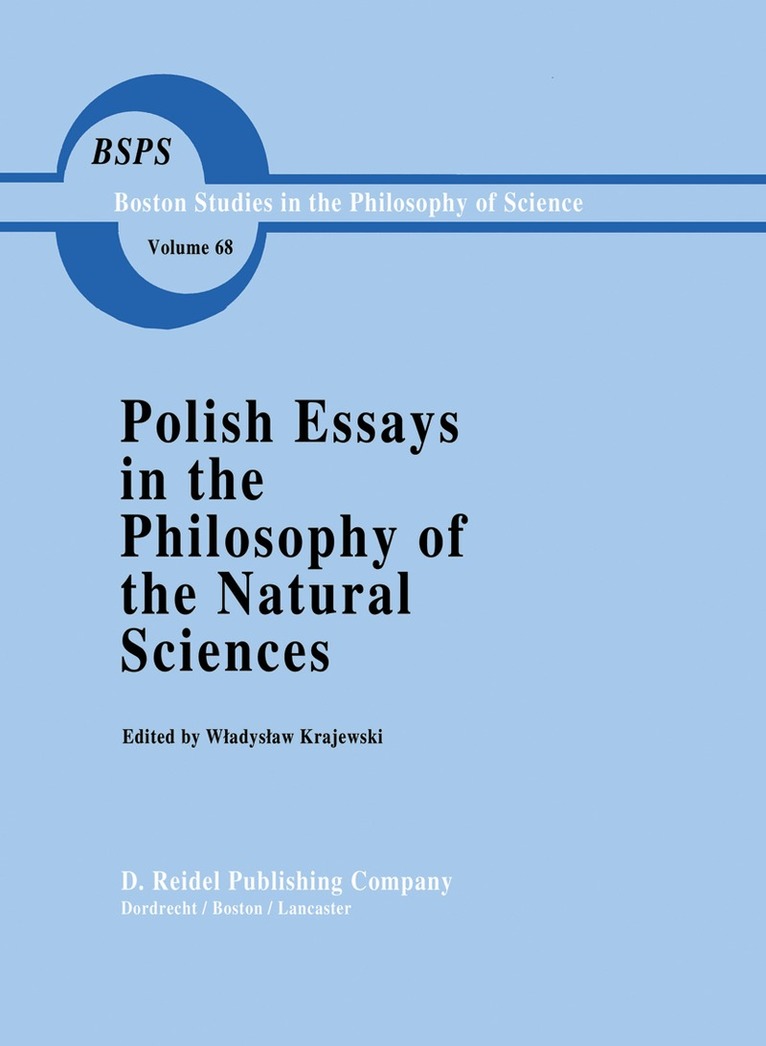
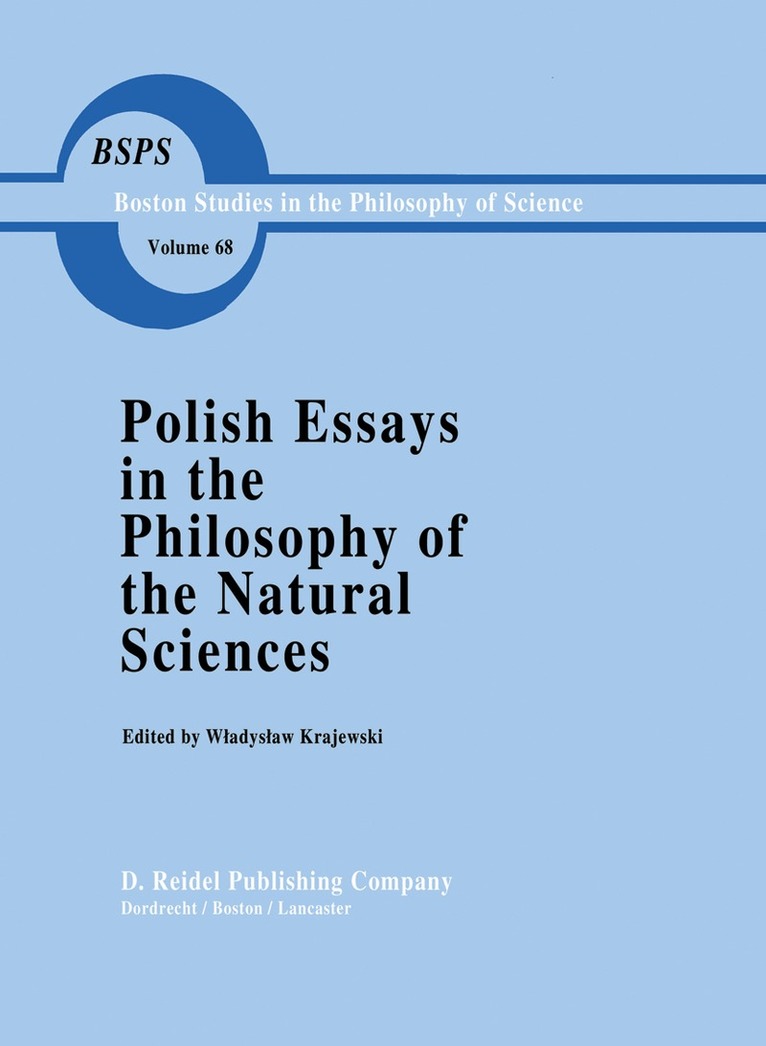
Modern philosophy has benefited immensely from the intelligence and sensitivity, the creative and critical energies, and the lucidity of Polish scholars. Their investigations into the logical and methodological founda- tions of mathematics, the physical and biological sciences, ethics and esthetics, psychology, linguistics, economics and jurisprudence, and the social sciences - all are marked by profound and imaginative work. To the centers of empiricist philosophy of science in Vienna, Berlin and Cambridge during the first half of this century, one always added the great school of analytic and methodological studies in Warsaw and Lw6w. To the world centers of Marxist theoretical practice in Berlin, Moscow, Paris, Rome and elsewhere, one must add the Poland of the same era, from Ludwig Krzywicki (1859-1941) onward. (From our preface to Wiatr [1979p. Other movements also have been distinctive in Poland.Phenomenology was developed in the impressive school of Roman Ingarden at Cracow, semiotics from the early work of the philosopher and psychologist Kazimierz Twardowski at Lw6w in the 1890's, with masterful develop- ment by his disciples Kotarbinski and Ajdukiewicz onward, conceptual foundations of physics in the incisive methodological reflections of Marian Smoluchowski, and mathematical logic from Jan I:.ukasiewicz and Stanislaw Lesniewski to Tarski, Mostowski, and many others.
2 110 kr
Skickas inom 10-15 vardagar
Modern philosophy has benefited immensely from the intelligence and sensitivity, the creative and critical energies, and the lucidity of Polish scholars. Their investigations into the logical and methodological founda- tions of mathematics, the physical and biological sciences, ethics and esthetics, psychology, linguistics, economics and jurisprudence, and the social sciences - all are marked by profound and imaginative work. To the centers of empiricist philosophy of science in Vienna, Berlin and Cambridge during the first half of this century, one always added the great school of analytic and methodological studies in Warsaw and Lw6w. To the world centers of Marxist theoretical practice in Berlin, Moscow, Paris, Rome and elsewhere, one must add the Poland of the same era, from Ludwig Krzywicki (1859-1941) onward. (From our preface to Wiatr [1979p. Other movements also have been distinctive in Poland.Phenomenology was developed in the impressive school of Roman Ingarden at Cracow, semiotics from the early work of the philosopher and psychologist Kazimierz Twardowski at Lw6w in the 1890's, with masterful develop- ment by his disciples Kotarbinski and Ajdukiewicz onward, conceptual foundations of physics in the incisive methodological reflections of Marian Smoluchowski, and mathematical logic from Jan I:.ukasiewicz and Stanislaw Lesniewski to Tarski, Mostowski, and many others.

538 kr
Skickas inom 10-15 vardagar
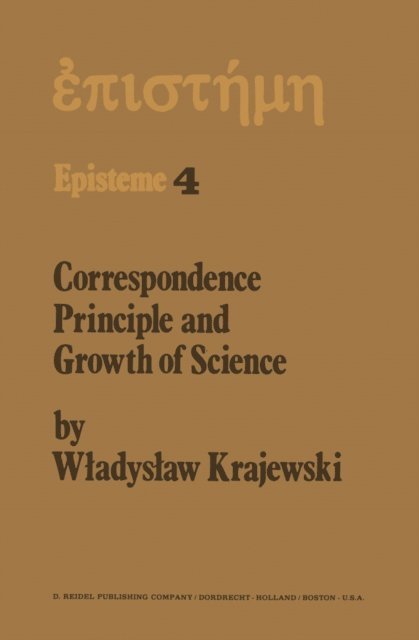
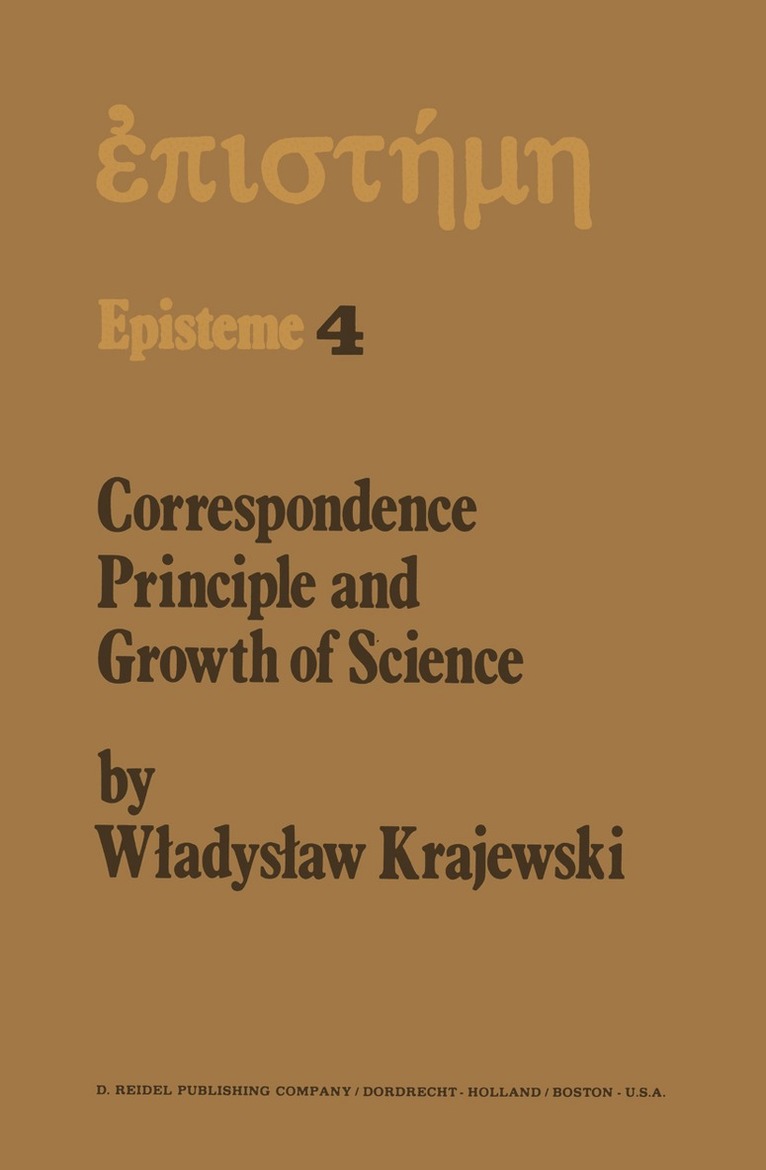
This book is devoted to the problems of the growth of science. These prob lems, neglected for a long time by the philosophers of science, have become in the 60's and 70's a subject of vivid discussion. There are philosophers who stress only the dependence of science upon various sociological, psycho logical and other factors and deny any internal laws of the development of knowledge, like approaching the truth. The majority rejects such nihilism and searches for the laws of the growth of science. However, they often overlook the role of the Correspondence Principle which connects the suc cessive scientific theories. On the other hand, some authors, while stressing the role of this principle, overlook logical difficulties connected with it, e. g. the problem of the incompatibility of successive theories, of the falsity of some of their assumptions, etc. I believe the Correspondence Principle to be a basic principle of the pro gress of contemporary physics and, probably, of every advanced science. How ever, this principle must be properly interpreted and the above-mentioned logical difficulties must be solved. Their solution requires, as it seems, revealing the idealizational nature of the basic laws of science, in any case of the quantitative laws of advanced sciences. This point has been recently emphasized by some Polish philosophers, especially in Poznan.