W. Paul Reeve – författare
Visar alla böcker från författaren W. Paul Reeve. Handla med fri frakt och snabb leverans.
13 produkter
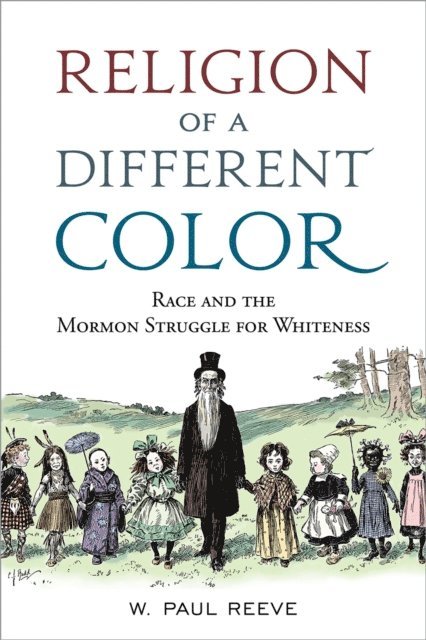
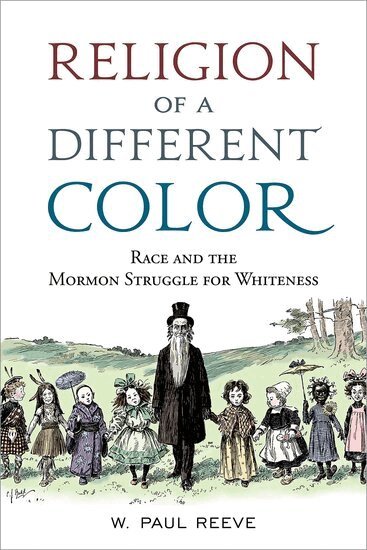
Religion of a Different Color
Race and the Mormon Struggle for Whiteness
E-bok, 2015
265 kr
Lägg i varukorg
Mormonism is one of the few homegrown religions in the United States, one that emerged out of the religious fervor of the early nineteenth century. Yet, members of the Church of Jesus Christ of Latter-day Saints have struggled for status and recognition. In this book, W. Paul Reeve explores the …
Religion of a Different Color
Race and the Mormon Struggle for Whiteness
E-bok, 2015
265 kr
Lägg i varukorg
Mormonism is one of the few homegrown religions in the United States, one that emerged out of the religious fervor of the early nineteenth century. Yet, members of the Church of Jesus Christ of Latter-day Saints have struggled for status and recognition. In this book, W. Paul Reeve explores the …
Religion of a Different Color
Race and the Mormon Struggle for Whiteness
Häftad, 2017
676 kr
Lägg i varukorg
Mormonism is one of the few homegrown religions in the United States, one that emerged out of the religious fervor of the early nineteenth century. Yet, members of the Church of Jesus Christ of Latter-day Saints have struggled for status and recognition. In this book, W. Paul Reeve explores the …
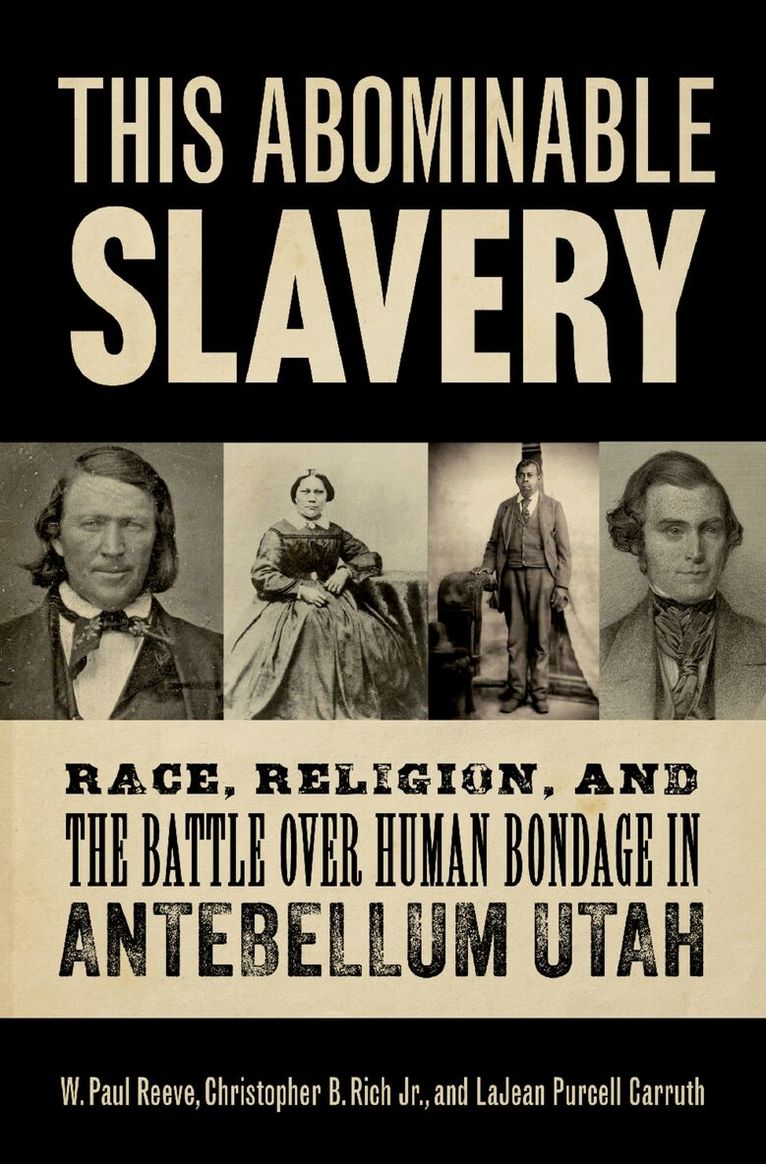
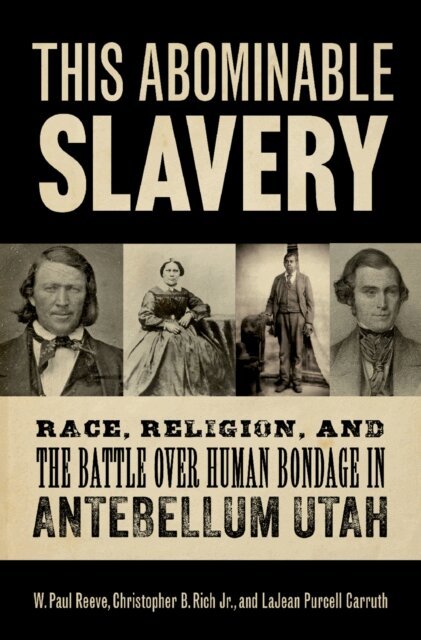
This Abominable Slavery
Race, Religion, and the Battle over Human Bondage in Antebellum Utah
Av W. Paul Reeve, Christopher B. Rich, Jr. m. fl.
Inbunden, 2025
337 kr
Lägg i varukorg
On July 22, 1847, a group of about forty refugees entered the Salt Lake Valley. Among them were three enslaved men, two of whom shared the religion, Mormonism, that had caused them to flee. The valley was also home to members of the Ute tribe, who would sometimes barter captive women and children …
This Abominable Slavery
Race, Religion, and the Battle over Human Bondage in Antebellum Utah
Av LaJean Purcell Carruth, Christopher B. Rich m. fl.
E-bok, 2024
319 kr
Lägg i varukorg
On July 22, 1847, a group of about forty refugees entered the Salt Lake Valley. Among them were three enslaved men, two of whom shared the religion, Mormonism, that had caused them to flee. The valley was also home to members of the Ute tribe, who would sometimes barter captive women and children …
This Abominable Slavery
Race, Religion, and the Battle over Human Bondage in Antebellum Utah
Av LaJean Purcell Carruth, Christopher B. Rich m. fl.
E-bok, 2024
319 kr
Lägg i varukorg
On July 22, 1847, a group of about forty refugees entered the Salt Lake Valley. Among them were three enslaved men, two of whom shared the religion, Mormonism, that had caused them to flee. The valley was also home to members of the Ute tribe, who would sometimes barter captive women and children …
Religion of a Different Color
Race and the Mormon Struggle for Whiteness
Inbunden, 2015
911 kr
Lägg i varukorg
The Protestant white majority in the nineteenth century was convinced that Mormonism represented a racial-not merely religious-departure from the mainstream and they spent considerable effort attempting to deny Mormon whiteness. Being white equalled access to political, social, and economic power, …
Making Space on the Western Frontier:
Mormons, Miners, and Southern Paiutes
Inbunden, 2007
526 kr
Lägg i varukorg
When Mormon ranchers and Anglo-American miners moved into centuries-old Southern Paiute space during the last half of the nineteenth century, a clash of cultures quickly ensued. W. Paul Reeve explores the dynamic nature of that clash as each group attempted to create sacred space on the southern …
Making Space on the Western Frontier
Mormons, Miners, and Southern Paiutes
E-bok, 2010
585 kr
Lägg i varukorg
Until recently, most scholarly work on Chinese music in both Chinese and Western languages has focused on genres, musical structure, and general history and concepts, rather than on the musicians themselves. This volume breaks new ground by focusing on individual musicians active in different …
Between Pulpit and Pew
The Supernatural World in Mormon History and Folklore
Av W. Paul Reeve, Michael Scott Van Wagenen
Häftad, 2011
374 kr
Lägg i varukorg
Cain wanders the frontier as a Bigfoot-like hairy beast and confronts an early Mormon apostle. An evil band of murderers from Mormon scripture, known as the Gadianton robbers, provides an excuse for the failure of a desert town. Stories of children raised from the dead with decayed bodies and …
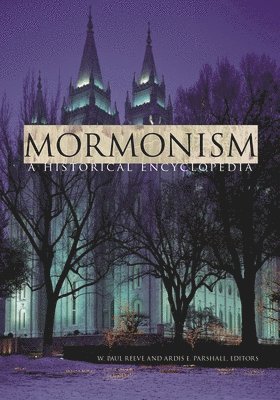
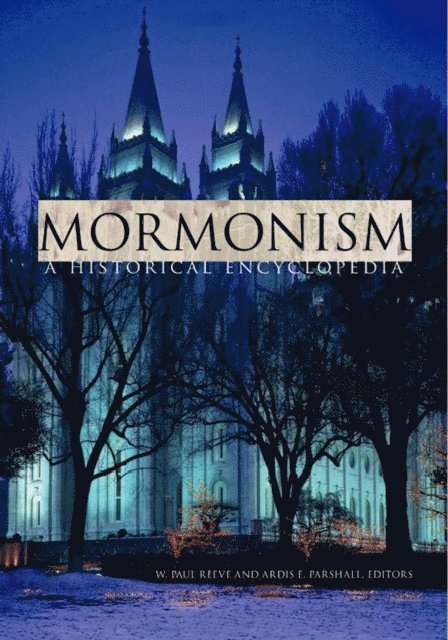
Mormonism
A Historical Encyclopedia
Av W. Paul Reeve, Ardis E. Parshall
Inbunden, 2010
1141 kr
Lägg i varukorg
Covering its historic development, important individuals, and central ideas and issues, this encyclopedia offers broad historical coverage of The Church of Jesus Christ of Latter-day Saints.Mormonism: A Historical Encyclopedia helps readers explore a church that has gone from being an object of …
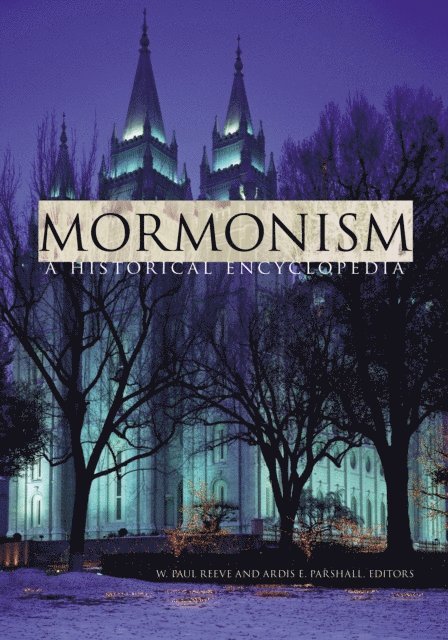
Mormonism
A Historical Encyclopedia
Av W. Paul Reeve, Ardis E. Parshall
E-bok, 2010
1220 kr
Lägg i varukorg
Covering its historic development, important individuals, and central ideas and issues, this encyclopedia offers broad historical coverage of The Church of Jesus Christ of Latter-day Saints. Mormonism: A Historical Encyclopedia helps readers explore a church that has gone from being an object of …
Mormonism
A Historical Encyclopedia
Av W. Paul Reeve, Ardis E. Parshall
E-bok, 2010
1247 kr
Lägg i varukorg
Covering its historic development, important individuals, and central ideas and issues, this encyclopedia offers broad historical coverage of The Church of Jesus Christ of Latter-day Saints. Mormonism: A Historical Encyclopedia helps readers explore a church that has gone from being an object of …