W R Mitchell - Böcker
Visar alla böcker från författaren W R Mitchell. Handla med fri frakt och snabb leverans.
5 produkter
5 produkter
200 kr
Skickas
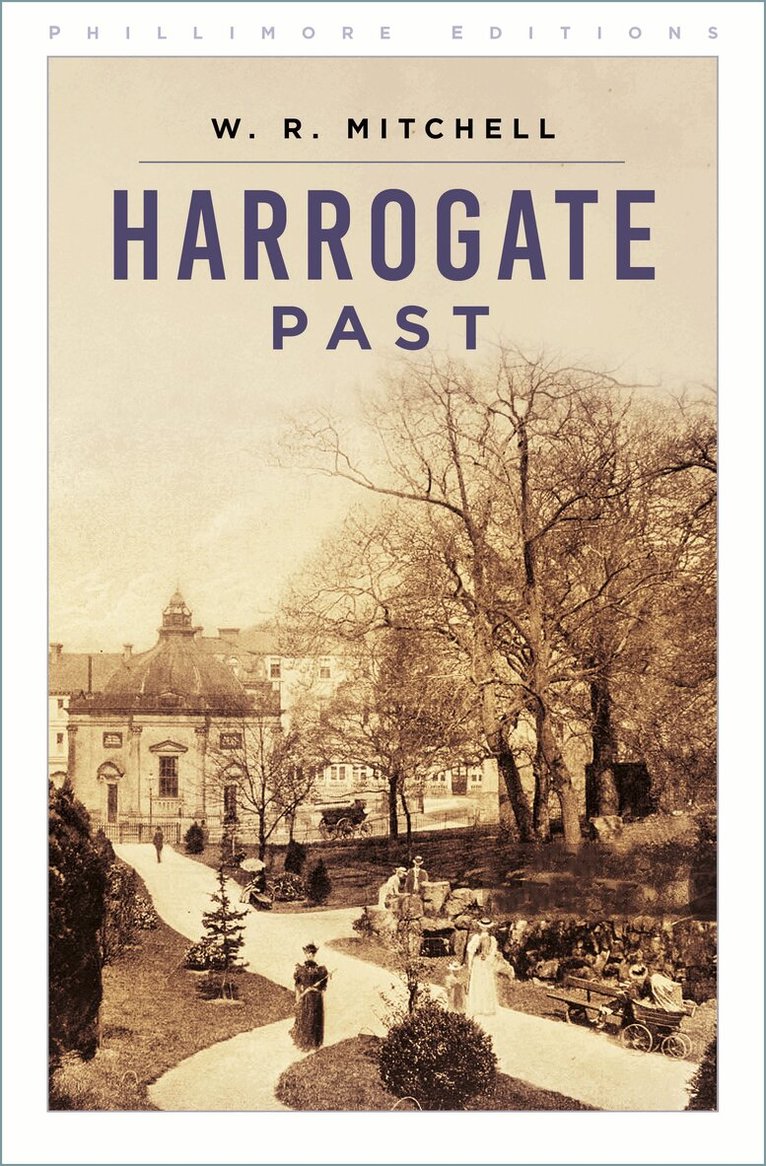
Harrogate began as a tiny hamlet in the Royal Forest of Knaresborough and owes its rise to prominence almost entirely to the exploitation of its mineral springs. Doctors recommended their patients to drink the sulphur-laden water and the first English ‘watering place’ distinguished by the name ‘spa’ became a fashionable retreat for the nobility and gentry. In the Season, in addition to the many private carriages of the well-to-do, no less than 19 coaches ran daily from all parts of the land. The numbers arriving to ‘take the cure’ rose from 20,000 in 1848, when the railway came, to 60,000 a year by the end of the century.The enclosure of the Royal Forest in the 18th century and the gain of 200 acres of open ground, known as the Stray, gave perpetual access to the famous springs and ensured that Harrogate would have space as well as style. The Victorians added many fine buildings to impress their visitors, including the Royal Baths Assembly Room, Opera House and the Kursaal – the name of which was hastily changed to Royal Hall at the outbreak of the First World War. The town enjoyed its social heyday in Edwardian times but, with changes in medical practice, the spa declined.However, the trains that had boosted visitor numbers in the 19th century also brought better-off commuters from the industrial West Riding, to enjoy its strong cultural life and up-market image. Harrogate re-invented itself as a floral resort and conference centre. The publicity manager in 1953 had the bright idea of twinning the town with Luchon in the French Pyrenees, which was the start of the now widespread town-twinning scheme, and Harrogate became the permanent home of the Great Yorkshire Show.In this well-researched and very readable book, a well-known local historian provides a chronological account of Harrogate’s past.
168 kr
Tillfälligt slut
For twenty years, W R Mitchell was the editor of The Dalesman and he is known for his love of the Yorkshire Dales but there is another place close to his heart: the remote parts of the Scottish Highlands and Islands. It's a Long Way to Muckle Flugga tells the tale of the author and his friends as they head north across the Border to explore some region of Scotland - one year the Isle of Arran, the next the Great Glen - moving ever northwards to their ultimate goal, Muckle Flugga in the Shetlands. W R Mitchell and his friends are drawn to the wild, lonely landscape and the abundant bird and animal life found in these remote parts of Scotland. This enthralling odyssey through an unspoilt wilderness will delight locals, as well as visitors to these captivating parts of Scotland.
195 kr
Tillfälligt slut
Morecambe Bay has been described as ‘a great inner sea’. Low tide reveals a tawny desert 120 square miles in extent. Crossing the Sands – and the estuaries of Keer and Kent – was once part of a daring west coast route linking Lancashire with its northern territory of Furness. A milestone on the Cartmel peninsula gives the distance to Lancaster ‘over sands’ as 15 miles, less than half that of the land route via Kendal. The safe passage of travellers was ensured by appointed guides. Fishermen from Morecambe used trawlers known as ‘nobbies’ and were part of a lively coastal trade. At low tide the horse-and-cart fishermen would take to the sands, seeking shrimp.In his inimitable and entertaining style, the author follows the shoreline, showing the unique points of interest of each area: Ulverston has a lighthouse; at Dalton, clog irons and red earth hint at an industrial past; Furness Abbey was one of the richest in the north country; Barrow rose from a hamlet to become the world’s biggest centre for iron and steel in Victorian times. This fascinating book will interest visitors and residents alike.
189 kr
Tillfälligt slut
Skipton, in the Craven district of North Yorkshire, has a plexus of small valleys but is almost ringed by heather moors. This illustrated book relates Skipton to the Craven district, an area of outstanding natural beauty which has the largest outcrop of limestone in the country. It is useful for local historians and the region's many visitors.
193 kr
Tillfälligt slut
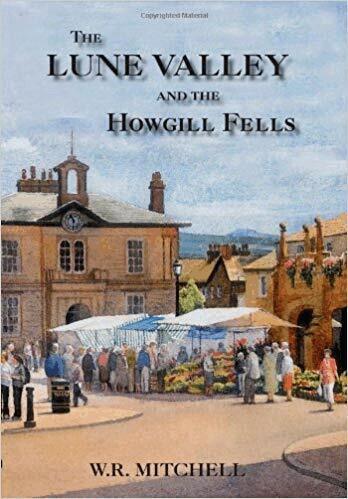
The Lune Valley is in border country, a historic and picturesque divide between the Lake District and the Yorkshire Dales, the Silurian rocks of the former separated by a geological fault from the Carboniferous rocks of the latter. It has been suggested the area should be taken into the Yorkshire Dales National Park, but for now it guards its own unique identity. To the Romans, the valley provided a low-lying route between the Lancashire Plain and Solway Firth. It took the Anglo-Saxons to clear the tracts of forest and create settlements with the suffix -ton.The Lune river, despite rising in austere country, makes what historian T.D. Whitaker described as ‘a graceful curve about a peninsula of meadow and pasture, exuberantly fertile’, and in Edwardian times this rich agricultural backdrop provided the setting for grand estates. The region contains the ancient market towns of Kirkby Lonsdale, approached for centuries from the south via Devil’s Bridge, which spanned a limestone gorge, and Sedbergh, which lies in the imposing presence of the hill known as Winder. The Howgill Fells are a cluster of grassy hills which impart to the landscape an undeniable grandeur when viewed from the Lune Gorge by road or rail travellers. At Cautley Spout, in the east, water descends for 700 feet in a series of gigantic leaps. Casterton Fell, in Upper Lunesdale, is noted for an extensive web of potholes and caves, and in the valley of the Lyvennet, near Tebay, is a scattering of ‘thunderstones’, of pink Shap granite.This readable and informative history examines the geology, farming, crafts and industries of the Lune Valley and Howgill Fells, as well as the transport, religious affairs, sport and culture of this distinctive region. It is illustrated throughout and will be enjoyed not only by those who live here but also by those who choose, with good reason, to visit.