W. Seth Carus - Böcker
Visar alla böcker från författaren W. Seth Carus. Handla med fri frakt och snabb leverans.
6 produkter
6 produkter
809 kr
Skickas inom 10-15 vardagar
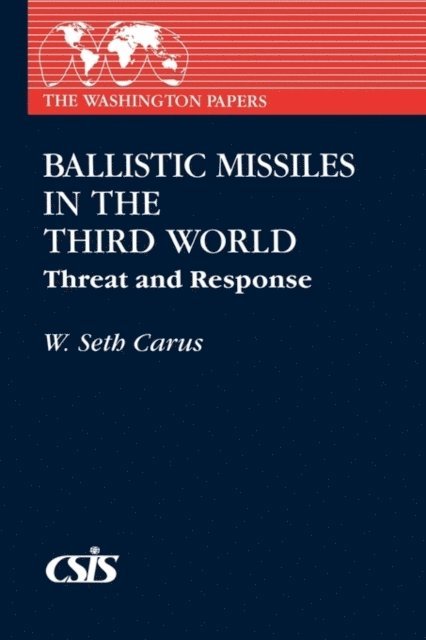
The proliferation of ballistic missiles in the Third World has posed a new type of challenge to policy makers in the United States. More than twenty Third World countries either possess surface-to-surface missiles or are trying to develop or acquire them. Current trends suggest that the number of countries with missiles will increase in the 1990s and that the capabilities of the available systems will also grow. W. Seth Carus assesses the threat of such proliferation to United States military forces as well as those of its allies operating in the Third World. The book studies the military utility of these missiles to the countries that possess them and covers the various military responses of Third World countries to missile proliferation.Carus also examines the various attempts the United States has made to slow the proliferation of ballistic missiles. Washington has joined many of its allies in the Missile Technology Control Regime (MTCR), a suppliers agreement designed to restrict exports of missiles and missile technologies to the Third World. According to Carus, efforts have been made to persuade the Soviet Union, China and other countries to abide by the provisions of the MTCR. After discussing the bilateral talks with proliferating countries, Carus also analyzes the attempts made to derail specific missile programs and the difficulties involved in controlling missile technology.
381 kr
Skickas inom 10-15 vardagar
The proliferation of ballistic missiles in the Third World has posed a new type of challenge to policy makers in the United States. More than twenty Third World countries either possess surface-to-surface missiles or are trying to develop or acquire them. Current trends suggest that the number of countries with missiles will increase in the 1990s and that the capabilities of the available systems will also grow. W. Seth Carus assesses the threat of such proliferation to United States military forces as well as those of its allies operating in the Third World. The book studies the military utility of these missiles to the countries that possess them and covers the various military responses of Third World countries to missile proliferation.Carus also examines the various attempts the United States has made to slow the proliferation of ballistic missiles. Washington has joined many of its allies in the Missile Technology Control Regime (MTCR), a suppliers agreement designed to restrict exports of missiles and missile technologies to the Third World. According to Carus, efforts have been made to persuade the Soviet Union, China and other countries to abide by the provisions of the MTCR. After discussing the bilateral talks with proliferating countries, Carus also analyzes the attempts made to derail specific missile programs and the difficulties involved in controlling missile technology.
381 kr
Skickas inom 10-15 vardagar
Seth Carus's book is a unique combination of scholarly discipline and astute political judgment. This is a succinct and insightful analysis of one of the most vital security challenges of this century. Janne E. Nolan Senior Fellow The Brookings Institution Since the vivid images of SCUD missile attacks on Israel and Saudi Arabia were flashed on television screens all over the world, many have wondered how a country like Iraq could acquire and use such long-range ballistic missiles. Although Iran and Iraq had fired these missiles at each other many times during their 1980-88 war, the threat posed by Saddam Hussein's missiles was not fully realized until the SCUDs began raining down on Israel, and Saudi Arabia at the start of the 1991 Persian Gulf War. This timely book by missile expert W. Seth Carus, written in cooperation with the Center for Strategic and International Studies and including a foreword by Edward N. Luttwak, contains an alarming assessment of the missile threat worldwide. An up-to-the-minute postscript on the American-Iraqi war and its effects on further ballistic missile proliferation throughout the Third World is also included. Carus presents the facts behind the spread of ballistic missiles and their technology to Third World countries and suggests plausible responses for the United States and its allies.Various developing nations--among them Iran, Iraq, Libya, North and South Korea, Brazil, Syria, Israel, Saudi Arabia, India, and South Africa--already possess large numbers of ballistic missiles and no longer rely on the superpowers alone for their weapons procurement or production. Carus covers all aspects of ballistic missiles--their capabilities and disadvantages, their possible fitting with chemical or nuclear warheads, their attractiveness for Third World leaders, and the responses of Third World countries to missile arsenals in neighboring states. The success of cruise missiles and anti-missile missiles (such as Patriots) in the Persian Gulf War make these missiles of even greater interest to Third World countries. Carus warns of the dire consequences of ignoring the spread of missiles and their technology to areas of the world where future wars are likely to occur.
809 kr
Skickas inom 10-15 vardagar
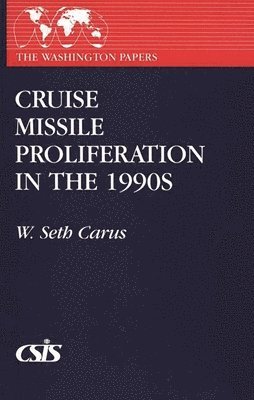
The proliferation of advanced weapons to volatile regions of the world has become a major issue in the post Cold War era. It was thought that no Third World nation could ever pose a technologically-based threat to the great powers by acquiring advanced weaponry. But this has proved to be wrong. The Persian Gulf War changed the worldwide perception of the spread of ballistic missiles to countries like Iraq. Access to a new type of weapon--cruise missiles--poses an even greater threat. With technology that is accessible, affordable, and relatively simple to produce, Third World countries could acquire highly accurate, long-range cruise missile forces to escalate local conflicts and threaten the forces and even the territories of the industrial powers.This book is a warning to policymakers. It is not too late to confront the realities of cruise missile proliferation and to devise international responses that could contain the worst possible consequences. Carus proposes a new regime of technology controls, security-building measures, and conflict resolution that need to be considered, and acted on, by policymakers and international relations experts everywhere.
368 kr
Skickas inom 10-15 vardagar
The proliferation of advanced weapons to volatile regions of the world has become a major issue in the post Cold War era. It was thought that no Third World nation could ever pose a technologically-based threat to the great powers by acquiring advanced weaponry. But this has proved to be wrong. The Persian Gulf War changed the worldwide perception of the spread of ballistic missiles to countries like Iraq. Access to a new type of weapon--cruise missiles--poses an even greater threat. With technology that is accessible, affordable, and relatively simple to produce, Third World countries could acquire highly accurate, long-range cruise missile forces to escalate local conflicts and threaten the forces and even the territories of the industrial powers.This book is a warning to policymakers. It is not too late to confront the realities of cruise missile proliferation and to devise international responses that could contain the worst possible consequences. Carus proposes a new regime of technology controls, security-building measures, and conflict resolution that need to be considered, and acted on, by policymakers and international relations experts everywhere.
285 kr
Skickas inom 5-8 vardagar