W. Wat Hopkins – författare
Visar alla böcker från författaren W. Wat Hopkins. Handla med fri frakt och snabb leverans.
12 produkter
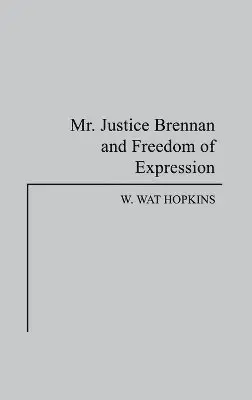
Mr. Justice Brennan and Freedom of Expression
Inbunden, 1991
785 kr
Lägg i varukorg
On July 21, 1990, Associate Justice William J. Brennan, Jr., announced his resignation from the nation's highest court. The judicial career of the man who Wat Hopkins considers the United States Supreme Court's premier protector of expression came to an end. Hopkins examines the body of Justice …
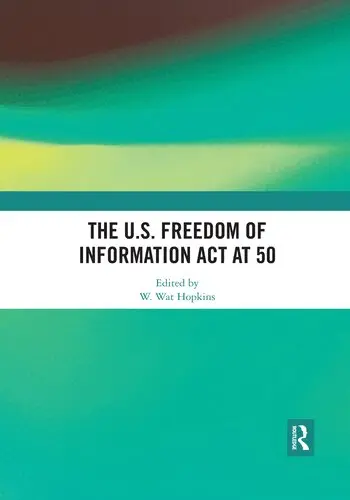
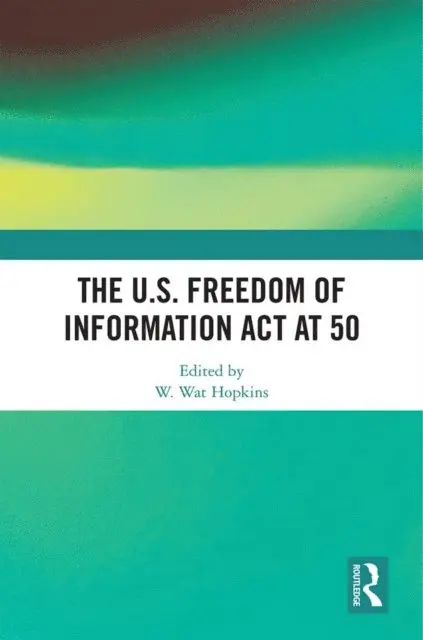
U.S. Freedom of Information Act at 50
Häftad, 2020
448 kr
Lägg i varukorg
The federal Freedom of Information Act (FOIA), which recently turned 50, has been hailed as the primary means by which US citizens can know about how their governors operate in a democratic republic. Recently, however, it has been criticized as ineffective because it is cumbersome and full of …
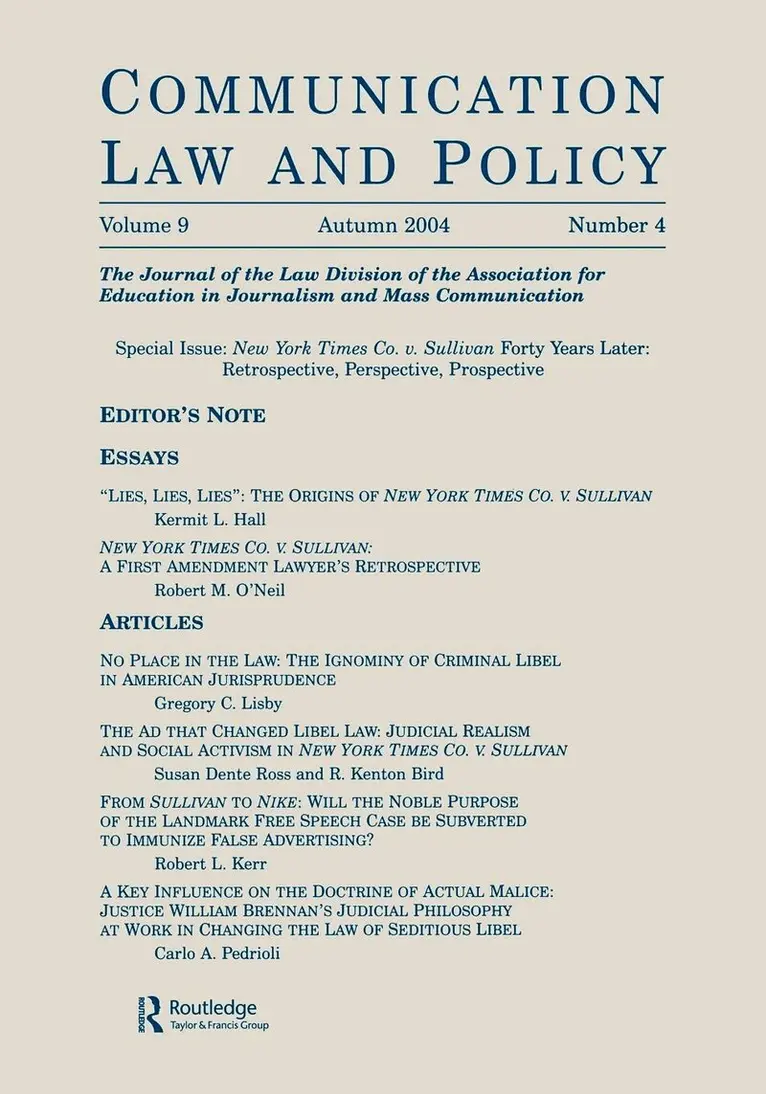
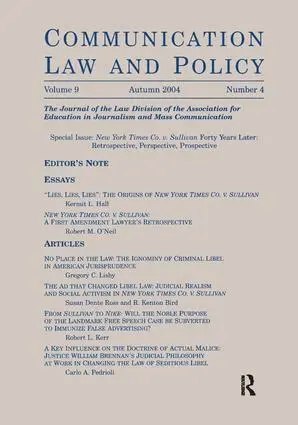
New York Times Co. v. Sullivan Forty Years Later
Retrospective, Perspective, Prospective:a Special Issue of communication Law and Policy
Häftad, 2004
341 kr
Lägg i varukorg
The need to protect free speech on matters of governing importance--more than any other element of government--is the defining factor of a free society. Nowhere in the law is that prospect more clearly explained than in the opinion in Times v. Sullivan. This special issue provides an example of the …
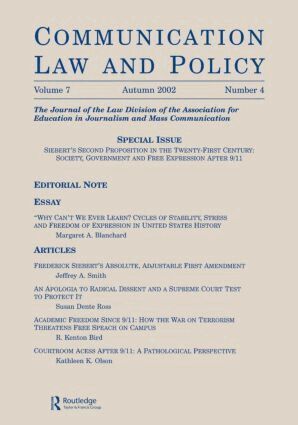
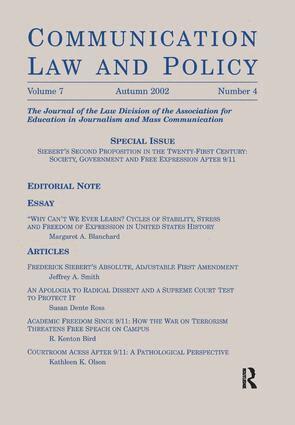
Siebert's Second Proposition in the Twenty-first Century
Society, Government and Free Expression After 9/11:a Special Issue of communication Law and Policy
Häftad, 2002
638 kr
Lägg i varukorg
In 1952, legal scholar and historian Frederick S. Siebert published his monumental study of three centuries of press freedom in England, in which he enunciated and supported two propositions that were remarkable for their simplicity. The second of the propositions has become a guiding principle in …
New York Times Co. v. Sullivan Forty Years Later
Retrospective, Perspective, Prospective:a Special Issue of communication Law and Policy
Inbunden, 2017
3063 kr
Lägg i varukorg
The need to protect free speech on matters of governing importance--more than any other element of government--is the defining factor of a free society. Nowhere in the law is that prospect more clearly explained than in the opinion in Times v. Sullivan. This special issue provides an example of the …
Siebert's Second Proposition in the Twenty-first Century
Society, Government and Free Expression After 9/11:a Special Issue of communication Law and Policy
Inbunden, 2017
3063 kr
Lägg i varukorg
In 1952, legal scholar and historian Frederick S. Siebert published his monumental study of three centuries of press freedom in England, in which he enunciated and supported two propositions that were remarkable for their simplicity. The second of the propositions has become a guiding principle in …
U.S. Freedom of Information Act at 50
Inbunden, 2018
1399 kr
Lägg i varukorg
The federal Freedom of Information Act (FOIA), which recently turned 50, has been hailed as the primary means by which US citizens can know about how their governors operate in a democratic republic. Recently, however, it has been criticized as ineffective because it is cumbersome and full of …
U.S. Freedom of Information Act at 50
E-bok, 2019
526 kr
Lägg i varukorg
The federal Freedom of Information Act (FOIA), which recently turned 50, has been hailed as the primary means by which US citizens can know about how their governors operate in a democratic republic. Recently, however, it has been criticized as ineffective because it is cumbersome and full of …
U.S. Freedom of Information Act at 50
E-bok, 2019
526 kr
Lägg i varukorg
The federal Freedom of Information Act (FOIA), which recently turned 50, has been hailed as the primary means by which US citizens can know about how their governors operate in a democratic republic. Recently, however, it has been criticized as ineffective because it is cumbersome and full of …
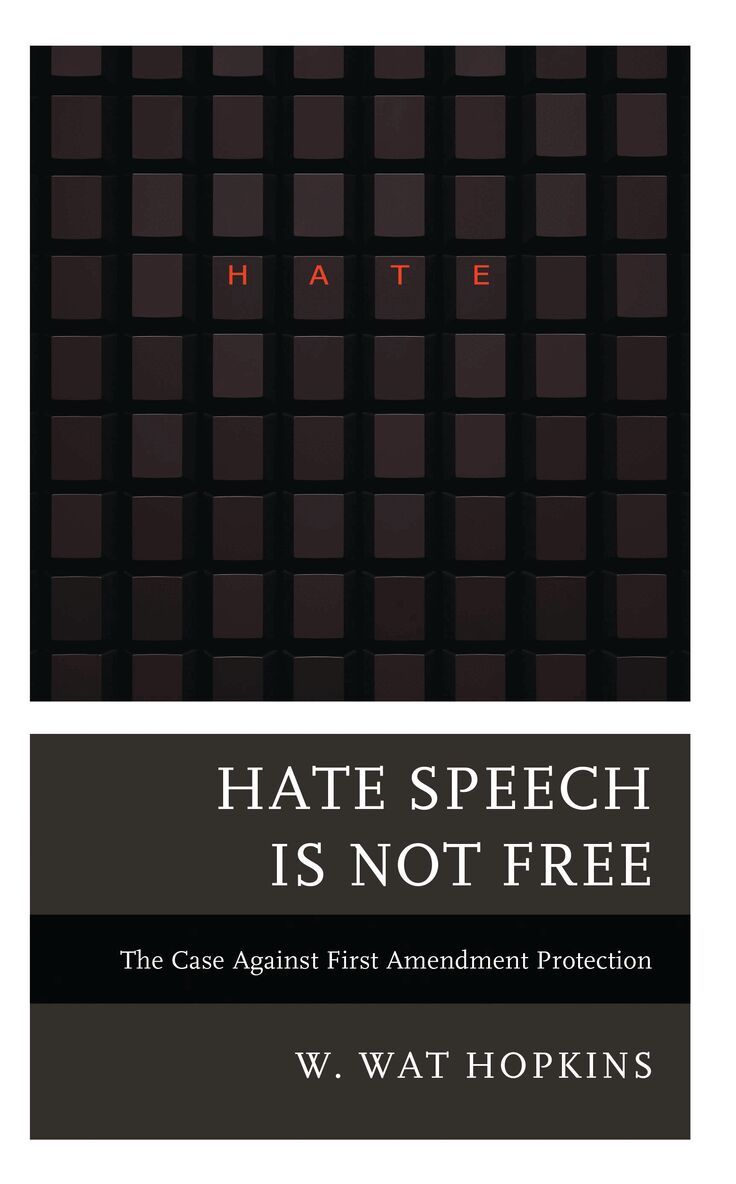
Hate Speech Is Not Free
The Case Against First Amendment Protection
Inbunden, 2024
979 kr
Lägg i varukorg
Hate speech has been a societal problem for many years and has seen a resurgence recently alongside political divisiveness and technologies that ease and accelerate the spread of messages. Methods to protect individuals and groups from hate speech have eluded lawmakers as the call for restrictions …
Hate Speech Is Not Free
The Case Against First Amendment Protection
E-bok, 2024
1076 kr
Lägg i varukorg
Hate speech has been a societal problem for many years and has seen a resurgence recently alongside political divisiveness and technologies that ease and accelerate the spread of messages. Methods to protect individuals and groups from hate speech have eluded lawmakers as the call for restrictions …
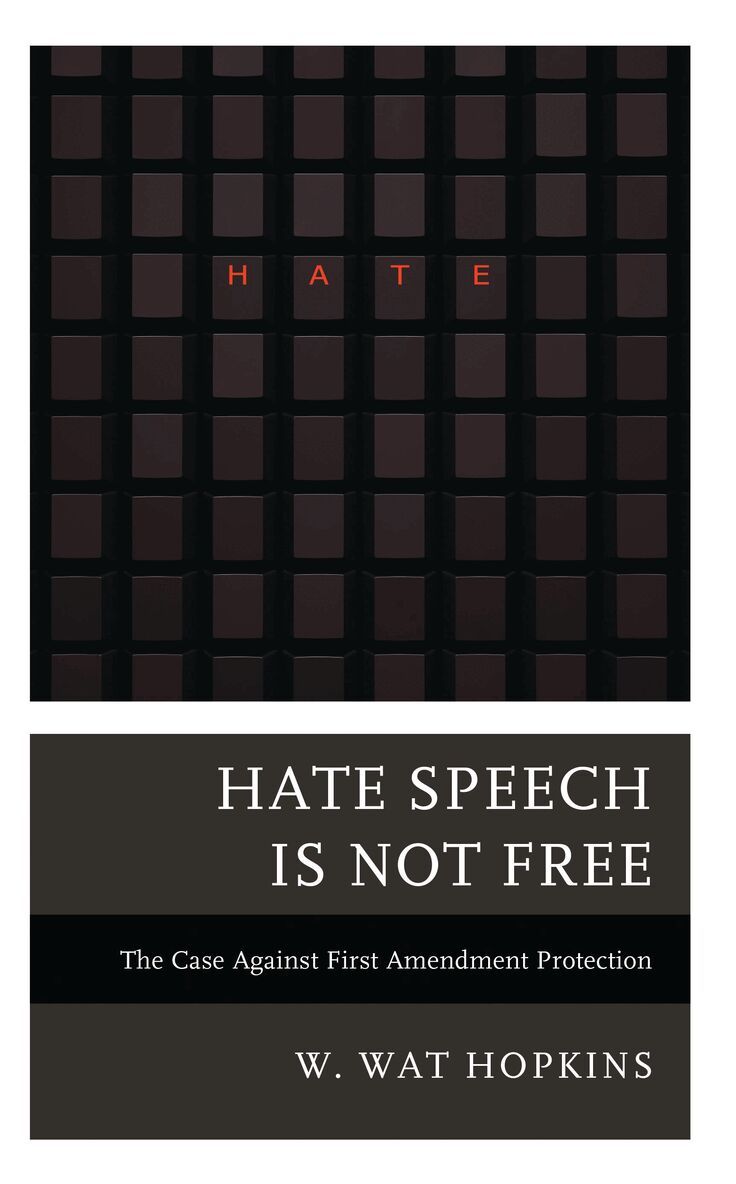
Hate Speech Is Not Free
The Case Against First Amendment Protection
Häftad, 2026
382 kr
Lägg i varukorg
Hate speech has been a societal problem for many years and has seen a resurgence recently alongside political divisiveness and technologies that ease and accelerate the spread of messages. Methods to protect individuals and groups from hate speech have eluded lawmakers as the call for restrictions …