W.A. Thomas - Böcker
Visar alla böcker från författaren W.A. Thomas. Handla med fri frakt och snabb leverans.
5 produkter
5 produkter
3 280 kr
Skickas inom 10-15 vardagar
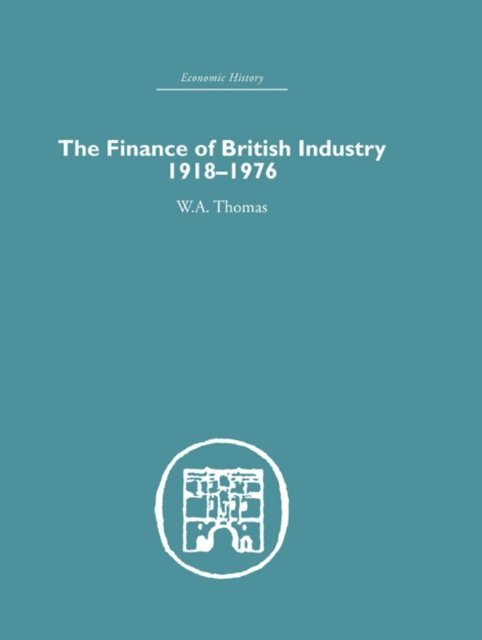
How has British industry financed itself in the past? With the current debate on industry's financial strategy, this study of the past sixty years is a particularly timely contribution to the discussions on the future financing of industry. This book gives, for the inter-war years, a detailed examination of the main sources of funds, covering long-term and short-term funding. It also traces the transition in the new issue market and explores the course of firms' own internal funds, and ends his coverage of the pre-war years with a chapter on the Macmillan Gap.Dr Thomas puts particular emphasis on the influence of government policy on the financing of industry in post-war Britain. He also explains the effects the new sources of finance have had on industry and the major public corporations. His last chapter surveys the later developments in the main sources and uses of funds and the factors responsible for them, and includes an illuminating comparison of financial practices in some of the major overseas industrial countries. Dr. Thomas has written a clear and objective account describing the trends in finance since the First World War. His notably well-documented book is an essential reference work.

2 793 kr
Skickas inom 10-15 vardagar
First Published in 2005. The provincial stock exchanges have long been an area of considerable neglect in the study of the history of finance and investment. They have always been dwarfed by the London Stock Exchange, but at least from 1836 onwards it was not the only market in the country. Those who have traced the development of the English capital market have been careful to point to the importance of provincial capital in railway promotion, yet while the role of provincial capital was emphasized, the praises of the 'vehicle' which helped to mobilize such funds went unsaid. It is difficult to see how provincial investors would have been prepared to commit so much of their capital resources for such purposes without some assurance of being able to liquidate their holdings fairly speedily, since for most of them London was at some distance. This book is an attempt to fill a gap—to trace the origins of the provincial investment 'vehicle' and its progress to the present day.
1 434 kr
Tillfälligt slut
Emerging stock markets have attracted considerable academic interest over the last ten years. The growth of these emerging markets has been impressive as developing countries seek to mobilize both domestic and international funds to finance investment. In this respect the stock exchange has become a symbol of development. Yet many new markets have been characterized by high price volatility, variable trading conditions and occasional ’crashes’. Chinese markets are no exception to these trends. Drawing on a range of primary and secondary sources, including a collection of weekly share lists of the early market and later of the stock exchange from The North China Herald, Arthur Thomas examines the financial evolution of Shanghai and the contribution of the major western banking institutions which financed the early import and export trade. Opening chapters provide an account of the commercial activity of the area, the genesis of the share market, its organizational development and dealing methods, and the leading brokers and broking firms in Shanghai. The latter part of the book chronicles the behaviour of the market and the influences which produced periodic booms, crises and slumps, culminating in the final collapse of the market with the arrival of war in 1941. The late 1980s witnessed the re-emergence of the Chinese market with ’experiments’ in Shanghai and Shenzhen. These emerging experimental stock markets grew rapidly with considerable potential in their early years, but they have also been prey to high volatility and difficulty in building up a developed financial infrastructure. Western Capitalism in China explores the fluctuations in the fortunes of the Shanghai Stock Exchange and points to favourable future potential, with the possibility of a major market consolidation in the future. W. A. Thomas lectures in the Department of Economics and Accounting at the University of Liverpool.
690 kr
Skickas inom 10-15 vardagar
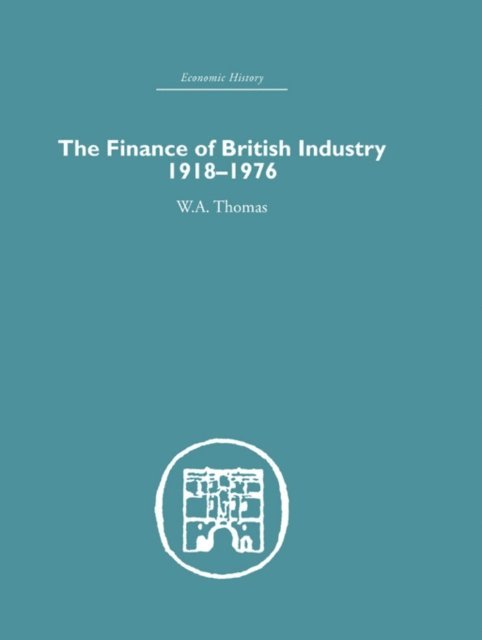
How has British industry financed itself in the past? With the current debate on industry's financial strategy, this study of the past sixty years is a particularly timely contribution to the discussions on the future financing of industry. This book gives, for the inter-war years, a detailed examination of the main sources of funds, covering long-term and short-term funding. It also traces the transition in the new issue market and explores the course of firms' own internal funds, and ends his coverage of the pre-war years with a chapter on the Macmillan Gap.Dr Thomas puts particular emphasis on the influence of government policy on the financing of industry in post-war Britain. He also explains the effects the new sources of finance have had on industry and the major public corporations. His last chapter surveys the later developments in the main sources and uses of funds and the factors responsible for them, and includes an illuminating comparison of financial practices in some of the major overseas industrial countries. Dr. Thomas has written a clear and objective account describing the trends in finance since the First World War. His notably well-documented book is an essential reference work.
690 kr
Skickas inom 10-15 vardagar
First Published in 2005. The provincial stock exchanges have long been an area of considerable neglect in the study of the history of finance and investment. They have always been dwarfed by the London Stock Exchange, but at least from 1836 onwards it was not the only market in the country. Those who have traced the development of the English capital market have been careful to point to the importance of provincial capital in railway promotion, yet while the role of provincial capital was emphasized, the praises of the 'vehicle' which helped to mobilize such funds went unsaid. It is difficult to see how provincial investors would have been prepared to commit so much of their capital resources for such purposes without some assurance of being able to liquidate their holdings fairly speedily, since for most of them London was at some distance. This book is an attempt to fill a gap—to trace the origins of the provincial investment 'vehicle' and its progress to the present day.