Wahyu Prasetyawan - Böcker
Visar alla böcker från författaren Wahyu Prasetyawan. Handla med fri frakt och snabb leverans.
3 produkter
3 produkter
371 kr
Skickas inom 7-10 vardagar
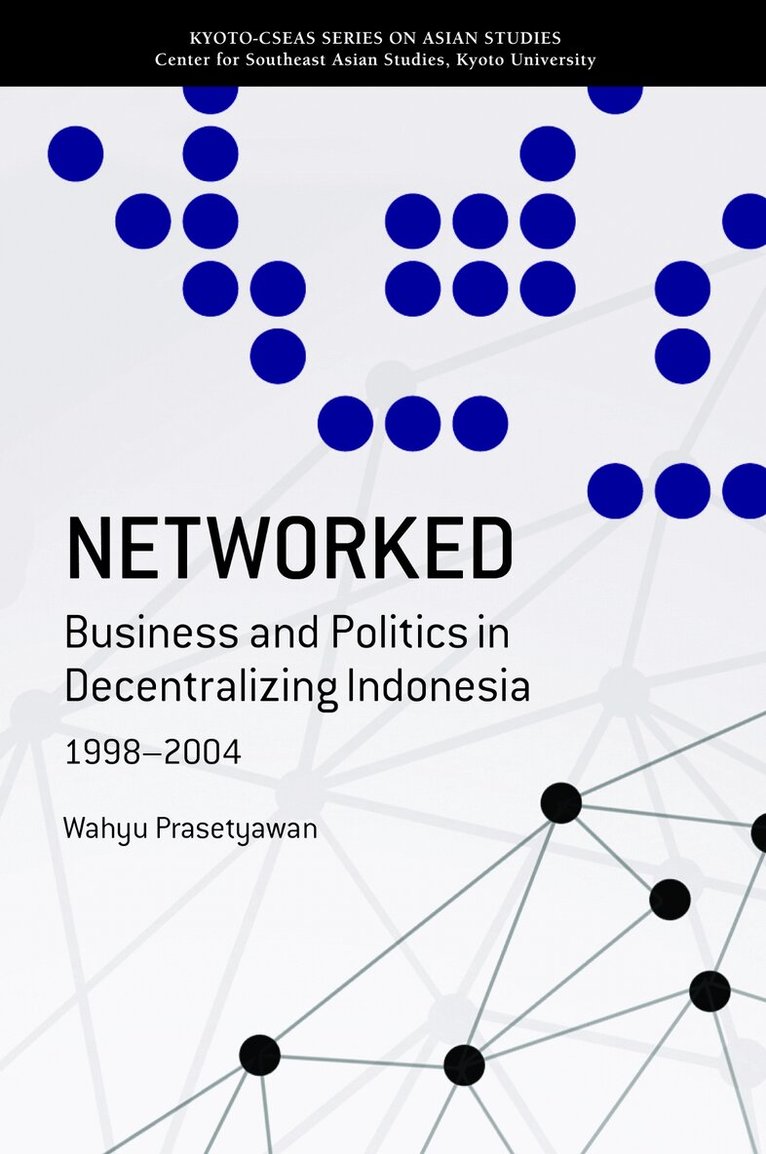
After the fall of Suharto in Indonesia in 1998, the new government under B.J. Habibie introduced a decentralization policy that dramatically changed relations between the central and local governments. Under decentralization, local governments engaged in bureaucratic and political conflict with the central government over control of natural resources and fairer distribution of rents from these resources. Local elites demanded greater involvement in shaping economic and political institutions.Decentralization is among the most important political economic developments in Indonesia over the last thirty years. This book evaluates three cases (in the provinces of East Kalimantan, West Sumatra, and Riau) of deepseated political conflict and intrigue implicating central government, local governments and multinational companies. The author’s analysis shows how competition to manage and control Indonesia’s vast natural resources is no longer limited to national level interests, nor can it be restricted only to the local level. The study elucidates changes in the structure of the national political economy as the result of deep engagement of local actors in disputes with the central government over control of natural resources. These changes will mean new patterns of distribution of natural resource rents, with implications for Indonesia’s evolving democratic politics and modes of governance. The study is also relevant to investors and resource industry players trying to understand Indonesia’s political economy.
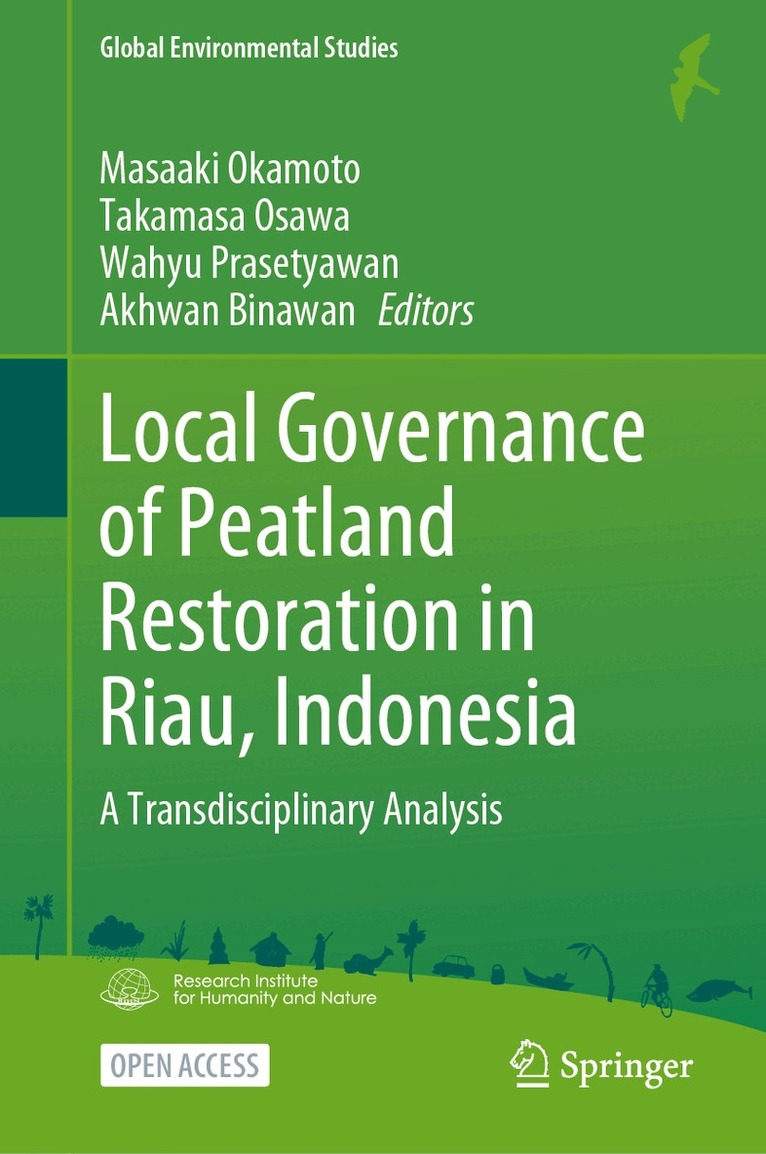
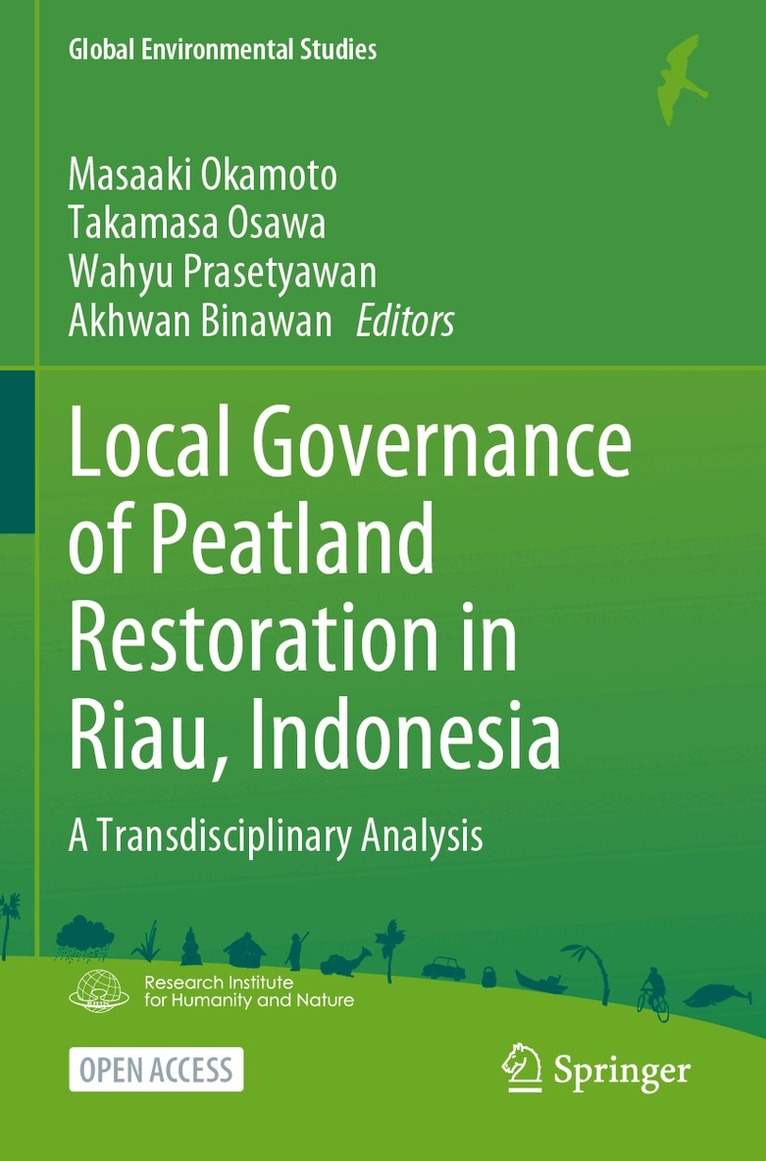
Local Governance of Peatland Restoration in Riau, Indonesia
A Transdisciplinary Analysis
Inbunden, Engelska, 2023
371 kr
Skickas inom 5-8 vardagar
This open access book is one in a series of four volumes introducing peatland conservation and restoration in Indonesia. It focuses on local governance, in particular on regional and local perspectives in Riau, the most peat-destructed province of Indonesia. The book fills a vital gap in the existing literature that overlooks social science and humanities perspectives. Written by authors from different disciplines and backgrounds (including scholars and NGO activists), the approaches to the topic are various and unique, including analysis of GPS logs, social media, geospatial assessments, online interviews (conducted due to the Covid-19 pandemic), and more conventional questionnaires and surveys of community members. The chapters cover an interdisciplinary understanding of peatland destruction and broadly offer insights into environmental governance. While presenting combined studies of established fieldwork methodologies and contemporary technology such as drones and geospatial information, the book also explores the potential of long-distance research with rural communities through online facilitation, which was brought about by Covid-19, but that may have longterm implications.Readers will gain a comprehensive understanding of the complexities surrounding peatland conservation and restoration and recognize the significance of locally inclusive approaches that use contemporary but accessible technologies to sustainably govern the globally important resource of peatland. That approach would be useful for other environmentally fragile but important regions and give some ideas to achieve the United Nations’ SDGs for 1)No Poverty, 5)Gender Equality, 13)Climate Action, 15)Life of Land.
Local Governance of Peatland Restoration in Riau, Indonesia
A Transdisciplinary Analysis
Häftad, Engelska, 2023
294 kr
Skickas inom 5-8 vardagar
This open access book is one in a series of four volumes introducing peatland conservation and restoration in Indonesia. It focuses on local governance, in particular on regional and local perspectives in Riau, the most peat-destructed province of Indonesia. The book fills a vital gap in the existing literature that overlooks social science and humanities perspectives. Written by authors from different disciplines and backgrounds (including scholars and NGO activists), the approaches to the topic are various and unique, including analysis of GPS logs, social media, geospatial assessments, online interviews (conducted due to the Covid-19 pandemic), and more conventional questionnaires and surveys of community members. The chapters cover an interdisciplinary understanding of peatland destruction and broadly offer insights into environmental governance. While presenting combined studies of established fieldwork methodologies and contemporary technology such as drones and geospatial information, the book also explores the potential of long-distance research with rural communities through online facilitation, which was brought about by Covid-19, but that may have longterm implications.Readers will gain a comprehensive understanding of the complexities surrounding peatland conservation and restoration and recognize the significance of locally inclusive approaches that use contemporary but accessible technologies to sustainably govern the globally important resource of peatland. That approach would be useful for other environmentally fragile but important regions and give some ideas to achieve the United Nations’ SDGs for 1)No Poverty, 5)Gender Equality, 13)Climate Action, 15)Life of Land.