Wai Chee Dimock - Böcker
Visar alla böcker från författaren Wai Chee Dimock. Handla med fri frakt och snabb leverans.
10 produkter
10 produkter
1 049 kr
Skickas inom 7-10 vardagar
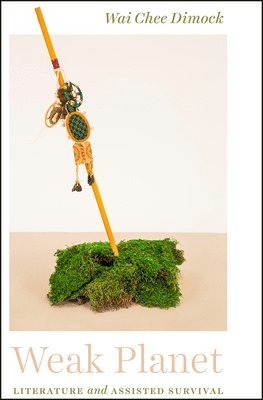
Vulnerability. We see it everywhere. In once permanent institutions. In runaway pandemics. In democracy itself. And most frighteningly, in ecosystems with no sustainable future. Against these large-scale hazards of climate change, what can literature teach us? This is the question Wai Chee Dimock asks in Weak Planet, proposing a way forward, inspired by works that survive through kinship with strangers and with the nonhuman world.Drawing on Native American studies, disability studies, and environmental humanities, Dimock shows how hope can be found not in heroic statements but in incremental and unspectacular teamwork. Reversing the usual focus on hegemonic institutions, she highlights instead incomplete gestures given an afterlife with the help of others. She looks at Louise Erdrich’s and Sherman Alexie’s user-amended captivity narratives; nontragic sequels to Moby-Dick by C. L. R. James, Frank Stella, and Amitav Ghosh; induced forms of Irishness in Henry James, Colm Tóibín, W. B. Yeats, and Gish Jen; and the experimentations afforded by a blurry Islam in works by Henri Matisse, James Joyce, Ezra Pound, and Langston Hughes. Celebrating literature’s durability as an assisted outcome, Weak Planet gives us new ways to think about our collective future.
243 kr
Skickas inom 7-10 vardagar
Vulnerability. We see it everywhere. In once permanent institutions. In runaway pandemics. In democracy itself. And most frighteningly, in ecosystems with no sustainable future. Against these large-scale hazards of climate change, what can literature teach us? This is the question Wai Chee Dimock asks in Weak Planet, proposing a way forward, inspired by works that survive through kinship with strangers and with the nonhuman world.Drawing on Native American studies, disability studies, and environmental humanities, Dimock shows how hope can be found not in heroic statements but in incremental and unspectacular teamwork. Reversing the usual focus on hegemonic institutions, she highlights instead incomplete gestures given an afterlife with the help of others. She looks at Louise Erdrich’s and Sherman Alexie’s user-amended captivity narratives; nontragic sequels to Moby-Dick by C. L. R. James, Frank Stella, and Amitav Ghosh; induced forms of Irishness in Henry James, Colm Tóibín, W. B. Yeats, and Gish Jen; and the experimentations afforded by a blurry Islam in works by Henri Matisse, James Joyce, Ezra Pound, and Langston Hughes. Celebrating literature’s durability as an assisted outcome, Weak Planet gives us new ways to think about our collective future.
715 kr
Skickas inom 3-6 vardagar
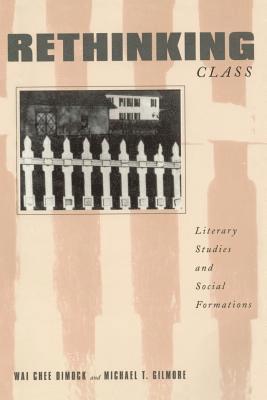
In recent years, as the centrality of race and gender has been established in literary studies, class has often been seen as a crude and reductionist concept. For this volume, the editors have commissioned essays arguing for the continuing vitality as well as the energizing problematics of the category of class. The book's introduction addresses the ways that the concept of class has been employed in both literary and historical analysis, and the importance of a renewed interest in class in the current trend toward historicism. The first section of the book restores class to its moment of inception as both a theoretical construct and an objectively descriptive category. In the second section, the contributors test some of the general propositions set forth by examining the categorization of class as itself a history and a problematic. The text concludes by asking how the category of class can enrich and complicate our response to specific literary texts.
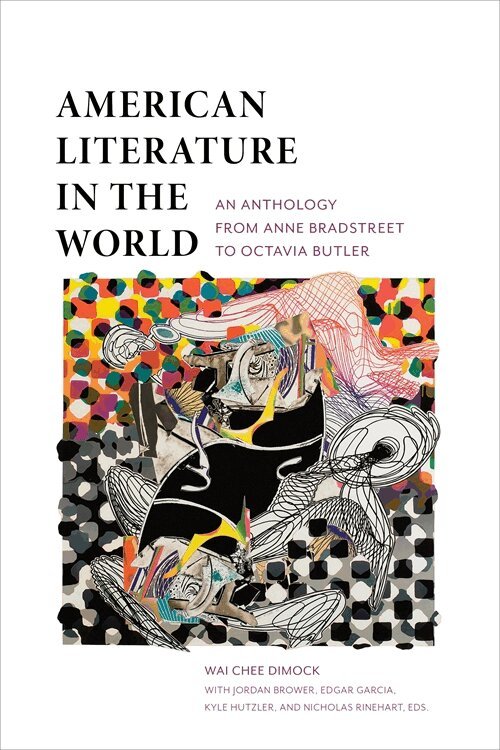
American Literature in the World
An Anthology from Anne Bradstreet to Octavia Butler
Inbunden, Engelska, 2017
1 637 kr
Skickas inom 7-10 vardagar
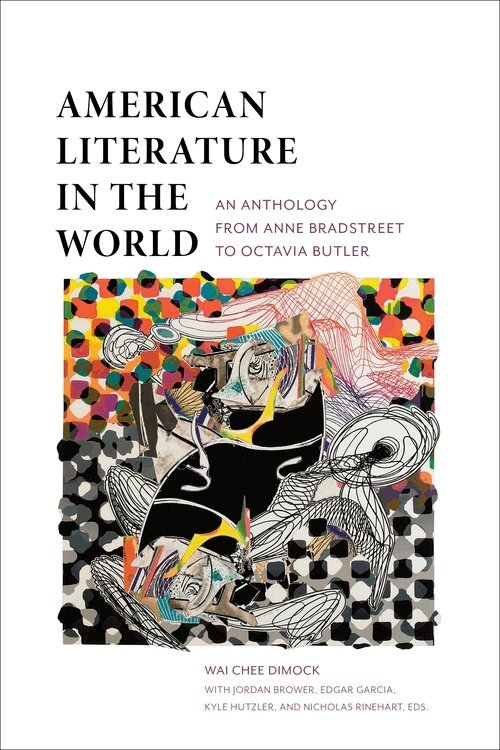
American Literature in the World is an innovative anthology offering a new way to understand the global forces that have shaped the making of American literature. The wide-ranging selections are structured around five interconnected nodes: war; food; work, play, and travel; religions; and human and nonhuman interfaces. Through these five categories, Wai Chee Dimock and a team of emerging scholars reveal American literature to be a complex network, informed by crosscurrents both macro and micro, with local practices intensified by international concerns. Selections include poetry from Anne Bradstreet to Jorie Graham; the fiction of Herman Melville, Gertrude Stein, and William Faulkner; Benjamin Franklin's parables; Frederick Douglass's correspondence; Theodore Roosevelt's Rough Riders; Langston Hughes's journalism; and excerpts from The Autobiography of Malcom X as well as Octavia Butler's Dawn. Popular genres such as the crime novels of Raymond Chandler, the comics of Art Spiegelman, the science fiction of Philip K. Dick, and recipes from Alice B. Toklas are all featured.More recent authors include Junot Diaz, Leslie Marmon Silko, Jonathan Safran Foer, Edwidge Danticat, Gary Shteyngart, and Jhumpa Lahiri. These selections speak to readers at all levels and invite them to try out fresh groupings and remap American literature. A continually updated interactive component at www.amlitintheworld.yale.edu complements the anthology.
American Literature in the World
An Anthology from Anne Bradstreet to Octavia Butler
Häftad, Engelska, 2017
415 kr
Skickas inom 7-10 vardagar
American Literature in the World is an innovative anthology offering a new way to understand the global forces that have shaped the making of American literature. The wide-ranging selections are structured around five interconnected nodes: war; food; work, play, and travel; religions; and human and nonhuman interfaces. Through these five categories, Wai Chee Dimock and a team of emerging scholars reveal American literature to be a complex network, informed by crosscurrents both macro and micro, with local practices intensified by international concerns. Selections include poetry from Anne Bradstreet to Jorie Graham; the fiction of Herman Melville, Gertrude Stein, and William Faulkner; Benjamin Franklin's parables; Frederick Douglass's correspondence; Theodore Roosevelt's Rough Riders; Langston Hughes's journalism; and excerpts from The Autobiography of Malcom X as well as Octavia Butler's Dawn. Popular genres such as the crime novels of Raymond Chandler, the comics of Art Spiegelman, the science fiction of Philip K. Dick, and recipes from Alice B. Toklas are all featured.More recent authors include Junot Diaz, Leslie Marmon Silko, Jonathan Safran Foer, Edwidge Danticat, Gary Shteyngart, and Jhumpa Lahiri. These selections speak to readers at all levels and invite them to try out fresh groupings and remap American literature. A continually updated interactive component at www.amlitintheworld.yale.edu complements the anthology.
665 kr
Skickas inom 3-6 vardagar
In Residues of Justice, Wai Chee Dimock probes the conceit of justice as a matter of measurable equivalence—those iconic scales that promise perfect balance—and finds what she calls the “residues” left behind by any attempt to translate lived conflicts into commensurate terms. Opening with Aristophanes’ The Frogs and moving through Aristotle’s proportional ethics, Kant, Rawls, and Mill, Dimock shows how justice has long been imagined as a language of ratios, universals, and adequation. Against this dream of objective fit—good for good, evil for evil—she foregrounds the incommensurate: what gets lost in translation when law seeks punishment, philosophy seeks foundations, and both presume a common currency of value. Engaging Michael Sandel’s critique of liberal justice and Carol Gilligan’s “ethic of care,” she reframes justice as one virtue among others, necessarily partial, historically contingent, and never exhaustive.Dimock’s signal move is to put literature alongside law and philosophy as a third, stubbornly recalcitrant language of justice. Through close readings of American writers—from Whitman’s democratic personhood and Cooper’s punitive zeal to Rebecca Harding Davis’s economic dispossession, Howells’s compensatory aspirations, Warner’s luck, and Chopin’s rights—she tracks where commensuration thins, frays, or fails altogether. The result is a powerful argument that literary representation exposes the limits of juridical and philosophical balancing acts, insisting on the unweighable remnants that any settlement leaves behind—and inviting more capacious, humane supplements to our adjudicative ideals.This title is part of UC Press's Voices Revived program, which commemorates University of California Press’s mission to seek out and cultivate the brightest minds and give them voice, reach, and impact. Drawing on a backlist dating to 1893, Voices Revived makes high-quality, peer-reviewed scholarship accessible once again using print-on-demand technology. This title was originally published in 1996.
754 kr
Skickas inom 7-10 vardagar
In Residues of Justice, Wai Chee Dimock probes the conceit of justice as a matter of measurable equivalence—those iconic scales that promise perfect balance—and finds what she calls the “residues” left behind by any attempt to translate lived conflicts into commensurate terms. Opening with Aristophanes’ The Frogs and moving through Aristotle’s proportional ethics, Kant, Rawls, and Mill, Dimock shows how justice has long been imagined as a language of ratios, universals, and adequation. Against this dream of objective fit—good for good, evil for evil—she foregrounds the incommensurate: what gets lost in translation when law seeks punishment, philosophy seeks foundations, and both presume a common currency of value. Engaging Michael Sandel’s critique of liberal justice and Carol Gilligan’s “ethic of care,” she reframes justice as one virtue among others, necessarily partial, historically contingent, and never exhaustive.Dimock’s signal move is to put literature alongside law and philosophy as a third, stubbornly recalcitrant language of justice. Through close readings of American writers—from Whitman’s democratic personhood and Cooper’s punitive zeal to Rebecca Harding Davis’s economic dispossession, Howells’s compensatory aspirations, Warner’s luck, and Chopin’s rights—she tracks where commensuration thins, frays, or fails altogether. The result is a powerful argument that literary representation exposes the limits of juridical and philosophical balancing acts, insisting on the unweighable remnants that any settlement leaves behind—and inviting more capacious, humane supplements to our adjudicative ideals.This title is part of UC Press's Voices Revived program, which commemorates University of California Press’s mission to seek out and cultivate the brightest minds and give them voice, reach, and impact. Drawing on a backlist dating to 1893, Voices Revived makes high-quality, peer-reviewed scholarship accessible once again using print-on-demand technology. This title was originally published in 1996.
488 kr
Skickas inom 7-10 vardagar
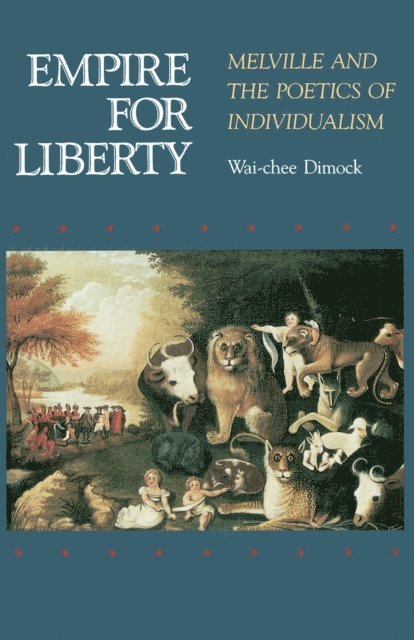
Wai Chee Dimock approaches Herman Melville not as a timeless genius, but as a historical figure caught in the politics of an imperial nation and an "imperial self." She challenges our customary view by demonstrating a link between the individualism that enabled Melville to write as a sovereign author and the nationalism that allowed America to grow into what Jefferson hoped would be an "empire for liberty."
330 kr
Skickas inom 7-10 vardagar
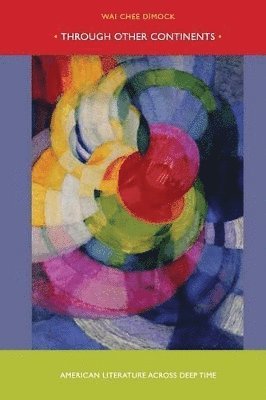
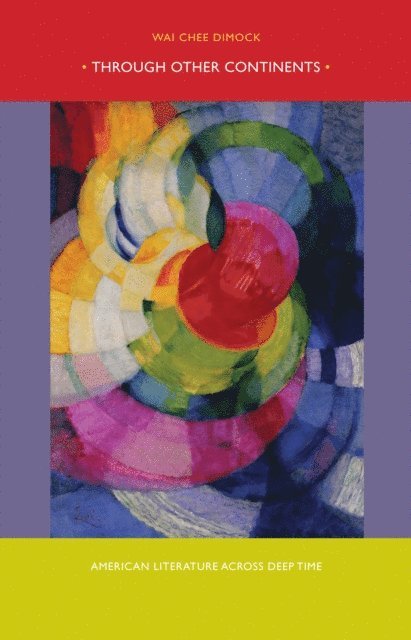
What we call American literature is quite often a shorthand, a simplified name for an extended tangle of relations." This is the argument of Through Other Continents, Wai Chee Dimock's sustained effort to read American literature as a subset of world literature. Inspired by an unorthodox archive--ranging from epic traditions in Akkadian and Sanskrit to folk art, paintings by Veronese and Tiepolo, and the music of the Grateful Dead--Dimock constructs a long history of the world, a history she calls "deep time." The civilizations of Mesopotamia, India, Egypt, China, and West Africa, as well as Europe, leave their mark on American literature, which looks dramatically different when it is removed from a strictly national or English-language context. Key authors such as Thoreau, Margaret Fuller, Ezra Pound, Robert Lowell, Gary Snyder, Leslie Silko, Gloria Naylor, and Gerald Vizenor are transformed in this light. Emerson emerges as a translator of Islamic culture; Henry James's novels become long-distance kin to Gilgamesh; and Black English loses its ungrammaticalness when reclassified as a creole tongue, meshing the input from Africa, Europe, and the Americas.Throughout, Dimock contends that American literature is answerable not to the nation-state, but to the human species as a whole, and that it looks dramatically different when removed from a strictly national or English-language context.
415 kr
Skickas inom 7-10 vardagar
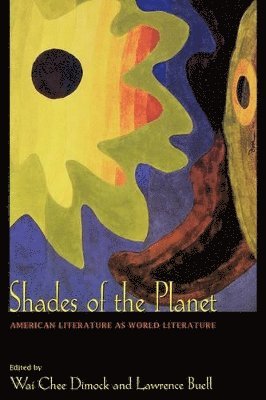
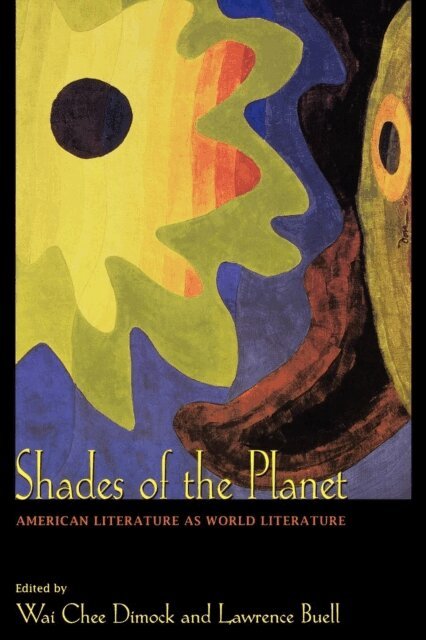
In a globalizing age, studying American literature in isolation from the rest of the world seems less and less justified. But is the conceptual box of the nation dispensable? And what would American literature look like without it?Leading scholars take up this debate in Shades of the Planet, beginning not with the United States as center, but with the world as circumference. This reversed frame yields a surprising landscape, alive with traces of West Africa, Eastern Europe, Iran, Iraq, India, China, Mexico, and Australia. The Broadway musical Oklahoma! has aboriginal antecedents; Black English houses an African syntax; American slavery consorts with the Holocaust; Philip Roth keeps company with Milan Kundera; the crime novel moves south of the border; and R. P. Blackmur lectures in Japan. A national literature becomes haunted by the world when that literature is seen extending to the Pacific, opening up to Islam, and accompanying African-American authors as they travel. Highlighting American literature as a fold in a planet-wide fabric, this pioneering volume transforms the field, redrawing its institutional as well as geographical map.The contributors are Rachel Adams, Jonathan Arac, Homi K.Bhabha, Lawrence Buell, Wai Chee Dimock, Susan Stanford Friedman, Paul Giles, David Palumbo-Liu, Ross Posnock, Joseph Roach, and Eric J. Sundquist.