Wai Weng Hew - Böcker
Visar alla böcker från författaren Wai Weng Hew. Handla med fri frakt och snabb leverans.
2 produkter
2 produkter
283 kr
Skickas inom 7-10 vardagar
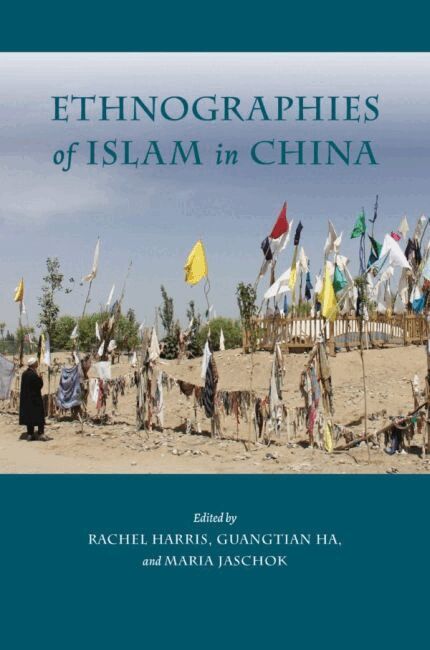
In the late 1970s Islam regained its force by generating novel forms of piety and forging new paths in politics throughout the world, including China. The Islamic revival in China, which came to fruition in the 2000s and the 2010s, prompted increases in government suppression but also intriguing resonances with the broader Muslim world—from influential theoretical and political contestations over Muslim women’s status, the popularization of mass media and the appearance of new patterns of consumption, to increases in transnational Muslim migration. Although China does not belong to the "Islamic world" as it is conventionally understood, China’s Muslims have strengthened and expanded their global connections and impact. Such significant shifts in Chinese Muslim life have received scant scholarly attention until now. With contributions from a wide variety of scholars—all sharing a commitment to the value of the ethnographic approach—this volume provides the first comprehensive account of China’s Islamic revival since the 1980s as the country struggled to recover from the wreckage of the Cultural Revolution. The authors show the multifarious nature of China’s Islam revival, which defies any reductive portrayal that paints it as a unified development motivated by a common ideology, and demonstrate how it was embedded in China’s broader economic transition. Most importantly, they trace the historical genealogies and sociopolitical conditions that undergird the crackdown on Muslim life across China, confronting head-on the difficulties of working with Muslims—Uyghur Muslims in particular—at a time of intense religious oppression, intellectual censorship, and intrusive surveillance technology. With chapters on both Hui and Uyghur Muslims, this book also traverses boundaries that often separate studies of these two groups, and illustrates with great clarity the value of disciplinary and methodological border-crossing. As such, Ethnographies of Islam in China is essential reading for those interested in Islam’s complexity in contemporary China and its broader relevance to the Muslim world and the changing nature of Chinese society seen through the prism of religion.
Chinese Ways of Being Muslim
Negotiating Ethnicity and Religiosity in Indonesia
Häftad, Engelska, 2017
283 kr
Skickas inom 7-10 vardagar
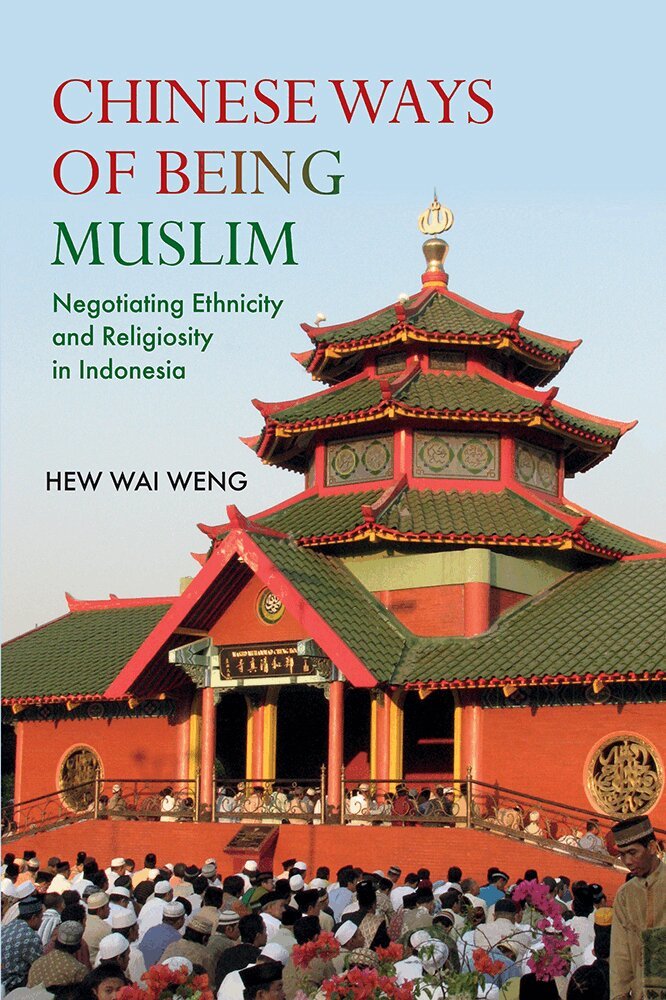
In contrast to many recent works on Muslim societies, which point to an increasing ‘de-culturalization’ and ‘purification’ of Islamic practices, this engaging study probes deeply into the nexus between religion and ethnicity. By exploring architectural designs, preaching activities, cultural celebrations, social participation and everyday practices, this book explores the formation and contestation of Chinese Muslim cultural identities in today’s Indonesia. Here, for instance, it scrutinizes Chinese Muslim leaders who strategically promote their unique identities by rearticulating their histories and cultivating ties with Muslims in China. Yet, their intentional mixing of Chineseness and Islam does not reflect all aspects of the multi-layered and multifaceted identities of ordinary Chinese Muslims - there is no single ‘Chinese way of being Muslim’ in Indonesia. Moreover, asserting Chinese identity and Islamic religiosity need not imply racial segregation and religious exclusion; it can act against them. The study thus helps us to understand better the cultural politics of Muslim and Chinese identities in Indonesia, giving insights into current possibilities and limitations of ethnic and religious cosmopolitanism. In so doing, Chinese Ways of Being Muslim offers unique insights into the cultural politics of Muslim and Chinese identity in Southeast Asia today.