Waitman Wade Beorn - Böcker
Visar alla böcker från författaren Waitman Wade Beorn. Handla med fri frakt och snabb leverans.
5 produkter
5 produkter
473 kr
Skickas inom 10-15 vardagar
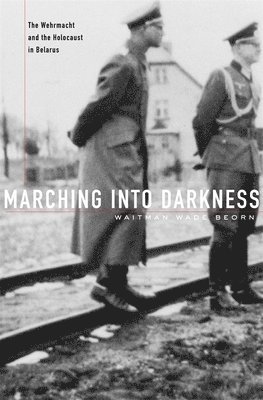
On October 10, 1941, the entire Jewish population of the Belarusian village of Krucha was rounded up and shot. While Nazi death squads routinely carried out mass executions on the Eastern Front, this particular atrocity was not the work of the SS but was committed by a regular German army unit acting on its own initiative. Marching into Darkness is a bone-chilling exposé of the ordinary footsoldiers who participated in the Final Solution on a daily basis.Although scholars have exploded the myth that the Wehrmacht played no significant part in the Holocaust, a concrete picture of its involvement at the local level has been lacking. Among the crimes Waitman Wade Beorn unearths are forced labor, sexual violence, and graverobbing, though a few soldiers refused to participate and even helped Jews. By meticulously reconstructing the German army's activities in Belarus in 1941, Marching into Darkness reveals in stark detail how the army willingly fulfilled its role as an agent of murder on a massive scale. Early efforts at improvised extermination progressively became much more methodical, with some army units going so far as to organize "Jew hunts." Beorn also demonstrates how the Wehrmacht used the pretense of anti-partisan warfare as a subterfuge by reporting murdered Jews as partisans.Through archival research into military and legal records, survivor testimonies, and eyewitness interviews, Beorn paints a searing portrait of a professional army's descent into ever more intimate participation in genocide.
331 kr
Skickas
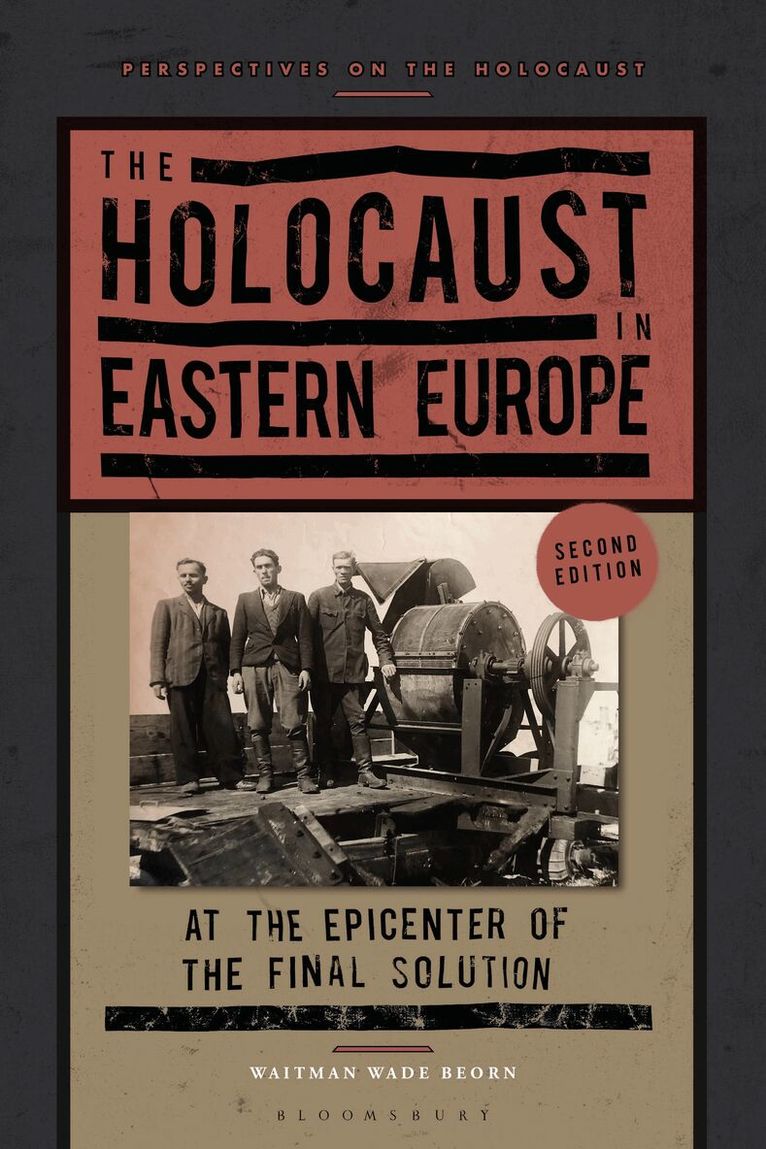
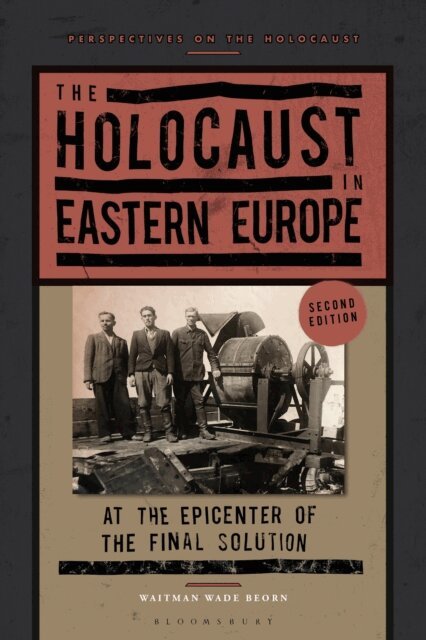
This book provides an authoritative history of the Holocaust in Eastern Europe and makes a compelling case for why the region can be considered ‘the epicentre of the final solution’.Waitman Wade Beorn introduces us to pre-war Jewish life in Eastern Europe, before tracing the escalating nature of Nazi policies in the area during the Second World War. Beorn crucially reflects on the German obsession with the East and its impact on the Nazi genocidal project there. The Holocaust in Eastern Europe also examines Soviet occupation and its consequences for the Shoah, while offering vital coverage of key themes like ghettoization, the Final Solution, rescue, collaboration, resistance, and many others. The book considers the commonalities and differences of regional Holocaust experiences from the perspectives of perpetrators, witnesses, collaborators, and victims/survivors.Adeptly incorporating material on challenging subjects like sexual violence, the use of slave labour, the treatment of Soviet POWs, and profiteering, this 2nd edition includes two brand new chapters that enhance the scope and usefulness of the text even further; one addresses sources, methods, historiographical debates in the field, and the other focuses on non-Jewish victims of the Nazi genocidal project, such as Soviet prisoners of war, the mental and physically handicapped, Sinti and Roma, and other civilians.
1 039 kr
Skickas inom 10-15 vardagar
This book provides an authoritative history of the Holocaust in Eastern Europe and makes a compelling case for why the region can be considered ‘the epicentre of the final solution’.Waitman Wade Beorn introduces us to pre-war Jewish life in Eastern Europe, before tracing the escalating nature of Nazi policies in the area during the Second World War. Beorn crucially reflects on the German obsession with the East and its impact on the Nazi genocidal project there. The Holocaust in Eastern Europe also examines Soviet occupation and its consequences for the Shoah, while offering vital coverage of key themes like ghettoization, the Final Solution, rescue, collaboration, resistance, and many others. The book considers the commonalities and differences of regional Holocaust experiences from the perspectives of perpetrators, witnesses, collaborators, and victims/survivors.Adeptly incorporating material on challenging subjects like sexual violence, the use of slave labour, the treatment of Soviet POWs, and profiteering, this 2nd edition includes two brand new chapters that enhance the scope and usefulness of the text even further; one addresses sources, methods, historiographical debates in the field, and the other focuses on non-Jewish victims of the Nazi genocidal project, such as Soviet prisoners of war, the mental and physically handicapped, Sinti and Roma, and other civilians.
776 kr
Skickas inom 10-15 vardagar
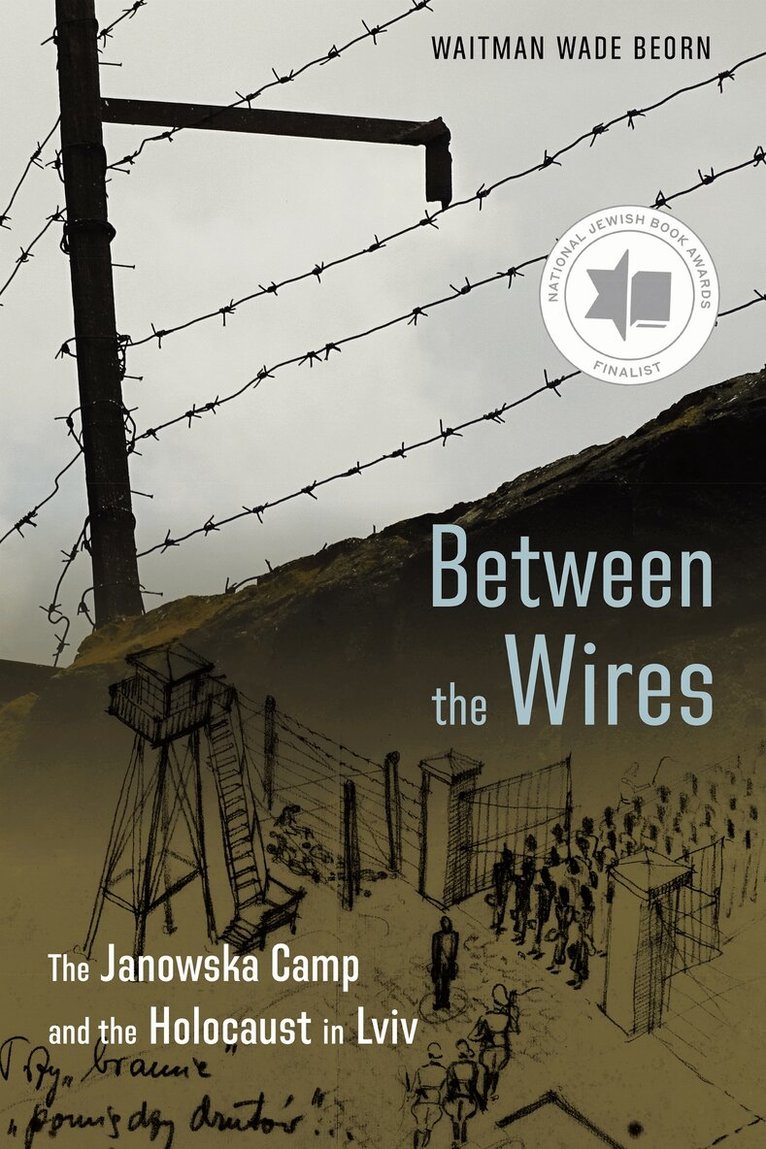
Finalist for the 2024 National Jewish Book AwardBetween the Wires tells for the first time the history of the Janowska camp in Lviv, Ukraine. Located in a city with the third-largest ghetto in Nazi-occupied Europe, Janowska remains one of the least-known sites of the Holocaust, despite being one of the deadliest. Simultaneously a prison, a slave labor camp, a transit camp to the gas chambers, and an extermination site, this hybrid camp played a complex role in the Holocaust.Based on extensive archival research, Between the Wires explores the evolution and the connection to Lviv of this rare urban camp. Waitman Wade Beorn reveals the exceptional brutality of the SS staff alongside an almost unimaginable will to survive among prisoners facing horrendous suffering, whose resistance included an armed uprising. This integrated chronicle of perpetrators, victims, and bystanders follows the history of the camp into the postwar era, including attempts to bring its criminals to justice.
357 kr
Skickas
Winner of the 2025 Omeljan Pritsak Book Prize in Ukrainian StudiesFinalist for the 2024 National Jewish Book AwardHonorable Mention for the 2023–2024 American Association for Ukrainian Studies Book Prize Between the Wires tells for the first time the history of the Janowska camp in Lviv, Ukraine. Located in a city with the third-largest ghetto in Nazi-occupied Europe, Janowska remains one of the least-known sites of the Holocaust, despite being one of the deadliest. Simultaneously a prison, a slave labor camp, a transit camp to the gas chambers, and an extermination site, this hybrid camp played a complex role in the Holocaust.Based on extensive archival research, Between the Wires explores the evolution and the connection to Lviv of this rare urban camp. Waitman Wade Beorn reveals the exceptional brutality of SS staff alongside an almost unimaginable will to survive among prisoners facing horrendous suffering, whose resistance included an armed uprising. This integrated chronicle of perpetrators, victims, and bystanders follows the history of the camp into the postwar era, including attempts to bring its criminals to justice.