Wallace Arthur - Böcker
Visar alla böcker från författaren Wallace Arthur. Handla med fri frakt och snabb leverans.
15 produkter
15 produkter
573 kr
Skickas inom 7-10 vardagar
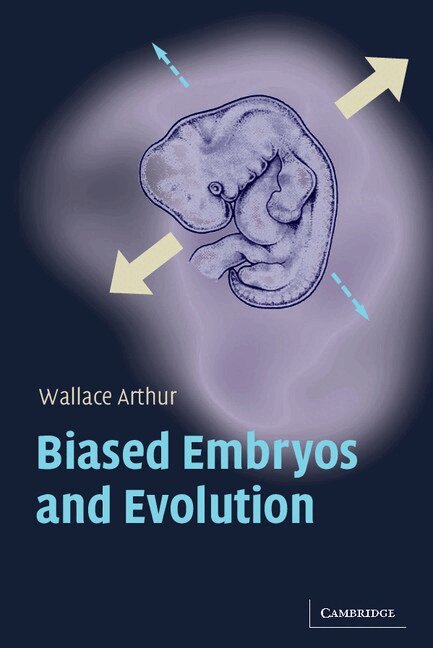
What determines the direction of evolutionary change? This book provides a revolutionary answer to this question. Many biologists, from Darwin's day to our own, have been satisfied with the answer 'natural selection'. Professor Wallace Arthur is not. He takes the controversial view that biases in the ways that embryos can be altered are just as important as natural selection in determining the directions that evolution has taken, including the one that led to the origin of humans. This argument forms the core of the book. However, in addition, the book summarizes other important issues relating to how embryonic (and post-embryonic) development evolves. Written in an easy, conversational style, this is the first book for students and the general reader that provides an account of the exciting new field of Evolutionary Developmental Biology ('Evo-Devo' to its proponents).
573 kr
Skickas inom 7-10 vardagar
Neo-Darwinism currently occupies a dominant position in evolutionary thought. While this theory has considerable explanatory power, it is widely recognized as being incomplete in that it lacks a component dealing with individual development, or ontogeny. This is particularly conspicuous in relation to attempts to explain the evolutionary origin of the 35 or so animal body plans, and of the developmental trajectories that generate them. This book examines both the origin of body plans in particular and the evolution of animal development in general. In doing so, it ranges widely, covering topics as diverse as comparative developmental genetics, selection theory and Vendian/Cambrian fossils. Particular emphasis is placed on gene duplication, changes in spatio-temporal gene-expression patterns, internal selection, coevolution of interacting genes, and coadaptation. The book will be of particular interest to students and researchers in evolutionary biology, genetics, paleontology and developmental biology.
1 218 kr
Skickas inom 7-10 vardagar
What determines the direction of evolutionary change? This book provides a revolutionary answer to this question. Many biologists, from Darwin's day to our own, have been satisfied with the answer 'natural selection'. Professor Wallace Arthur is not. He takes the controversial view that biases in the ways that embryos can be altered are just as important as natural selection in determining the directions that evolution has taken, including the one that led to the origin of humans. This argument forms the core of the book. However, in addition, the book summarizes other important issues relating to how embryonic (and post-embryonic) development evolves. Written in an easy, conversational style, this is the first book for students and the general reader that provides an account of the exciting new field of Evolutionary Developmental Biology ('Evo-Devo' to its proponents).
395 kr
Skickas inom 10-15 vardagar
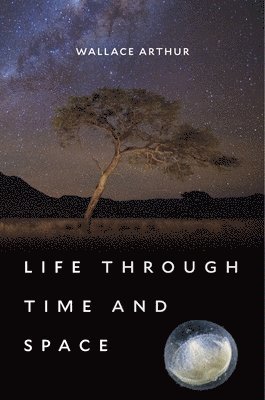
All humans share three origins: the beginning of our individual lives, the appearance of life on Earth, and the formation of our planetary home. Life through Time and Space brings together the latest discoveries in both biology and astronomy to examine our deepest questions about where we came from, where we are going, and whether we are alone in the cosmos.A distinctive voice in the growing field of astrobiology, Wallace Arthur combines embryological, evolutionary, and cosmological perspectives to tell the story of life on Earth and its potential to exist elsewhere in the universe. He guides us on a journey through the myriad events that started with the big bang and led to the universe we inhabit today. Along the way, readers learn about the evolution of life from a primordial soup of organic molecules to complex plants and animals, about Earth’s geological transformation from barren rock to diverse ecosystems, and about human development from embryo to infant to adult. Arthur looks closely at the history of mass extinctions and the prospects for humanity’s future on our precious planet.Do intelligent aliens exist on a distant planet in the Milky Way, sharing the three origins that characterize all life on Earth? In addressing this question, Life through Time and Space tackles the many riddles of our place and fate in the universe that have intrigued human beings since they first gazed in wonder at the nighttime sky.
180 kr
Skickas inom 5-8 vardagar
208 kr
Skickas inom 7-10 vardagar
The two most fascinating questions about extraterrestrial life are where it is found and what it is like. In particular, from our Earth-based vantage point, we are keen to know where the closest life to us is, and how similar it might be to life on our home planet. This book deals with both of these key issues. It considers possible homes for life, with a focus on Earth-like exoplanets. And it examines the possibility that life elsewhere might be similar to life here, due to the existence of parallel environments, which may result in Darwinian selection producing parallel trees of life between one planet and another. Understanding Life in the Universe provides an engaging and myth-busting overview for any reader interested in the existence and nature of extraterrestrial life, and the realistic possibility of discovering credible evidence for it in the near future.
536 kr
Skickas inom 7-10 vardagar
The two most fascinating questions about extraterrestrial life are where it is found and what it is like. In particular, from our Earth-based vantage point, we are keen to know where the closest life to us is, and how similar it might be to life on our home planet. This book deals with both of these key issues. It considers possible homes for life, with a focus on Earth-like exoplanets. And it examines the possibility that life elsewhere might be similar to life here, due to the existence of parallel environments, which may result in Darwinian selection producing parallel trees of life between one planet and another. Understanding Life in the Universe provides an engaging and myth-busting overview for any reader interested in the existence and nature of extraterrestrial life, and the realistic possibility of discovering credible evidence for it in the near future.
1 008 kr
Skickas inom 7-10 vardagar
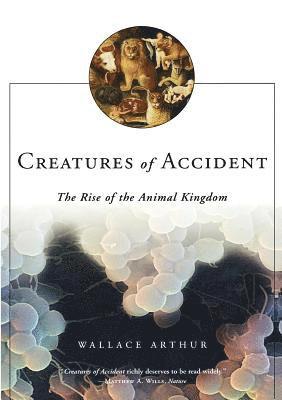
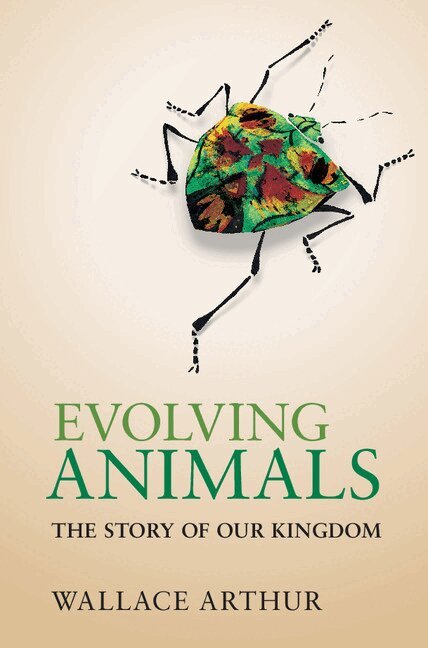
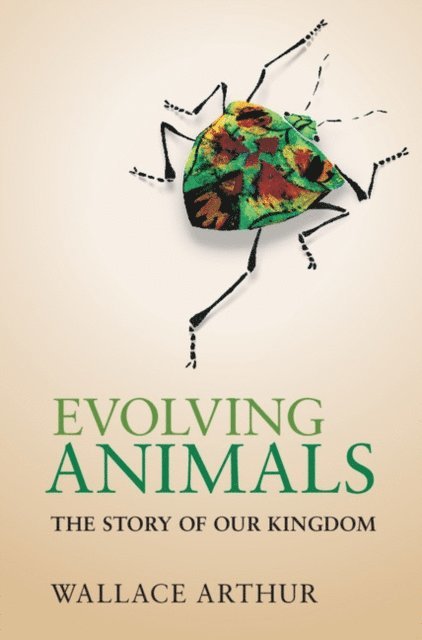
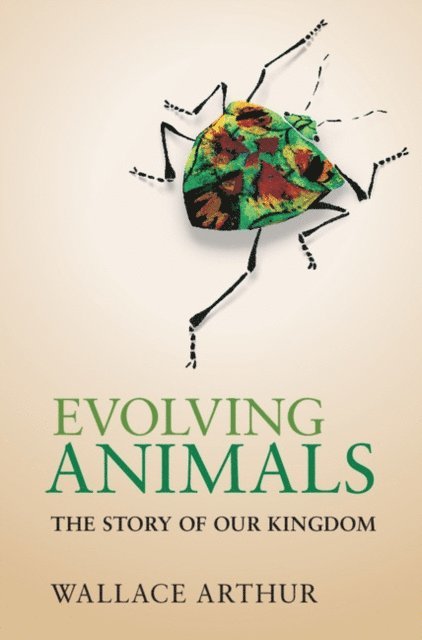
What do we know about animal evolution in the early twenty-first century? How much more do we know today than Darwin did? What are the most exciting discoveries that have been made in the last few decades? Covering all the main animal groups, from jellyfish to mammals, this book considers all of these questions and more. Its 30 short chapters, each written in a conversational, nontechnical style and accompanied by numerous original illustrations, deal equally with the pattern and the process of evolution - with both evolutionary trees and evolutionary mechanisms. They cover diverse evolutionary themes, including: the animal toolkit, natural selection, embryos and larvae, animal consciousness, fossils, human evolution, and even the possibility of animal life existing elsewhere than on Earth. This unique text will make an excellent introduction for undergraduates and others with an interest in the subject.
397 kr
Skickas inom 7-10 vardagar
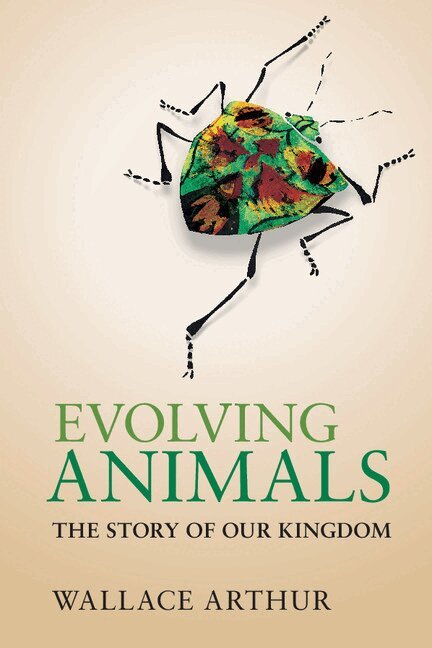
What do we know about animal evolution in the early twenty-first century? How much more do we know today than Darwin did? What are the most exciting discoveries that have been made in the last few decades? Covering all the main animal groups, from jellyfish to mammals, this book considers all of these questions and more. Its 30 short chapters, each written in a conversational, nontechnical style and accompanied by numerous original illustrations, deal equally with the pattern and the process of evolution - with both evolutionary trees and evolutionary mechanisms. They cover diverse evolutionary themes, including: the animal toolkit, natural selection, embryos and larvae, animal consciousness, fossils, human evolution, and even the possibility of animal life existing elsewhere than on Earth. This unique text will make an excellent introduction for undergraduates and others with an interest in the subject.
158 kr
Skickas inom 7-10 vardagar
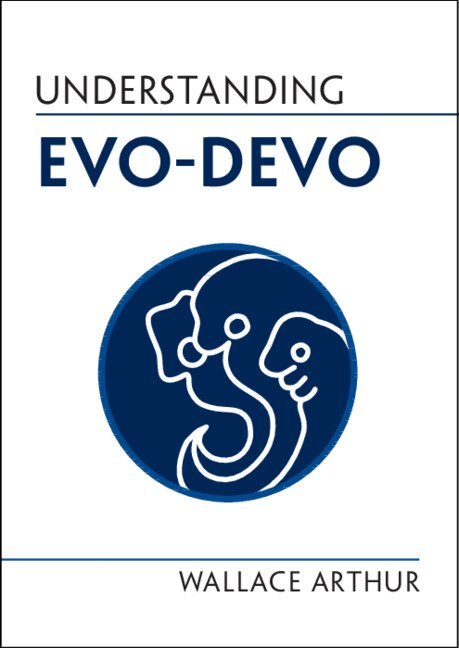
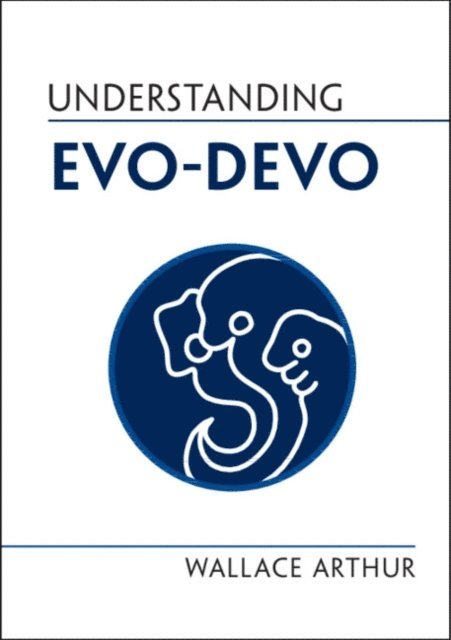
Why do the best-known examples of evolutionary change involve the alteration of one kind of animal into another very similar one, like the evolution of a bigger beak in a bird? Wouldn't it be much more interesting to understand how beaks originated? Most people would agree, but until recently we didn't know much about such origins. That is now changing, with the growth of the interdisciplinary field evo-devo, which deals with the relationship between how embryos develop in the short term and how they (and the adults they grow into) evolve in the long term. One of the key questions is: can the origins of structures such as beaks, eyes, and shells be explained within a Darwinian framework? The answer seems to be yes, but only by expanding that framework. This book discusses the required expansion, and the current state of play regarding our understanding of evolutionary and developmental origins.
599 kr
Skickas inom 7-10 vardagar
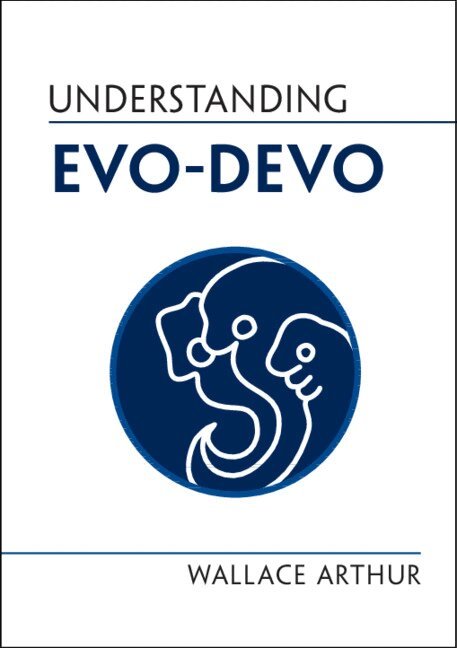
Why do the best-known examples of evolutionary change involve the alteration of one kind of animal into another very similar one, like the evolution of a bigger beak in a bird? Wouldn't it be much more interesting to understand how beaks originated? Most people would agree, but until recently we didn't know much about such origins. That is now changing, with the growth of the interdisciplinary field evo-devo, which deals with the relationship between how embryos develop in the short term and how they (and the adults they grow into) evolve in the long term. One of the key questions is: can the origins of structures such as beaks, eyes, and shells be explained within a Darwinian framework? The answer seems to be yes, but only by expanding that framework. This book discusses the required expansion, and the current state of play regarding our understanding of evolutionary and developmental origins.
239 kr
Skickas inom 7-10 vardagar
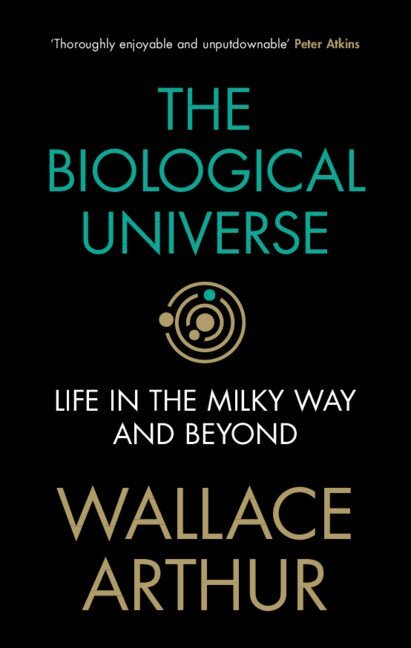
Are we alone in the universe, or are there other life forms 'out there'? This is one of the most scientifically and philosophically important questions that humanity can ask. Now, in the early 2020s, we are tantalizingly close to an answer. As this book shows, the answer will almost certainly be that life forms are to be found across the Milky Way and beyond. They will be thinly spread, to be sure. Yet the number of inhabited planets probably runs into the trillions. Some are close enough for us to detect evidence of life by analysing their atmospheres. This evidence may be found within a couple of decades. Its arrival will be momentous. But even before it arrives we can anticipate what life elsewhere will be like by examining the ecology and evolution of life on Earth. This book considers the current state of play in relation to these titanic issues.
759 kr
Skickas inom 7-10 vardagar
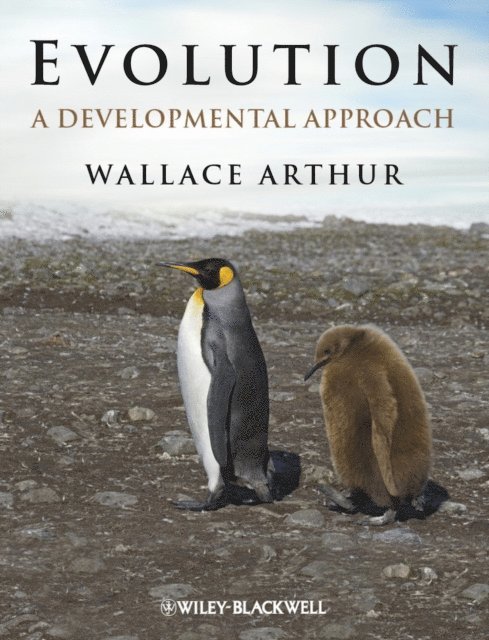
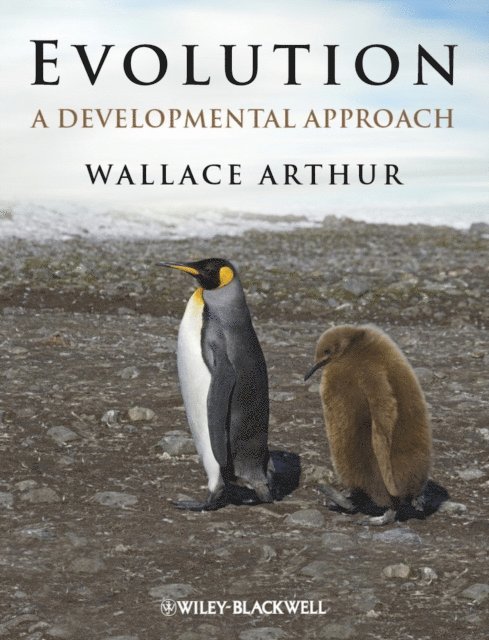
This book is aimed at students taking courses on evolution in universities and colleges. Its approach and its structure are very different from previously-published evolution texts. The core theme in this book is how evolution works by changing the course of embryonic and post-embryonic development. In other words, it is an evolution text that has been very much influenced by the new approach of evolutionary developmental biology, or 'evo-devo'. Key themes include the following: developmental repatterning; adaptation and coadaptation; gene co-option; developmental plasticity; the origins of evolutionary novelties and body plans; and evolutionary changes in the complexity of organisms. As can be seen from this list, the book includes information across the levels of the gene, the organism, and the population. It also includes the issue of mapping developmental changes onto evolutionary trees. The examples used to illustrate particular points range widely, including animals, plants and fossils."I have really enjoyed reading this book. One of the strengths of the book is the almost conversational style. I found the style easy to read, but also feel that it will be invaluable in teaching. One of our tasks in university level teaching is to develop students' critical thinking skills. We need to support them in their intellectual development from a "just the facts" approach to being able to make critical judgements based on available evidence. The openness and honesty with which Arthur speaks to uncertainty in science is refreshing and will be a baseline for discussions with students."-Professor Patricia Moore, Exeter University "This book, written as an undergraduate text, is a really most impressive book. Given the burgeoning interest in the role of developmental change in evolution in recent times, this will be a very timely publication. The book is well structured and, like the author's other books, very well written. He communicates with a clear, lucid style and has the ability to explain even the more difficult concepts in an accessible manner."---Professor Kenneth McNamara, University of CambridgeThe companion site can be found at www.wiley.com/go/arthur/evolution. Here you download all figures from the book, captions, tables, and table of contents.
1 099 kr
Skickas inom 5-8 vardagar
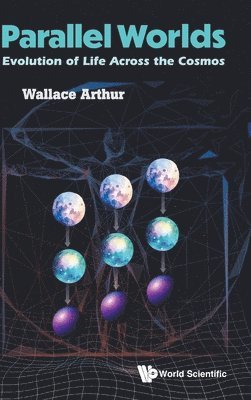
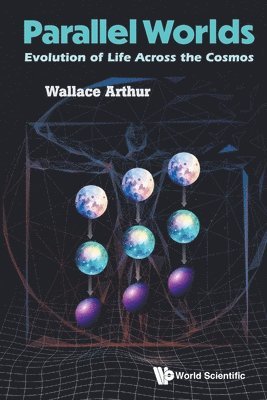
Humanity is fast approaching the point of being able to answer the age-old question: Are we alone in the cosmos? The answer will almost certainly turn out to be 'no'. This is virtually guaranteed by two discoveries made in the last hundred years or so: that the Milky Way is just one of countless galaxies; and that the number of planets beyond our solar system — 'exoplanets' — is vast.But what is extraterrestrial life actually like? What kinds of creatures roam the surfaces of alien planets or swim in their seas? Are they typically in the genre of 'life as we know it', or are they characterized by exotic forms and as-yet undiscovered metabolism? In Parallel Worlds, Wallace Arthur argues that we should expect to find creatures that are similar in broad terms to those of Earth. This can be anticipated because the environments of habitable planets have many parallel features, so Darwinian natural selection should work in parallel ways, producing broadly parallel trees of life.This book takes the form of a step-by-step argument in favour of the hypothesis that there are multiple worlds inhabited by life-forms that are broadly parallel to those of our home planet. Like all good hypotheses, it's testable. The testing won't be easy, and it isn't imminent; but it will happen eventually, providing humanity lasts for long enough.
557 kr
Skickas inom 5-8 vardagar
Humanity is fast approaching the point of being able to answer the age-old question: Are we alone in the cosmos? The answer will almost certainly turn out to be 'no'. This is virtually guaranteed by two discoveries made in the last hundred years or so: that the Milky Way is just one of countless galaxies; and that the number of planets beyond our solar system — 'exoplanets' — is vast.But what is extraterrestrial life actually like? What kinds of creatures roam the surfaces of alien planets or swim in their seas? Are they typically in the genre of 'life as we know it', or are they characterized by exotic forms and as-yet undiscovered metabolism? In Parallel Worlds, Wallace Arthur argues that we should expect to find creatures that are similar in broad terms to those of Earth. This can be anticipated because the environments of habitable planets have many parallel features, so Darwinian natural selection should work in parallel ways, producing broadly parallel trees of life.This book takes the form of a step-by-step argument in favour of the hypothesis that there are multiple worlds inhabited by life-forms that are broadly parallel to those of our home planet. Like all good hypotheses, it's testable. The testing won't be easy, and it isn't imminent; but it will happen eventually, providing humanity lasts for long enough.