Walter Galenson - Böcker
Visar alla böcker från författaren Walter Galenson. Handla med fri frakt och snabb leverans.
12 produkter
12 produkter
Labor and Economic Growth in Five Asian Countries
South Korea, Malaysia, Taiwan, Thailand, and the Philippines
Inbunden, Engelska, 1992
809 kr
Skickas inom 10-15 vardagar
This work explores developments in the labor markets of five countries--South Korea, Malaysia, Taiwan, Thailand, and the Philippines--which have undergone successful economic development during the past quarter of a century. This includes employment, earnings, industrial relations, and social security measures. While the Philippines' progress has lagged, the other four countries constitute the most successful group of the world's developing countries--offering a interesting contrast in approaches to growth. The author's methodology is comparative by specific subject, so that a correlation of developmental stages and the emergence of particular features of the labor market emerges.This study is unique in that inter-country comparisons are made in terms of specific aspects of the labor market. The work will be of interest to economists, political scientists, and sociologists concerned with problems of development. And it will be useful in pointing the way to successful development practices.
1 039 kr
Skickas inom 10-15 vardagar
After a century of growth, trade union membership and influence have begun to decline in most of the economically advanced countries. This comprehensive analysis of membership trends covers developing as well as industrialized countries. The author's thesis is that the unions have failed to pay sufficient attention to the concerns of a labor force that is more educated, with a higher participation of women, and with a greater concern for job security than was true in the past.
833 kr
Skickas inom 10-15 vardagar
A terse, well-written, up-to-date, and refreshing account of recent developments in employment practices across a sample of seven industrialized nations, including the Soviet Union, by an established scholar of comparative systems. The trends discussed are industrial democracy at enterprise and establishment level, quality of working life, job tenure and security of employment, personnel policy, and working time arrangements. . . . The book provides a useful and accessible introduction to a number of important themes in the management and maintenance of human resources. . . . Highly recommended. . . . ChoiceIn recent years, fundamental economic forces have profoundly affected the labor markets of the industrialized nations. Among these forces are: the mass entrance of women into the labor market and major changes in work patterns designed to accomodate them; industrial restructuring due to the decline in manufacturing and the concomitant rise in service industries and advanced technologies; the shift in workers' objectives toward job security, improved quality of working life, and more adequate provision for post-retirement years; and, finally, employee demand for industrial democracy or increased participation in making business decisions, which has led to the implementation of economically viable participatory schemes. The policy innovations and experiments effected during the past two decades in response to these labor market developments are the subject of New Trends in Employment Practices. In addition to the United States, the author considers four major industrial nations of the democratic world, France, Germany, Great Britain, and Japan. Walter Galenson also looks at Sweden, a country long noted for its imaginative labor programs, and the Soviet Union, a nation where recent events have graphically illustrated the strength of the demand for greater democracy at the enterprise and political levels.The book begins with a discussion of the promotion of industrial democracy at the enterprise level, citing a State of Washington program in which the unemployed receive seed money to start small businesses instead of being sent unemployment benefits. Galenson also details British experience with this same scheme. In Industrial Democracy at the Shop Floor Level, employee representation on corporate boards and employee ownership of companies, increasingly common phenomena in the United States, are investigated along with the relevant experience under German codetermination. Chapter Three is devoted to the movement for an improved Quality of Working Life (QWL), which is based largely on Japanese and Swedish models and has many adherents in the United States and Canada. Chapter four illustrates programs that take into account increased desire for job security, and specifically the Japanese system of lifetime employment guarantees. Preserving jobs and finding new ones when layoffs do occur, and Sweden's two-decade, near-zero unemployment due to its active labor market policy, are reviewed next. Chapter Six's focus is on the altered patterns of work time and Chapter Seven describes how various aspects of Soviet employment were handled in the past and explains the impact of Gorbachev's reforms. A final chapter offers a summary and conclusions. This cogent treatment of labor market practices will be of vital interest to corporate labor administrators who are or will be engaged in collective bargaining over the subjects treated in these pages. The book is ideal for courses in labor economics, comparative labor institutions, and internationally oriented courses in business schools.
811 kr
Skickas inom 3-6 vardagar
Labor in Developing Economies provides a comprehensive exploration of the complexities of labor markets in seven diverse nations, offering a critical lens into the intersections of trade unionism, political systems, and economic development. The countries studied—including Indonesia, Israel, Pakistan, Turkey, Brazil, Argentina, and Chile—represent a wide range of cultural, political, and economic contexts, showcasing the varied challenges and opportunities faced by labor movements in underdeveloped regions. Despite their differences, these nations share common struggles, such as transitioning agrarian workforces to industrial labor, navigating high levels of unemployment and underemployment, and grappling with government intervention in labor organization and wage determination.The book highlights the precarious state of trade unionism in many underdeveloped nations, noting its vulnerability to political influence and economic adversity. While unions in some countries, such as Indonesia and Israel, have played pivotal roles in national development and independence, others face significant barriers, including employer resistance and government restrictions. The essays delve into the balance between fostering independent trade unions and pursuing economic growth, emphasizing the importance of collective bargaining and labor rights in promoting social stability and worker dignity. Ultimately, the volume serves as a vital resource for understanding the dynamic relationship between labor, state, and development, and offers insights into the critical choices nations must make in shaping their labor institutions.This title is part of UC Press's Voices Revived program, which commemorates University of California Press’s mission to seek out and cultivate the brightest minds and give them voice, reach, and impact. Drawing on a backlist dating to 1893, Voices Revived makes high-quality, peer-reviewed scholarship accessible once again using print-on-demand technology. This title was originally published in 1962.
684 kr
Skickas inom 3-6 vardagar
Trade Union Democracy in Western Europe offers both a lucid survey of European labor organizations and a provocative mirror for American debates about union structure and democracy. Walter Galenson provides a comparative account of how unions in Belgium, Holland, Austria, France, Italy, Britain, and Sweden have evolved distinctive responses to the challenges of representation, political fragmentation, and member participation. He pays particular attention to the phenomenon of “dual unionism,” long rejected in the United States but widely accepted in parts of Europe as a positive feature of union life. By situating organizational forms within their economic, political, and social contexts, Galenson demonstrates that no single model of union democracy can be transplanted wholesale; each reflects the historical choices and institutional legacies of its setting.At the same time, the study speaks directly to American concerns. Questions about exclusive jurisdiction, rank-and-file participation, and the organization of white-collar workers gain fresh perspective when viewed alongside European practices. Case studies of Swedish white-collar unions, for example, highlight possibilities for independent, politically neutral, and workplace-centered organization in sectors of growing importance to U.S. labor. Comparisons with Britain, France, and Italy underscore both the dangers of fragmentation and the adaptive strengths of centralized bargaining traditions. Galenson’s work thus serves as both an authoritative introduction to European labor structures and an indispensable resource for scholars, practitioners, and policymakers seeking to rethink the future of union democracy in the United States. By “visiting other nations,” as Clark Kerr observes in his preface, readers gain not only knowledge of Europe but also a sharpened perspective on their own institutions.This title is part of UC Press's Voices Revived program, which commemorates University of California Press’s mission to seek out and cultivate the brightest minds and give them voice, reach, and impact. Drawing on a backlist dating to 1893, Voices Revived makes high-quality, peer-reviewed scholarship accessible once again using print-on-demand technology. This title was originally published in 1961.
1 469 kr
Skickas inom 3-6 vardagar
Labor in Developing Economies provides a comprehensive exploration of the complexities of labor markets in seven diverse nations, offering a critical lens into the intersections of trade unionism, political systems, and economic development. The countries studied—including Indonesia, Israel, Pakistan, Turkey, Brazil, Argentina, and Chile—represent a wide range of cultural, political, and economic contexts, showcasing the varied challenges and opportunities faced by labor movements in underdeveloped regions. Despite their differences, these nations share common struggles, such as transitioning agrarian workforces to industrial labor, navigating high levels of unemployment and underemployment, and grappling with government intervention in labor organization and wage determination.The book highlights the precarious state of trade unionism in many underdeveloped nations, noting its vulnerability to political influence and economic adversity. While unions in some countries, such as Indonesia and Israel, have played pivotal roles in national development and independence, others face significant barriers, including employer resistance and government restrictions. The essays delve into the balance between fostering independent trade unions and pursuing economic growth, emphasizing the importance of collective bargaining and labor rights in promoting social stability and worker dignity. Ultimately, the volume serves as a vital resource for understanding the dynamic relationship between labor, state, and development, and offers insights into the critical choices nations must make in shaping their labor institutions.This title is part of UC Press's Voices Revived program, which commemorates University of California Press’s mission to seek out and cultivate the brightest minds and give them voice, reach, and impact. Drawing on a backlist dating to 1893, Voices Revived makes high-quality, peer-reviewed scholarship accessible once again using print-on-demand technology. This title was originally published in 1962.
1 513 kr
Skickas inom 3-6 vardagar
Trade Union Democracy in Western Europe offers both a lucid survey of European labor organizations and a provocative mirror for American debates about union structure and democracy. Walter Galenson provides a comparative account of how unions in Belgium, Holland, Austria, France, Italy, Britain, and Sweden have evolved distinctive responses to the challenges of representation, political fragmentation, and member participation. He pays particular attention to the phenomenon of “dual unionism,” long rejected in the United States but widely accepted in parts of Europe as a positive feature of union life. By situating organizational forms within their economic, political, and social contexts, Galenson demonstrates that no single model of union democracy can be transplanted wholesale; each reflects the historical choices and institutional legacies of its setting.At the same time, the study speaks directly to American concerns. Questions about exclusive jurisdiction, rank-and-file participation, and the organization of white-collar workers gain fresh perspective when viewed alongside European practices. Case studies of Swedish white-collar unions, for example, highlight possibilities for independent, politically neutral, and workplace-centered organization in sectors of growing importance to U.S. labor. Comparisons with Britain, France, and Italy underscore both the dangers of fragmentation and the adaptive strengths of centralized bargaining traditions. Galenson’s work thus serves as both an authoritative introduction to European labor structures and an indispensable resource for scholars, practitioners, and policymakers seeking to rethink the future of union democracy in the United States. By “visiting other nations,” as Clark Kerr observes in his preface, readers gain not only knowledge of Europe but also a sharpened perspective on their own institutions.This title is part of UC Press's Voices Revived program, which commemorates University of California Press’s mission to seek out and cultivate the brightest minds and give them voice, reach, and impact. Drawing on a backlist dating to 1893, Voices Revived makes high-quality, peer-reviewed scholarship accessible once again using print-on-demand technology. This title was originally published in 1961.
605 kr
Skickas inom 10-15 vardagar
The Common Law is Oliver Wendell Holmes' most sustained work of jurisprudence. In it the careful reader will discern traces of his later thought as found in both his legal opinions and other writings.At the outset of The Common Law Holmes posits that he is concerned with establishing that the common law can meet the changing needs of society while preserving continuity with the past. A common law judge must be creative, both in determining the society's current needs, and in discerning how best to address these needs in a way that is continuous with past judicial decisions. In this way, the law evolves by moving out of its past, adapting to the needs of the present, and establishing a direction for the future. To Holmes' way of thinking, this approach is superior to imposing order in accordance with a philosophical position or theory because the law would thereby lose the flexibility it requires in responding to the needs and demands of disputing parties as well as society as a whole.According to Holmes, the social environment--the economic, moral, and political milieu--alters over time. Therefore, in order to remain responsive to this social environment, the law must change as well. But the law is also part of this environment and impacts it. There is, then, a continual reciprocity between the law and the social arrangements in which it is contextualized. And, as with the evolution of species, there is no starting over. Rather, in most cases, a judge takes existing legal concepts and principles, as these have been memorialized in legal precedent, and adapts them, often unconsciously, to fit the requirements of a particular case and present social conditions. Oliver Wendell Holmes, Jr. (1841-1935) served as chief justice of the Massachusetts Supreme Court and as an associate justice of the U.S. Supreme Court. He was nicknamed the "Great Dissenter" because of his many dissenting opinions. Holmes is also the author of Kent's Commentaries on the Law (1873) and "The Path of the Law" (1897).Tim Griffin has advanced degrees in philosophy and law, and has taught philosophy and legal theory courses at a number of universities. He is currently a seminarian pursuing ordination to the priesthood in the Episcopal Church.
2 151 kr
Skickas inom 10-15 vardagar
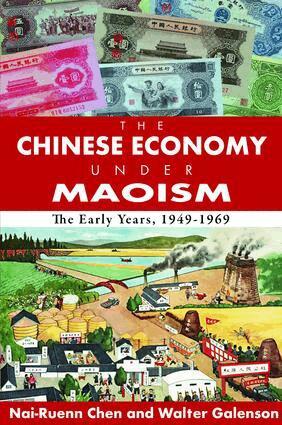
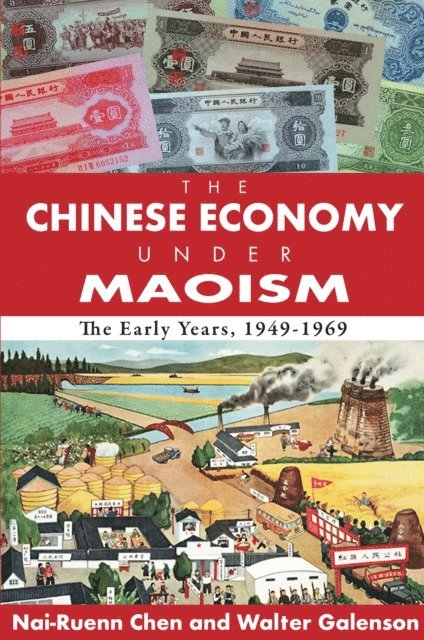
Over sixty years have elapsed since the Communists gained control of the Chinese mainland. The years between 1949 and 1969 were a time of constant change and periodic cataclysm - the initial purges, the Great Leap Forward, and the Cultural Revolution - all bound up with the Communist conception of how to move the country into modernity in the shortest possible time. The Chinese Economy under Maoism summarizes and evaluates the economic consequences of the Communist path to development in a concise, factual presentation that can be readily comprehended by non-economists.The authors review the major features of the Chinese economy prior to the Communist takeover and discuss the policies, performance, and problems of the individual sectors of the Chinese economy during its initial years under Communism. Included in their review are industry, agriculture, foreign trade, resource allocation, population, employment, and living standards. A concluding chapter summarizes Chinese economic growth and presents a discussion of future policy alternatives and an optimum economic policy for China.Based on important findings of Western scholars, with many original interpretations by the authors, this material is presented from a developmental point of view. Since it was originally published in 1972, sections of the book devoted to comparative studies of progress in India and the former Soviet regime will be of particular interest now. Free of technical language and providing insights into the economy of one of the most important countries in the world, this book will be useful not only to economists but to a broad range of sinologists, political scientists, sociologists, and historians interested in the path of revolution.
1 613 kr
Skickas inom 10-15 vardagar
The Common Law is Oliver Wendell Holmes' most sustained work of jurisprudence. In it the careful reader will discern traces of his later thought as found in both his legal opinions and other writings.At the outset of The Common Law Holmes posits that he is concerned with establishing that the common law can meet the changing needs of society while preserving continuity with the past. A common law judge must be creative, both in determining the society's current needs, and in discerning how best to address these needs in a way that is continuous with past judicial decisions. In this way, the law evolves by moving out of its past, adapting to the needs of the present, and establishing a direction for the future. To Holmes' way of thinking, this approach is superior to imposing order in accordance with a philosophical position or theory because the law would thereby lose the flexibility it requires in responding to the needs and demands of disputing parties as well as society as a whole.According to Holmes, the social environment--the economic, moral, and political milieu--alters over time. Therefore, in order to remain responsive to this social environment, the law must change as well. But the law is also part of this environment and impacts it. There is, then, a continual reciprocity between the law and the social arrangements in which it is contextualized. And, as with the evolution of species, there is no starting over. Rather, in most cases, a judge takes existing legal concepts and principles, as these have been memorialized in legal precedent, and adapts them, often unconsciously, to fit the requirements of a particular case and present social conditions. Oliver Wendell Holmes, Jr. (1841-1935) served as chief justice of the Massachusetts Supreme Court and as an associate justice of the U.S. Supreme Court. He was nicknamed the "Great Dissenter" because of his many dissenting opinions. Holmes is also the author of Kent's Commentaries on the Law (1873) and "The Path of the Law" (1897).Tim Griffin has advanced degrees in philosophy and law, and has taught philosophy and legal theory courses at a number of universities. He is currently a seminarian pursuing ordination to the priesthood in the Episcopal Church.
719 kr
Skickas inom 10-15 vardagar
Over sixty years have elapsed since the Communists gained control of the Chinese mainland. The years between 1949 and 1969 were a time of constant change and periodic cataclysm - the initial purges, the Great Leap Forward, and the Cultural Revolution - all bound up with the Communist conception of how to move the country into modernity in the shortest possible time. The Chinese Economy under Maoism summarizes and evaluates the economic consequences of the Communist path to development in a concise, factual presentation that can be readily comprehended by non-economists.The authors review the major features of the Chinese economy prior to the Communist takeover and discuss the policies, performance, and problems of the individual sectors of the Chinese economy during its initial years under Communism. Included in their review are industry, agriculture, foreign trade, resource allocation, population, employment, and living standards. A concluding chapter summarizes Chinese economic growth and presents a discussion of future policy alternatives and an optimum economic policy for China.Based on important findings of Western scholars, with many original interpretations by the authors, this material is presented from a developmental point of view. Since it was originally published in 1972, sections of the book devoted to comparative studies of progress in India and the former Soviet regime will be of particular interest now. Free of technical language and providing insights into the economy of one of the most important countries in the world, this book will be useful not only to economists but to a broad range of sinologists, political scientists, sociologists, and historians interested in the path of revolution.
1 009 kr
Skickas inom 10-15 vardagar
Despite the general decline of trade unions throughout the Western world, unions in Denmark, Norway, and Sweden have prospered. Why? Galenson cites their ability to organize white collar workers, the special attention they give to recruitment of women, and their ability to undergo structural change under employer pressure. He analyzes these factors in the belief that if unions in other parts of the world understand why and how unionism is succeeding in Scandinavia, its deterioration may be slowed and even reversed. In doing so, Galenson offers specific advice on how industrial relations professionals should manage to avoid breakdown of existing systems elsewhere. Labor unions, officials, and organization executives, as well as executives throughout the public sectors, will find Galenson's views informative and enlightening.Although there has been a good deal written about the Scandinavian labor movements in Dano-Norwegian and Swedish, there has been nothing comprehensive in English that deals with the labor movements in the three countries. Nor has there been a systematic analysis of their policies and practices. Galenson provides readers, now, with an account of how unions in the Scandinavian countries have managed to secure the world's highest rates of organization: up to 90% of all who are employed in Sweden, and somewhat less in Denmark and Norway, are trade union members, compared with 15% in the United States. The countries in which they operate are welfare states and are among the wealthiest countries in the world, yet remarkably little is known about the systems of industrial relations that have contributed to these results. Galenson's book will fill that gap and in doing so, make a unique contribution to the determination of policy in other countries.