Walter L. Buenger - Böcker
Visar alla böcker från författaren Walter L. Buenger. Handla med fri frakt och snabb leverans.
6 produkter
6 produkter
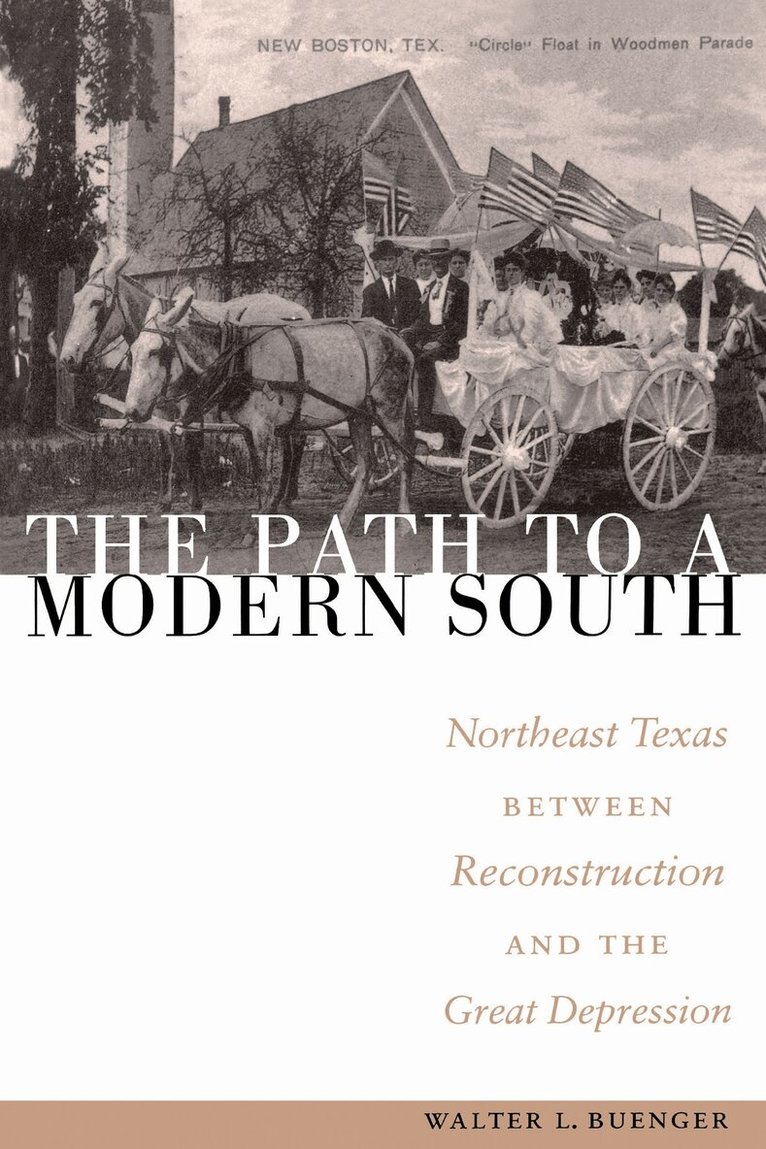
Path to a Modern South
Northeast Texas Between Reconstruction and the Great Depression
Häftad, Engelska, 2001
378 kr
Skickas inom 10-15 vardagar
The forces that turned Northeast Texas from a poverty-stricken region into a more economically prosperous area.Winner, Texas State Historical Association Coral H. Tullis Memorial Award for best book on Texas history, 2001Federal New Deal programs of the 1930s and World War II are often credited for transforming the South, including Texas, from a poverty-stricken region mired in Confederate mythology into a more modern and economically prosperous part of the United States. By contrast, this history of Northeast Texas, one of the most culturally southern areas of the state, offers persuasive evidence that political, economic, and social modernization began long before the 1930s and prepared Texans to take advantage of the opportunities presented by the New Deal and World War II.Walter L. Buenger draws on extensive primary research to tell the story of change in Northeast Texas from 1887 to 1930. Moving beyond previous, more narrowly focused studies of the South, he traces and interconnects the significant changes that occurred in politics, race relations, business and the economy, and women's roles. He also reveals how altered memories of the past and the emergence of a stronger identification with Texas history affected all facets of life in Northeast Texas.
268 kr
Skickas inom 10-15 vardagar
In 1845 Texans voted overwhelmingly to join the Union. They voted just as overwhelmingly to secede in 1861. The story of why and how that happened is filled with colorful characters, such as the aged Sam Houston, and with the southwestern flavor of raiding Comanches, German opponents of slavery, and a border with Mexico. Texas was unique among the seceding states because of its ambivalence toward secession. Yet for all its uniqueness the story of the secession of Texas has broad implications for the secession movement in general. Despite the local color and the southwestern nature of the state, Texas was more southern than western in 1860. Texans supported the Union or insisted upon secession for reasons common to the South and to the whole nation. Most Texans in 1860 were recent immigrants from southern and border states. They still thought and acted like citizens of their former states. The newness of Texas then makes it a particularly appropriate place from which to draw conclusions about the entire secession movement. Secession and the Union in Texas is both a narrative of secession in Texas and a case study of the causes of secession in a southern state. Politics play a key role in this history, but politics broadly defined to include the influence of culture, partisanship, ideology, and self-interest. As any study of a mass movement carried out in tense circumstances must be, this is social history as well as political history. It is a study of public hysteria, the pressure for consensus, and the vanishing of a political process in which rational debate about secession and the Union could take place. Although relying primarily on traditional sources such as manuscript collections and newspapers, a particularly rich source for this study, the author also uses election returns, population shifts over the course of the 1850s, and the breakdown of population within Texas counties to provide a balanced approach. These sources indicate that Texans were not simply secessionists or unionists. At the end of 1860 Texans ranged from ardent secessionists to equally passionate supporters of the Union. But the majority fell in between these two extremes, creating an atmosphere of ambivalence toward secession which was not erased even by the war.
309 kr
Skickas inom 10-15 vardagar
Originally published in 1991, this pioneering work in Texas historiography, edited by Walter H. Buenger and the late Robert A. Calvert, placed the intellectual development of Texas History within the framework of current trends in the study of U.S. history.In Texas through Time, twelveeminent scholars contribute evaluations of the historical literature in their respective fields of expertise - from Texas-Mexican culture and African-American roles to agrarianism, progressivism, and the New Deal; from perspectives on women to the urban experience of the Sunbelt boom and near-bust. The cumulative effort describes and analyzes what Texas history is and how it got that way." Avowedly revisionist . . . a hard-hitting analysis of Texas historiography.' --East Texas Historical Association" An absolute must for research library collections and scholars of Texas history.'--Books of the Southwest" Should be well thumbed by any historian concerned with Texas topics."--Southern Historian " A long-needed assessment of more than a century's worth of books, articles, masters theses, and doctoral dissertations on Texas history. . . . a well-conceived project that will prove to be a godsend for graduate students and their mentors, Texana' collectors, and journalists."--Journal of the West
But Also Good Business
Texas Commerce Banks and the Financing of Houston and Texas, 1886-1986
Häftad, Engelska, 2000
340 kr
Skickas inom 10-15 vardagar
282 kr
Skickas inom 10-15 vardagar
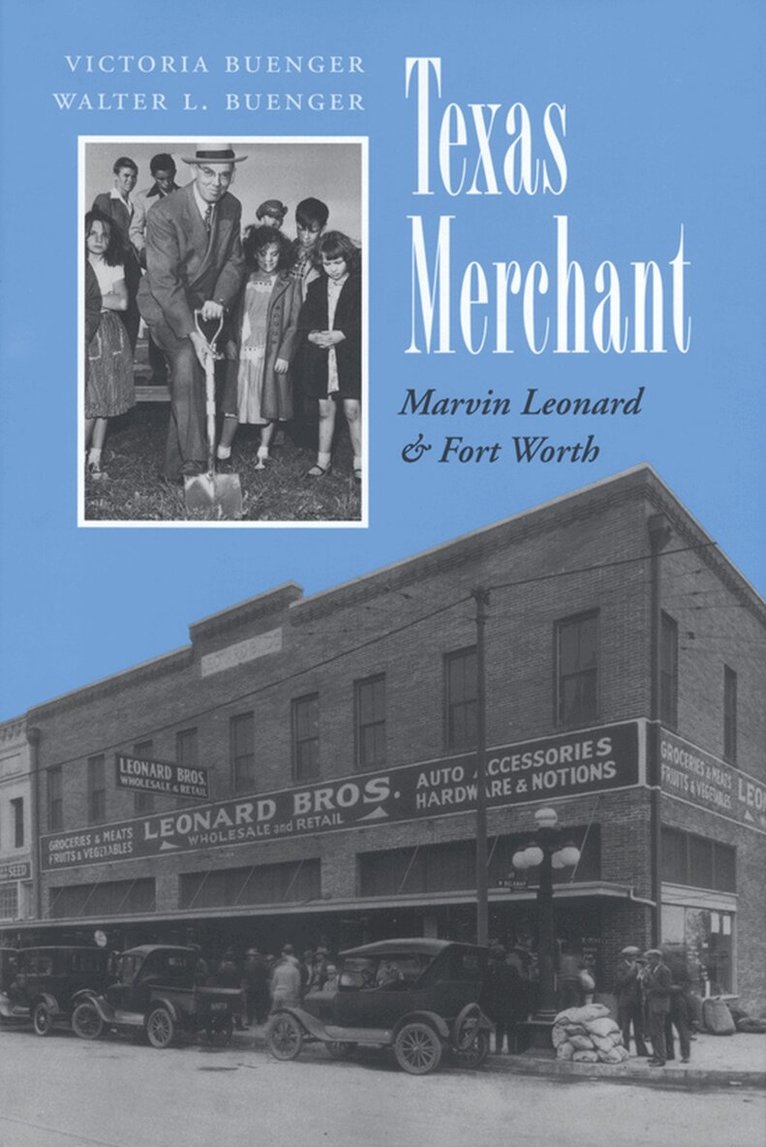
Few department stores symbolized the aspirations of a community or represented the identity of its citizens in a stronger or more enduring way than Leonards in Fort Worth, Texas. For over fifty years, Marvin Leonard, the store's founder, and his brother Obie ran a store that was always a unique place to shop. Customers also found a stunning array of goods - fur coats and canned tuna, pianos and tractors - and an environment that combined the spectacular with the familiar.But the story of Leonards goes beyond the store and the man who made it. For Marvin Leonard, downtown Fort Worth and Leonards were always intertwined. In the earliest years, Fort Worth's working families and rural West Texans shopped Leonards not only for bargains, but also because it was Fort Worth's place to meet and greet. Later, downtown's appeal slipped as rival suburban shopping areas grew, but Marvin Leonard refused to expand beyond one store and never left downtown.Leonards gave Fort Worth a special identity, a distinctiveness, and an attraction to the city's center. When Tandy bought Leonards and later sold it to Dillard's, Fort Worth's image and character changed.
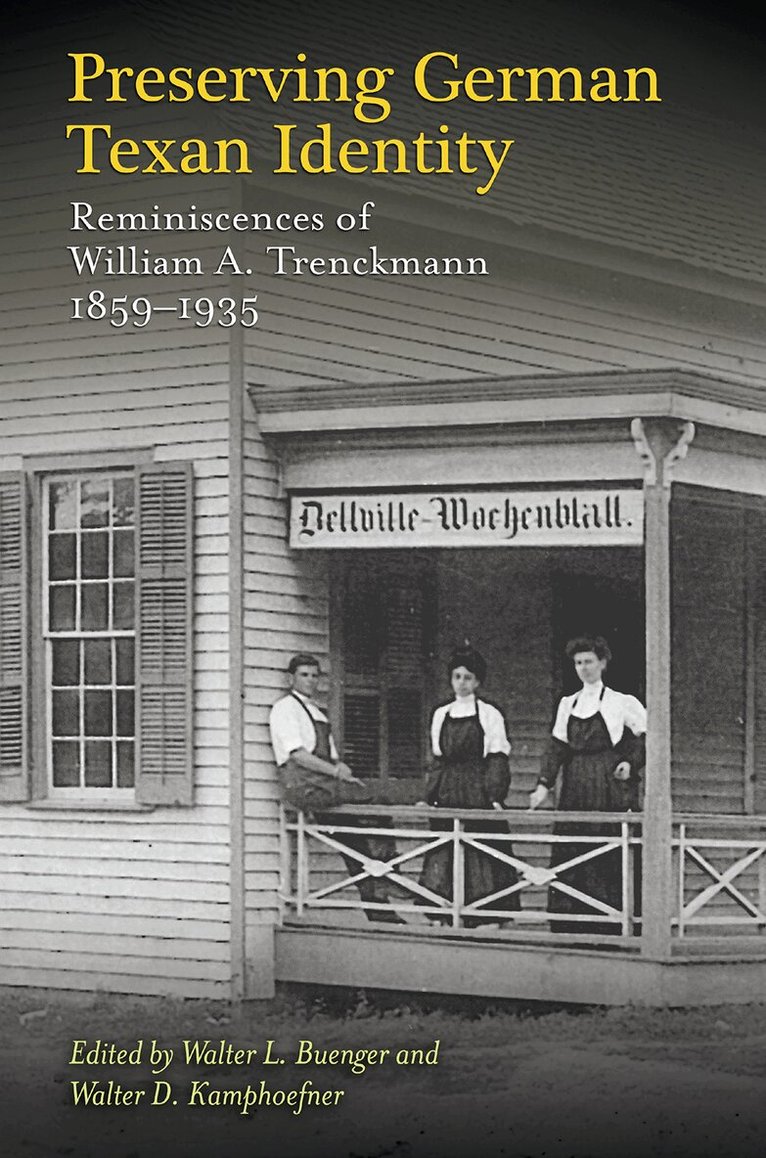
Preserving German Texan Identity
Reminiscences of William a. Trenckmann, 1859-1935
Inbunden, Engelska, 2018
474 kr
Skickas inom 10-15 vardagar
Born in Millheim, Texas, to a family of German immigrants who moved to Texas in the wake of the 1848 revolution, William Andreas Trenckmann was a teacher, journalist, and publisher who successfully combined his German heritage with a new, distinctly Texan identity. His education was cultivated at the brand new Agricultural and Mechanical College of Texas, where he distinguished himself as the valedictorian of the first graduating class; he later served on the college's board of directors and was even offered the presidency. From 1907 to 1909, he represented Austin County in the Texas legislature. Trenckmann's lasting contribution to Texas history, however, was the creation of Das Wochenblatt, a German-language weekly newspaper that he edited and published for over forty years.Das Wochenblatt became a popular and respected source of information for German-speaking immigrants, their descendants, and the Texas communities where they lived and worked. Through the paper, Trenckmann advocated for civil liberties and free elections. He also vigorously opposed prohibition, the Ku Klux Klan, and later the rise of Adolf Hitler and National Socialism. When the United States entered World War I, many German-language publications were suspended or otherwise heavily censored, but Trenckmann's newspaper was granted a rare exemption from the wartime government.From 1931 to 1933, Trenckmann serialized his memoirs, Erlebtes und Beobachtetes, or “experiences and observations.” In Preserving German Texan Identity, historians Walter L. Buenger and Walter D. Kamphoefner present a revised and annotated translation of those memoirs as a revealing window into the lives of German Texans in the late nineteenth and early twentieth centuries.