Walter van de Leur - Böcker
Visar alla böcker från författaren Walter van de Leur. Handla med fri frakt och snabb leverans.
3 produkter
3 produkter
345 kr
Skickas inom 5-8 vardagar
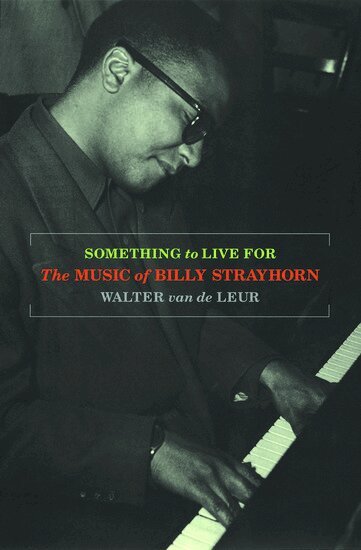
Something to Live For investigates and analyzes the entire oeuvre of Billy Strayhorn. Nearly seventy musical examples, drawn directly from his original autograph scores, provide insight into the development of his style, in his unique and often advanced harmonic language, and in his authoritative orchestral technique. The book traces the origin of Strayhorn's music, with its roots in European and American idioms, and uncovers hitherto unknown works that cast a new light on his development as a composer and orchestrator. Musicologist Walter van de Leur addresses the mythical, 30-year collaboration of Strayhorn and Ellington. Through ground breaking research on the surviving autograph scores of the two composers, Van de Leur redefines their unequalled musical partnership. The author argues that, as opposed to generally accepted views, Ellington and Strayhorn were not musical alter-egos who composed in a telepathic way. On the contrary, they were two distinctly individual composers who worked from different musical perspectives. This book details how those distinctions stem from the respective musical background of the two composers and how that affected their collaboration.According to the author, the differences between Ellington's and Strayhorn's music are clearly audible. Yet, because Ellington, the main interpreter of his collaborator's music, has played such a crucial role in our perception of Strayhorn's work, those differences have eluded most listeners. Something to Live For untangles Strayhorn from Ellington's shadow, identifies all of his contributions to the Ellington repertory, and points listeners to the most salient features that distinguish Strayhorn's musical style from Ellington's.Revelatory appendices, including a chronological listing of over five hundred different Strayhorn compositions and arrangements recorded by Ellington, a detailed listing of all of Strayhorn's compositions in manuscript and on record, complete the book. This book contains unique photographs as well as reproductions of autograph scores in Strayhorn's and Ellington's hand.
2 023 kr
Skickas inom 10-15 vardagar
Jazz and Death: Reception, Rituals, and Representations critically examines the myriad and complex interactions between jazz and death, from the New Orleans "jazz funeral" to jazz in heaven or hell, final recordings, jazz monuments, and the music’s own presumed death. It looks at how fans, critics, journalists, historians, writers, the media, and musicians have narrated, mythologized, and relayed those stories. What causes the fascination of the jazz world with its deaths? What does it say about how our culture views jazz and its practitioners? Is jazz somehow a fatal culture?The narratives surrounding jazz and death cast a light on how the music and its creators are perceived. Stories of jazz musicians typically bring up different tropes, ranging from the tragic, misunderstood genius to the notion that virtuosity somehow comes at a price. Many of these narratives tend to perpetuate the gendered and racialized stereotypes that have been part of jazz’s history. In the end, the ideas that encompass jazz and death help audiences find meaning in a complex musical practice and come to grips with the passing of their revered musical heroes -- and possibly with their own mortality.
577 kr
Skickas inom 10-15 vardagar
Jazz and Death: Reception, Rituals, and Representations critically examines the myriad and complex interactions between jazz and death, from the New Orleans "jazz funeral" to jazz in heaven or hell, final recordings, jazz monuments, and the music’s own presumed death. It looks at how fans, critics, journalists, historians, writers, the media, and musicians have narrated, mythologized, and relayed those stories. What causes the fascination of the jazz world with its deaths? What does it say about how our culture views jazz and its practitioners? Is jazz somehow a fatal culture?The narratives surrounding jazz and death cast a light on how the music and its creators are perceived. Stories of jazz musicians typically bring up different tropes, ranging from the tragic, misunderstood genius to the notion that virtuosity somehow comes at a price. Many of these narratives tend to perpetuate the gendered and racialized stereotypes that have been part of jazz’s history. In the end, the ideas that encompass jazz and death help audiences find meaning in a complex musical practice and come to grips with the passing of their revered musical heroes -- and possibly with their own mortality.