Walter Wallace – Författare
Visar alla böcker från författaren Walter Wallace. Handla med fri frakt och snabb leverans.
8 produkter
8 produkter
700 kr
Skickas inom 10-15 vardagar
The subject of this book is limited to the abstract form or "logic" of science (as applied particularly to scientific sociology). The chief aim is to compress, to simplify, and to organize into an easily understood and reasonably well-documented scheme some principal answers to questions such as: What makes a discipline "scientific" in the first place? What are theories, empirical generalizations, hypotheses, and observations; and how are they related to each other? What is meant by "the scientific method?" What roles do induction and deduction play in science? What are the places of measurement, sampling techniques, descriptive statistics, statistical inference, scale construction, tests of significance, "grand" theories, and "middle-range" theories? What parts are played by our ideas concerning logic, causality, and chance? What is the significance of the rule of parsimony? How do verbal and mathematical languages compare in expressing scientific statements?The intended use of this book goes beyond these abstract questions. The discussion presented here may serve a practical role in the sociology and history of science by providing a framework for reducing the enormous variety of scientific researches--both within a given field and across all fields--to a limited number of interrelated formal elements. Such a framework, it is hoped, may prove useful in assessing empirical relationships between the formal aspects of scientific work and its substantive social, economic, political, and historical aspects.Wallace identifies four ways of generating and testing the truth of empirical statements--"authoritarian," "mystical," "logico-rational," and "scientific," and considers each in depth. As he concludes, "In science (as in æeveryday life') things must be believed to be seen, as well as seen to be believed; and questions must already be answered a little, if they are to be asked at all." This is a work of synthesis that merits close attention. It provides an area for viewing theory as something more than a review of the history of any single social science discipline.Walter L. Wallace is Professor of Sociology Emeritus at Princeton University. He is also the author of Sociological Theory: An Introduction, and Principles of Scientific Sociology, available from AldineTransaction.
1 099 kr
Tillfälligt slut
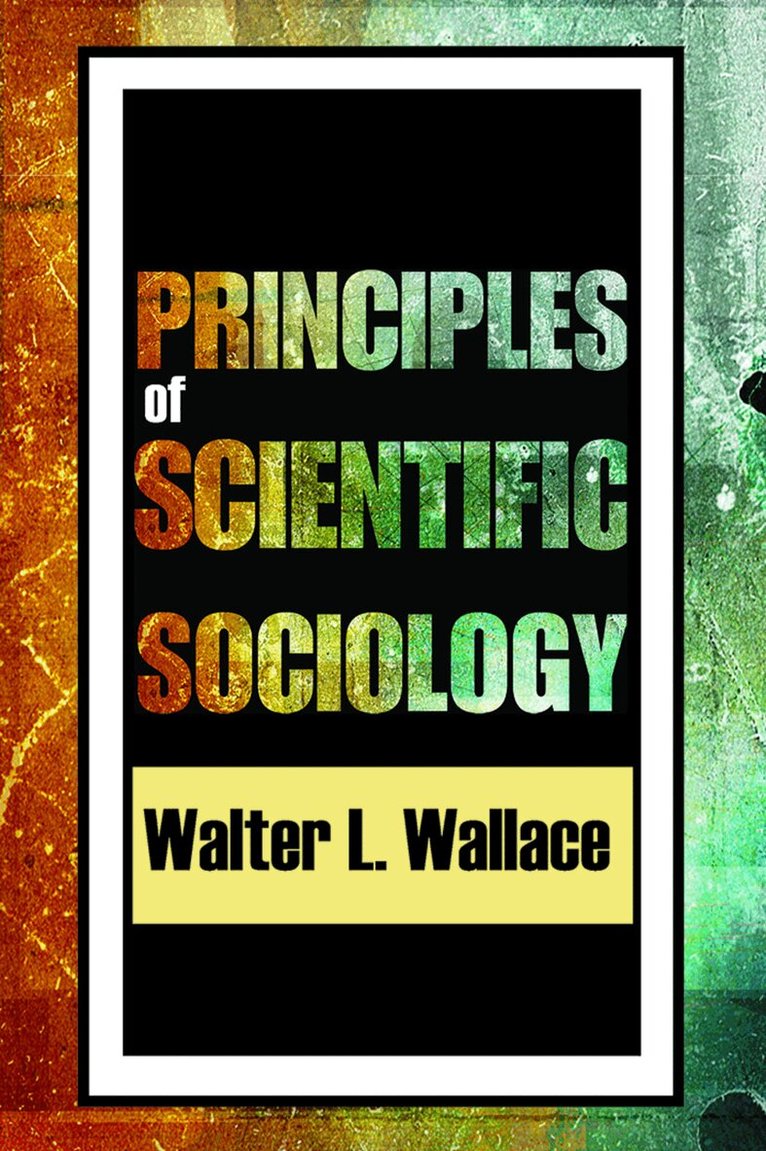
Principles of Scientific Sociology represents a major attempt to redirect the course of contemporary sociological thought. It is clear, well-organized, innovative, and original in its discussion of the context and methods of sociology conceived as a natural science. Wallace delineates the subject matter of sociology, classifies its variables, presents a logic of inquiry, and advocates the use of this logic for the acceptance or rejection of hypotheses or theories and for the solving of human problems.Social scientists, including political scientists, sociologists, anthropologists, historians, economists, social psychologists, and students of social phenomena among nonhumans, will find this work indispensable reading. Principles of Scientifc Sociology emphasizes the relationship between pure and applied sociological analysis. The essential contributions of each to the other are specified. Relationships between the substantive concepts of the sociology of humans, on the one hand, and the sociology of nonhumans, on the other, are systematized. In an attempt to put sociological analysis on a firm scientific basis, the book contains a concluding chapter focusing on central premises of natural science and their applicability to sociology.Wallace identifies the simple elements and relationships that sociological analysis requires if it is to lead to an understanding of complex social phenomena. On this basis, he considers the substantive elements and relations that comprise structural functionalism, historical materialism, symbolic interactionism, and other approaches to social data. He develops groundwork for standardizing these elements so that the contexts of different analyses may become rigorously comparable. The result is a fine, one-volume synthesis of sociological theory.
673 kr
Skickas inom 10-15 vardagar
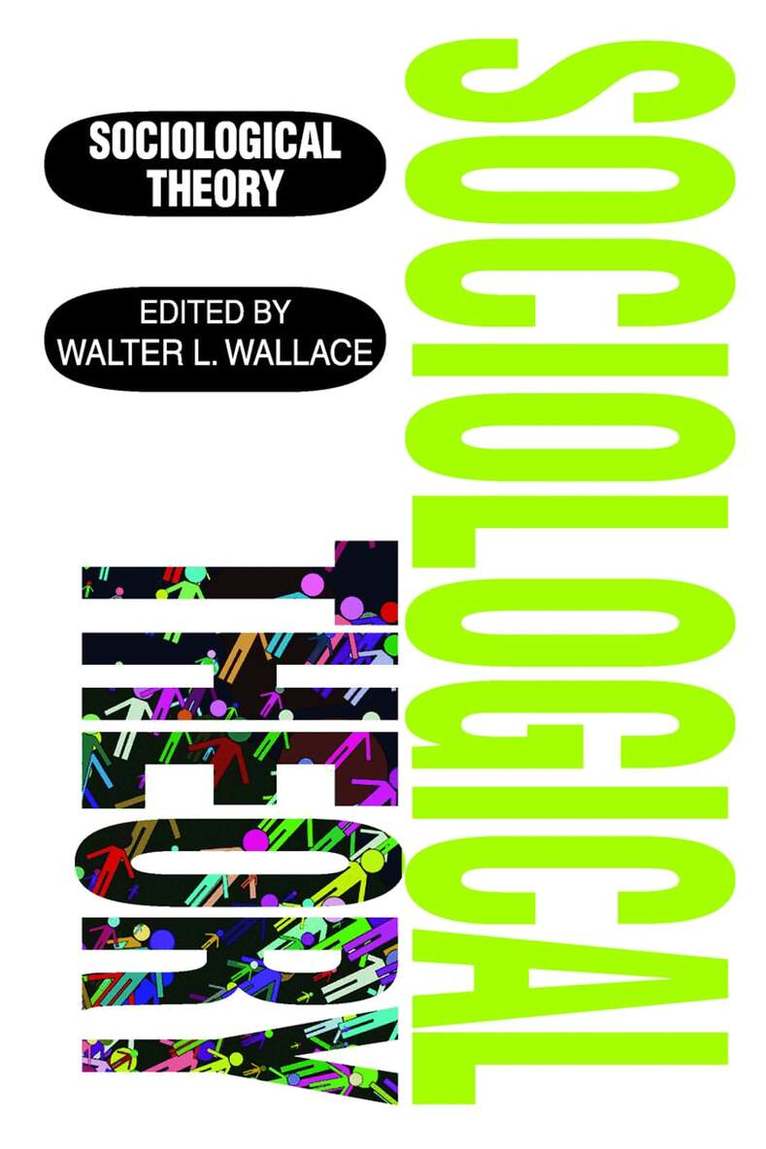
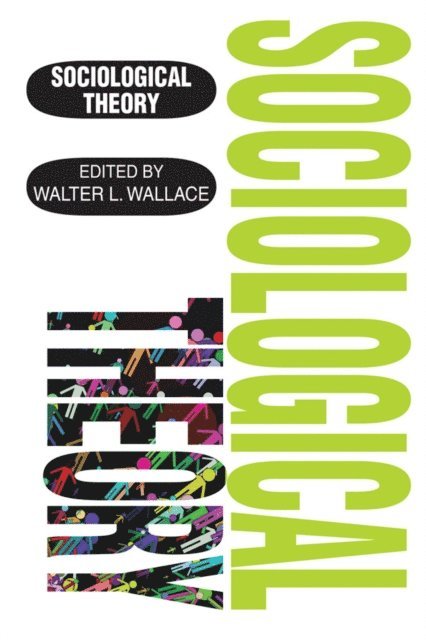
In this fundamental contribution to the study and application of sociological theory, Wallace examines a wide range of theories within a framework that clarifies their interrelationships and illustrates their implications for empirical research. Wallace is able to point out the symbiotic relationships among these theories which, at first, may appear to be in direct opposition--or at least discord.Sociological Theory begins with an original essay by the editor that introduces the reader to eleven general theoretical viewpoints. He calls these ecologism, demographism, materialism, psychologism, technologism, functional structuralism, exchange structuralism, conflict structuralism, symbolic interactionism, social actionism, and functional imperativism. To do this, Wallace assembles selected readings by major theorists that provide detailed examples of each of the theoretical viewpoints discussed. The selections are keyed to the framework developed in the Introduction, so as to enable the reader to work back and forth between the general and the particular statements. Offering far more than a mere survey or an abstract critical analysis, In this way, Sociological Theory provides a learning matrix that facilitates comprehension and enables the reader systematically to expand his knowledge of sociological theory.In developing his analytical framework, Wallace points out how these different types of theory complement rather than conflict with one another. Through this approach, he is able to show the distinctive level and scope of analysis of each theory to demonstrate why the sociologist must draw upon and integrate several viewpoints for interpreting research results and formulating hypotheses. A useful guide and reference work for researchers and teachers, the book is an excellent basic or supplementary text for all theory courses. As Robert K. Merton noted at the time of the original publication, "Sociological Theory is a beautiful piece of work."
673 kr
Skickas inom 10-15 vardagar
Principles of Scientific Sociology represents a major attempt to redirect the course of contemporary sociological thought. It is clear, well-organized, innovative, and original in its discussion of the context and methods of sociology conceived as a natural science. Wallace delineates the subject matter of sociology, classifies its variables, presents a logic of inquiry, and advocates the use of this logic for the acceptance or rejection of hypotheses or theories and for the solving of human problems.Social scientists, including political scientists, sociologists, anthropologists, historians, economists, social psychologists, and students of social phenomena among nonhumans, will find this work indispensable reading. Principles of Scientifc Sociology emphasizes the relationship between pure and applied sociological analysis. The essential contributions of each to the other are specified. Relationships between the substantive concepts of the sociology of humans, on the one hand, and the sociology of nonhumans, on the other, are systematized. In an attempt to put sociological analysis on a firm scientific basis, the book contains a concluding chapter focusing on central premises of natural science and their applicability to sociology.Wallace identifies the simple elements and relationships that sociological analysis requires if it is to lead to an understanding of complex social phenomena. On this basis, he considers the substantive elements and relations that comprise structural functionalism, historical materialism, symbolic interactionism, and other approaches to social data. He develops groundwork for standardizing these elements so that the contexts of different analyses may become rigorously comparable. The result is a fine, one-volume synthesis of sociological theory.
2 113 kr
Skickas inom 10-15 vardagar
In this fundamental contribution to the study and application of sociological theory, Wallace examines a wide range of theories within a framework that clarifies their interrelationships and illustrates their implications for empirical research. Wallace is able to point out the symbiotic relationships among these theories which, at first, may appear to be in direct opposition--or at least discord.Sociological Theory begins with an original essay by the editor that introduces the reader to eleven general theoretical viewpoints. He calls these ecologism, demographism, materialism, psychologism, technologism, functional structuralism, exchange structuralism, conflict structuralism, symbolic interactionism, social actionism, and functional imperativism. To do this, Wallace assembles selected readings by major theorists that provide detailed examples of each of the theoretical viewpoints discussed. The selections are keyed to the framework developed in the Introduction, so as to enable the reader to work back and forth between the general and the particular statements. Offering far more than a mere survey or an abstract critical analysis, In this way, Sociological Theory provides a learning matrix that facilitates comprehension and enables the reader systematically to expand his knowledge of sociological theory.In developing his analytical framework, Wallace points out how these different types of theory complement rather than conflict with one another. Through this approach, he is able to show the distinctive level and scope of analysis of each theory to demonstrate why the sociologist must draw upon and integrate several viewpoints for interpreting research results and formulating hypotheses. A useful guide and reference work for researchers and teachers, the book is an excellent basic or supplementary text for all theory courses. As Robert K. Merton noted at the time of the original publication, "Sociological Theory is a beautiful piece of work."
2 113 kr
Skickas inom 10-15 vardagar
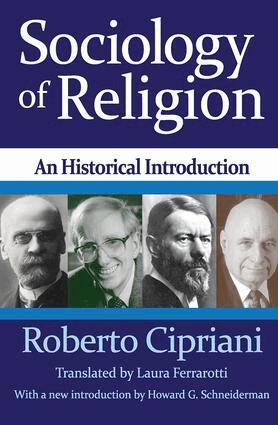
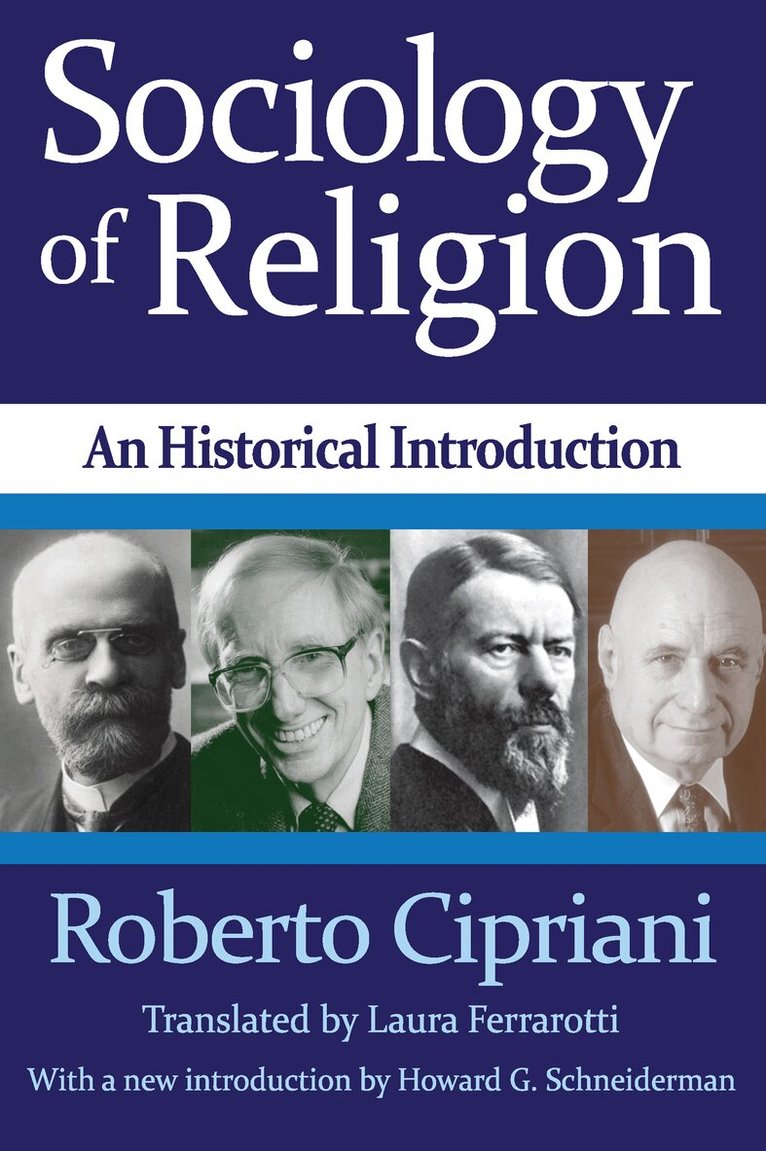
Sociology of Religion represents a documented introduction to the history of sociological thought as applied to religious phenomena. It examines both the substantive and functional definitions of religion that are more open, pluralistic, and not inscribed in a single explanatory horizon or within a single confessional perspective. The contributors' concerns are carefully written to show all sides of the argument.Roberto Cipriani argues for the simple definition that the sociology of religion is an application of sociological theories and methods to religious phenomena. Historically, close ties between sociology and the sociology of religion exist. The slow and uneven development of theory and methods affects the sociology of religion's development, but the latter has also benefited from increasing precision and scientific validity. Other sociological writers agree and disagree about different approaches. Some assume it is a militantly confessional or anti-confessional; others remain neutral within their work.
2 317 kr
Skickas inom 10-15 vardagar
The subject of this book is limited to the abstract form or "logic" of science (as applied particularly to scientific sociology). The chief aim is to compress, to simplify, and to organize into an easily understood and reasonably well-documented scheme some principal answers to questions such as: What makes a discipline "scientific" in the first place? What are theories, empirical generalizations, hypotheses, and observations; and how are they related to each other? What is meant by "the scientific method?" What roles do induction and deduction play in science? What are the places of measurement, sampling techniques, descriptive statistics, statistical inference, scale construction, tests of significance, "grand" theories, and "middle-range" theories? What parts are played by our ideas concerning logic, causality, and chance? What is the significance of the rule of parsimony? How do verbal and mathematical languages compare in expressing scientific statements?The intended use of this book goes beyond these abstract questions. The discussion presented here may serve a practical role in the sociology and history of science by providing a framework for reducing the enormous variety of scientific researches--both within a given field and across all fields--to a limited number of interrelated formal elements. Such a framework, it is hoped, may prove useful in assessing empirical relationships between the formal aspects of scientific work and its substantive social, economic, political, and historical aspects.Wallace identifies four ways of generating and testing the truth of empirical statements--"authoritarian," "mystical," "logico-rational," and "scientific," and considers each in depth. As he concludes, "In science (as in æeveryday life') things must be believed to be seen, as well as seen to be believed; and questions must already be answered a little, if they are to be asked at all." This is a work of synthesis that merits close attention. It provides an area for viewing theory as something more than a review of the history of any single social science discipline.Walter L. Wallace is Professor of Sociology Emeritus at Princeton University. He is also the author of Sociological Theory: An Introduction, and Principles of Scientific Sociology, available from AldineTransaction.
686 kr
Skickas inom 10-15 vardagar
Sociology of Religion represents a documented introduction to the history of sociological thought as applied to religious phenomena. It examines both the substantive and functional definitions of religion that are more open, pluralistic, and not inscribed in a single explanatory horizon or within a single confessional perspective. The contributors' concerns are carefully written to show all sides of the argument.Roberto Cipriani argues for the simple definition that the sociology of religion is an application of sociological theories and methods to religious phenomena. Historically, close ties between sociology and the sociology of religion exist. The slow and uneven development of theory and methods affects the sociology of religion's development, but the latter has also benefited from increasing precision and scientific validity. Other sociological writers agree and disagree about different approaches. Some assume it is a militantly confessional or anti-confessional; others remain neutral within their work.