Warren Eugene Milteer Jr - Böcker
Visar alla böcker från författaren Warren Eugene Milteer Jr. Handla med fri frakt och snabb leverans.
6 produkter
6 produkter
320 kr
Skickas inom 3-6 vardagar
548 kr
Skickas inom 7-10 vardagar
In North Carolina's Free People of Color, 1715- 1885, Warren Eugene Milteer Jr. examines the lives of free persons categorized by their communities as "negroes," "mulattoes," "mustees," "Indians," "mixed-Âbloods," or simply "free people of color." From the colonial period through Reconstruction, lawmakers passed legislation that curbed the rights and privileges of these non-enslaved residents, from prohibiting their testimony against whites to barring them from the ballot box. While such laws suggest that most white North Carolinians desired to limit the freedoms and civil liberties enjoyed by free people of color, Milteer reveals that the two groups often interacted- praying together, working the same land, and occasionally sharing households and starting families. Some free people of color also rose to prominence in their communities, becoming successful businesspeople and winning the respect of their white neighbors.Milteer's innovative study moves beyond depictions of the American South as a region controlled by a strict racial hierarchy. He contends that although North Carolinians frequently sorted themselves into races imbued with legal and social entitlements- with whites placing themselves above persons of color- those efforts regularly clashed with their concurrent recognition of class, gender, kinship, and occupational distinctions. Whites often determined the position of free nonwhites by designating them as either valuable or expendable members of society. In early North Carolina, free people of color of certain statuses enjoyed access to institutions unavailable even to some whites. Prior to 1835, for instance, some free men of color possessed the right to vote while the law disenfranchised all women, white and nonwhite included.North Carolina's Free People of Color, 1715- 1885 demonstrates that conceptions of race were complex and fluid, defying easy characterization. Despite the reductive labels often assigned to them by whites, free people of color in the state emerged from an array of backgrounds, lived widely varied lives, and created distinct cultures- all of which, Milteer suggests, allowed them to adjust to and counter everÂ-evolving forms of racial discrimination.
1 304 kr
Skickas inom 7-10 vardagar
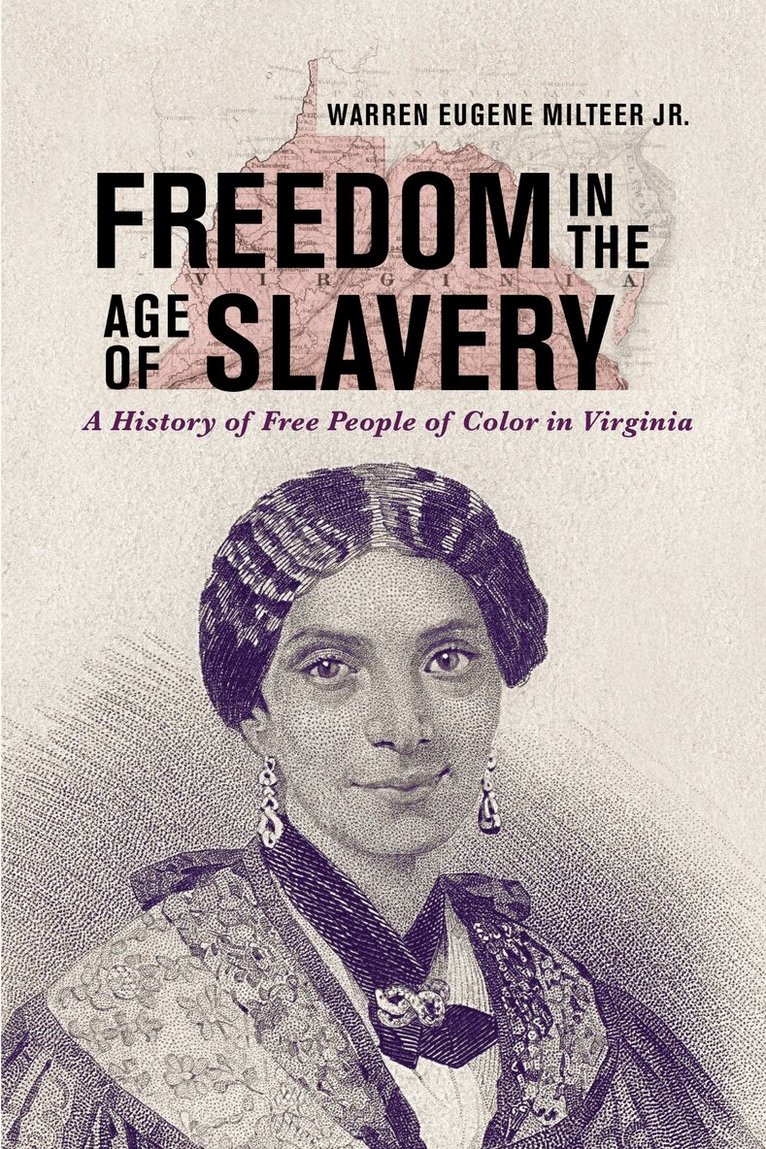
An authoritative study of the free people of color in the largest state of the Old SouthVirginia was the state with the most enslaved people prior to the Civil War. It was also at one time the state with the most resident free people of color—free from the legal disabilities specifically associated with enslavement but still denied many basic civil rights. Written by an award-winning expert on free people of color in the American South, Freedom in the Age of Slavery is the first modern comprehensive history of free Virginians of color from the colonial period through Reconstruction.Milteer recounts in granular detail the discriminatory policies and resulting hardships that free Virginians of color faced, while also documenting the openings they created for themselves and the successes they enjoyed against overwhelming odds. Throughout, he highlights the commonwealth's significance as the laboratory for legal discrimination throughout the nation, while never losing sight of the ways free people of color seized their opportunities wherever possible and built meaningful lives in the face of massive white resistance.
372 kr
Skickas inom 7-10 vardagar
An authoritative study of the free people of color in the largest state of the Old South.Virginia was the state with the most enslaved people prior to the Civil War. It was also at one time the state with the most resident free people of color—free from the legal disabilities specifically associated with enslavement but still denied many basic civil rights. Written by an award-winning expert on free people of color in the American South, Freedom in the Age of Slavery is the first modern comprehensive history of free Virginians of color from the colonial period through Reconstruction.Milteer recounts in granular detail the discriminatory policies and resulting hardships that free Virginians of color faced, while also documenting the openings they created for themselves and the successes they enjoyed against overwhelming odds. Throughout, he highlights the commonwealth's significance as the laboratory for legal discrimination throughout the nation, while never losing sight of the ways free people of color seized their opportunities wherever possible and built meaningful lives in the face of massive white resistance.
1 049 kr
Skickas inom 10-15 vardagar
On the eve of the Civil War, most people of color in the United States toiled in bondage. Yet more than half a million of these individuals, including over 250,000 in the South, were free. In Beyond Slavery's Shadow, Warren Eugene Milteer Jr. draws from a wide array of sources to demonstrate that from the colonial period through the Civil War, the growing influence of white supremacy and proslavery extremism created serious challenges for free persons categorized as "negroes," "mulattoes," "mustees," "Indians," or simply "free people of color" in the South. Segregation, exclusion, disfranchisement, and discriminatory punishment were ingrained in their collective experiences. Yet, in the face of attempts to deny them the most basic privileges and rights, free people of color defended their families and established organizations and businesses.These people were both privileged and victimized, both celebrated and despised, in a region characterized by social inconsistency. Milteer's analysis of the way wealth, gender, and occupation intersected with ideas promoting white supremacy and discrimination reveals a wide range of social interactions and life outcomes for the South's free people of color and helps to explain societal contradictions that continue to appear in the modern United States.
432 kr
Skickas inom 10-15 vardagar
On the eve of the Civil War, most people of color in the United States toiled in bondage. Yet more than half a million of these individuals, including over 250,000 in the South, were free. In Beyond Slavery's Shadow, Warren Eugene Milteer Jr. draws from a wide array of sources to demonstrate that from the colonial period through the Civil War, the growing influence of white supremacy and proslavery extremism created serious challenges for free persons categorized as "negroes," "mulattoes," "mustees," "Indians," or simply "free people of color" in the South. Segregation, exclusion, disfranchisement, and discriminatory punishment were ingrained in their collective experiences. Yet, in the face of attempts to deny them the most basic privileges and rights, free people of color defended their families and established organizations and businesses.These people were both privileged and victimized, both celebrated and despised, in a region characterized by social inconsistency. Milteer's analysis of the way wealth, gender, and occupation intersected with ideas promoting white supremacy and discrimination reveals a wide range of social interactions and life outcomes for the South's free people of color and helps to explain societal contradictions that continue to appear in the modern United States.