
Warren Ginsberg – författare
Visar alla böcker från författaren Warren Ginsberg. Handla med fri frakt och snabb leverans.
4 produkter
4 produkter
Inbunden, Engelska, 2015
1 890 kr
Skickas inom 7-10 vardagar
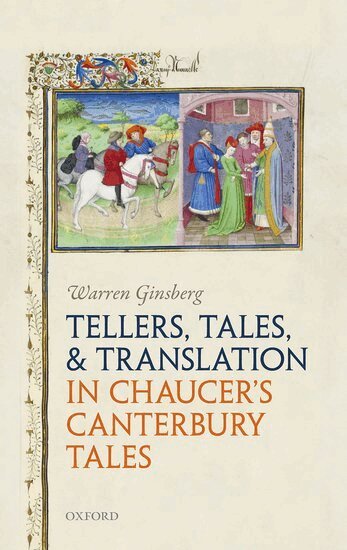
Two features distinguish the Canterbury Tales from other medieval collections of stories: the interplay among the pilgrims and the manner in which the stories fit their narrators. In his new book, Warren Ginsberg argues that Chaucer often linked tellers and tales by recasting a coordinating idea or set of concerns in each of the blocks of text that make up a 'Canterbury' performance. For the Clerk, the idea is transition, for the Merchant it is revision and reticence, for the Miller it is repetition, for the Franklin it is interruption and elision, for the Wife of Bath it is self-authorship, for the Pardoner it is misdirection and subversion. The parts connect because they translate one another. By expressing the same concept differently, the portraits of the pilgrims in the "General Prologue," the introductions and epilogues to the tales they tell, and the tales themselves become intra-lingual translations that begin to act like metaphors. When brought together by readers, they give the ensemble its inner cohesiveness and reveal what Walter Benjamin called modes of meaning. Chaucer also restaged events across his poem. They too become intra-lingual translations. Together with the linking passages that precede and follow a story, these episodes are the ligaments that stabilize the Tales and underwrite its remarkable elasticity. As much as the conceits that frame the work, the pilgrimage and the tale-telling contest, Chaucer's internal translations guided the construction of his masterpiece and the way his audiences have continued to read it.
Häftad, Engelska, 1983
315 kr
Skickas inom 5-8 vardagar
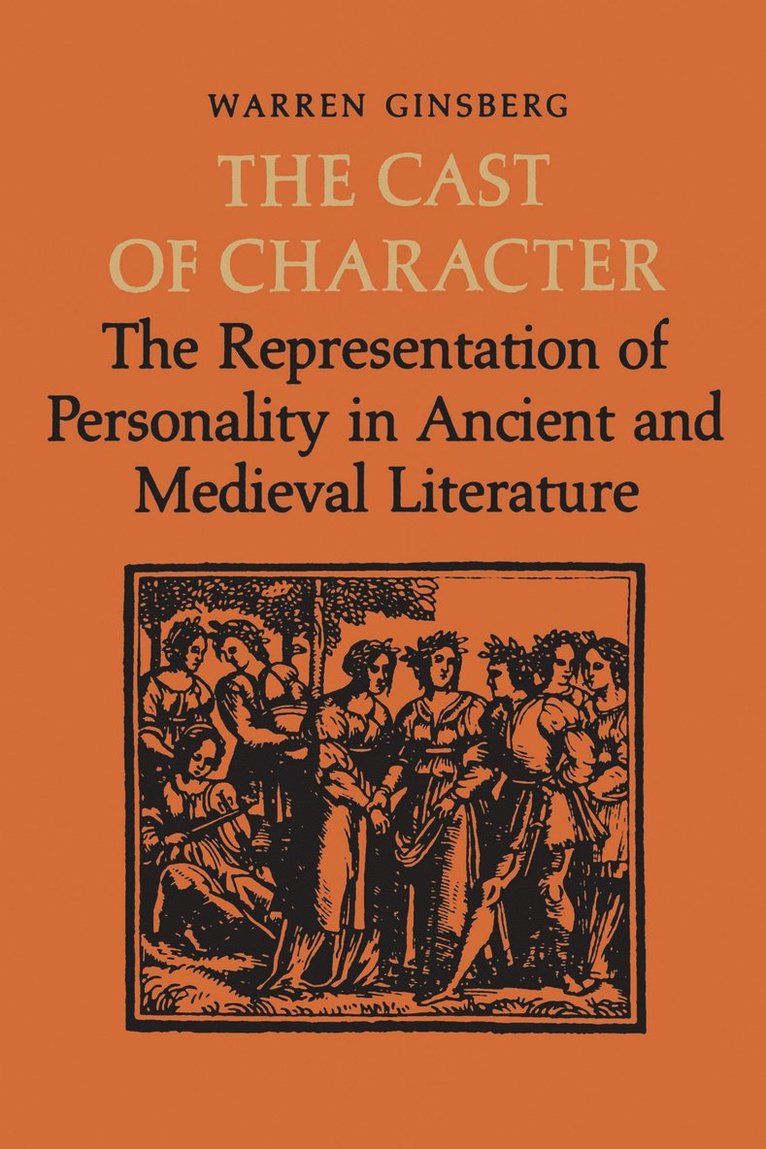
This book is concerned with the idea of character and the methods of representing it in ancient and medieval narrative fiction, and shows how late classical and medieval authors adopted techniques and perspectives from rhetoric, philosophy, and sometimes theology to fashion figures who define not only themselves but also their readers.Ginsberg first tests Ovid's concept in the Amores and the Metamorphoses against the conventions of classical tradition and shows how, although Ovid's idea of character did not change, his technique grew more subtle and complex as his art matured.Ginsberg then employs the methods of biblical exegesis to show how medieval characters – Gottfried's Tristan, Dante's Farinata, Chrétien's Yvain – both exist as themselves and point to characters beyond themselves, gaining depth and resonance because we see them in this perspective.Perspective is also a distinguishing quality of the maturing of Boccaccio's art. In the early works his characters seem to be little more than positions in a debate, but as he grew more skilful the strict formalism of binary oppositions gave way to the complexity of experience characteristic of the 'probably true' and culminating in the hundred perspectives of the Decameron. In Chaucer's Canterbury Tales the pilgrims are both typical and individual, twice-formed by the tale and by the frame. A character acts, and the reader forms expectations of his acting and in the process 'character,' the abiding glory of medieval literature, is created.
Häftad, Engelska, 1988
65 kr
Tillfälligt slut
Häftad, Engelska, 1992
216 kr
Tillfälligt slut
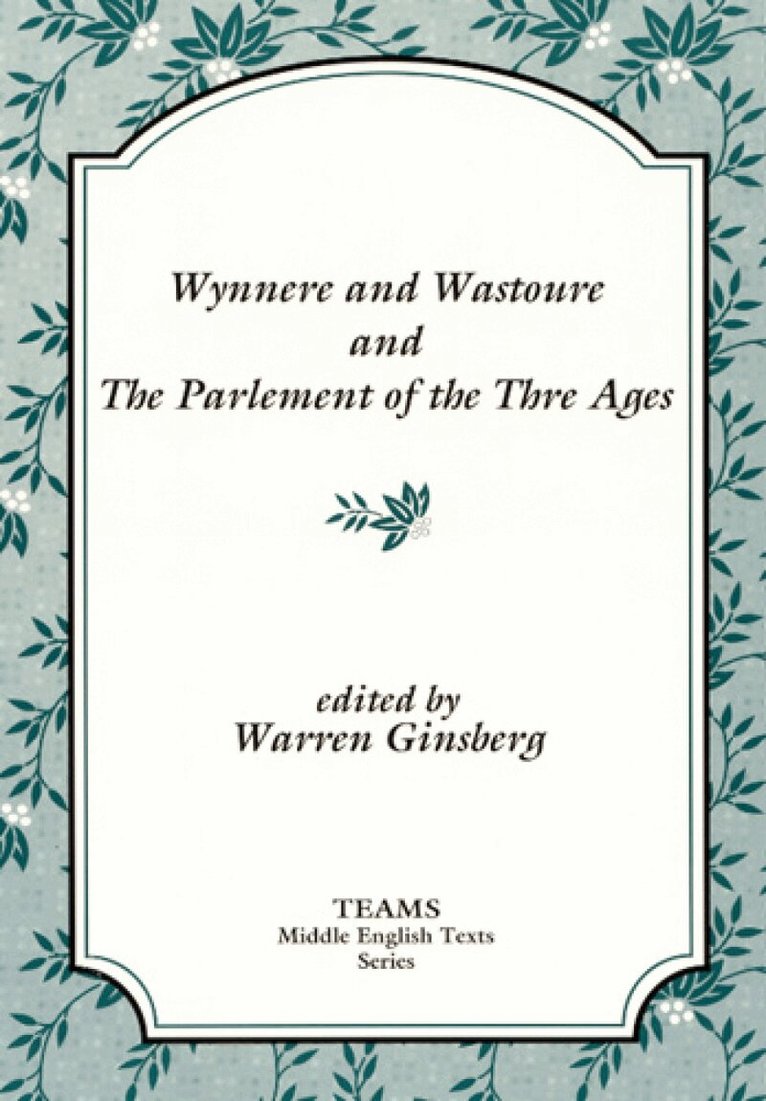
This edition contains two poems valuable to the study of satire of social abuses in the fourteenth century: Wynnere and Wastoure and The Parlement of the Thre Ages. Both combine two genres of medieval poetry: dream visions and poetic debates. As the editor observes, the poem's perspectives are truly dizzying: on the one hand, economics, politics, ethics and social relations are seen as an interrelated set of universal, timeless principles; on the other, they appear as actual, contingent conditions that have resulted from specific acts in history. The editions include notes, glosses, an introduction, and a glossary, making them accessible to beginning and advanced students in Middle English alike.