Washington Collado – författare
344 kr
Skickas inom 5-8 vardagar
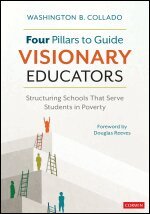
Address the challenges of high-poverty communities with visionary school leadership.
In this essential guide for education leaders who aspire to effect meaningful change in the lives of students from high-poverty communities, Washington B. Collado presents four pillars to support education leaders in (1) creating a shared vision and mission, (2) engaging families and communities, (3) maintaining a focus on equity, and (4) developing systems to support students’ academic and social-emotional development. Together, these four essential elements provide a coherent and systematic approach to educational excellence for all students, particularly those from low-income families.
Refusing to shy away from the challenges within high-poverty schools, Collado combines decades of leadership experience with the latest research on effective interventions for students. Through nine compelling chapters, he presents actionable strategies, key takeaways, and reflection questions for education leaders. Additional features include
vignettes showcasing real students and administrators, illustrating the successful implementation of key strategies;activities that encourage leaders to apply the chapter lessons to their specific contexts; andresearch-based data explicitly detailing the additional obstacles faced by low-income students.Visionary leaders hold a pivotal role in reshaping schools for students in high-poverty communities. By embracing the four pillars outlined in this book, education leaders can foster equitable and supportive learning environments that address the academic and social-emotional needs of their students so that all students can thrive.
308 kr
Skickas inom 5-8 vardagar
Break barriers, build trust, and create lasting change for students
Family engagement has never been more critical to student achievement, yet too many schools remain stuck in outdated models that treat families as occasional visitors rather than essential partners. Authored by three seasoned and celebrated school leaders, this practical book challenges educators to move beyond traditional "meetings and meals" approaches toward authentic family empowerment that drives meaningful change.
Introducing an innovative framework to reimagine family and community engagement, Empowered Families, Thriving Students addresses critical topics including overcoming deficit-based mindsets, establishing trust, building community partnerships, and reimagining traditional practices like parent-teacher conferences. Additional features include
Fourteen implementable strategies, each supported by clear action steps and self-analysis questionsAuthentic vignettes drawn from the authors' extensive experiences in PreK–2 schools across diverse communitiesEvidence-based approaches that combine nationally recognized research with compelling personal experiencesA focus on equity and cultural responsiveness that specifically address the needs of schools serving low-income and multilingual studentsThis exceptional guide provides school leaders, teachers, and community advocates with the essential tools to forge meaningful collaboration that focuses relentlessly on student achievement and wellbeing, creating stronger schools and more vibrant communities.
320 kr
Läs direkt efter köp
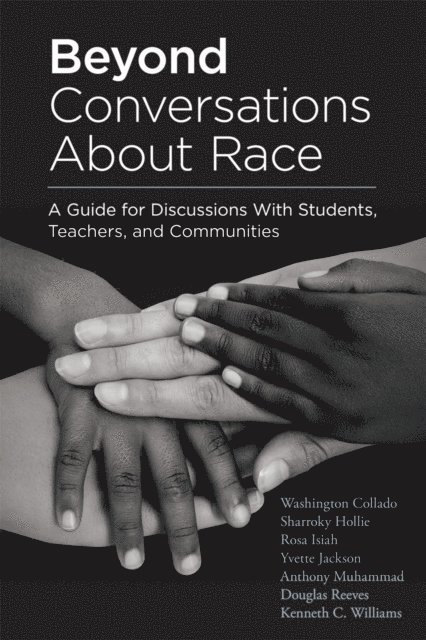
Written by a collective of brilliant authors, this essential work provokes respectful dialogue about race that catalyzes school-changing action. The book masterfully weaves together an array of scenarios and discussions, and directly addresses challenging topics such as discomfort, violence, advocacy, bias, and responsibility. The authors call on their lived experiences and, most important, their work with tens of thousands of educators, leaders, and students to help all of us do better in our schools and communities.
Learn how to talk about race in the classroom and advocate for racial equity in schools:
Recognize the presence of systemic racism in schools and understand why racism is such an uncomfortable topic for many.Use scenarios and effective discussion questions to encourage challenging conversations.Learn how to advocate for underserved communities and those who suffer under racism.Resist racial stereotypes and promote equity in the classroom.Take appropriate action based on challenging conversations.Ultimately develop classrooms, schools, and districts into safe, anti-racist educational strongholds and promote positive learning experiences for marginalized students.Contents:AcknowledgmentsTable of ContentsAbout the AuthorsIntroduction: How to Get the Most Out of This Book
Part 1: Getting Ready for Challenging ConversationsChapter 1: Why Is Talking About Race So Hard?Chapter 2: Why Is Discomfort Required?Chapter 3: Why Scenarios as an Educational Tool?Chapter 4: How Can We Create a Safe Space for Conversation?Chapter 5: How Will Faculty and Staff Set the Standard for Challenging Conversations?
Part 2: Using Scenarios for Important ConversationsChapter 6: Talking About Bias--How Can I Be Biased When I''m Not a Racist?Chapter 7: Talking About History--How Does the Shadow of 1619 Affect Us Today?Chapter 8: Talking About Action--How Can Something Be My Responsibility When It''s Not My Fault?Chapter 9: Talking About Advocacy--What Is My Duty to My Friends?Chapter 10: Talking About Law Enforcement--How Do Police Officers Help Us? How Do They Sometimes Hurt Us?Chapter 11: Talking About School--Where Are the Black People?Chapter 12: Talking About Violence--How Can We Talk About Terrible Things?
Part 3: Moving From Discussion to ActionChapter 13: How Do We Engage Our Communities?Chapter 14: How Can We Advocate for Change?Chapter 15: Why Isn''t Being Right Enough?Chapter 16: How Do We Create Equity Consciousness?Chapter 17: The Next Chapter--How Do We Shift From Opposing Bigotry to Practicing Anti-Racism?
References and ResourcesIndex