Anthony Muhammad – författare
320 kr
Läs direkt efter köp
366 kr
Skickas inom 3-6 vardagar
320 kr
Läs direkt efter köp
406 kr
Skickas inom 3-6 vardagar
365 kr
Läs direkt efter köp
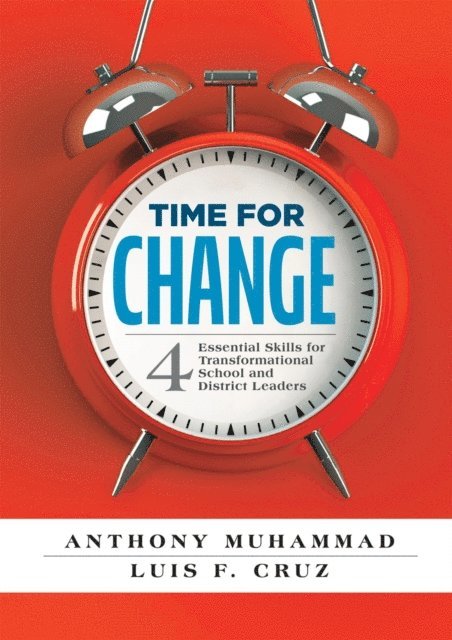
Transformational leaders have four distinctive skills: strong communication, the ability to build trust, the ability to increase the skills of those they lead, and a results orientation. Time for Change offers powerful guidance for those seeking to develop and strengthen the educational leadership skills needed for change management. Throughout this authoritative guide, Anthony Muhammad and Luis F. Cruz share concrete tools and strategies that will prepare you to lead your school toward lasting, meaningful change.
Use this educational leadership book to inspire a shared vision and overcome resistance to change:
Develop an understanding of leadership as a skill that can be practiced and improved.Consider three questions of transformational leadership (Why? Who? How?) and then Do!Learn about the technical and cultural dimensions of change and the ways in which both must be addressed.Understand the reasons behind resistance to change and how to manage it through effective leadership.Synthesize your skills as a school leader and utilize them to effect strategic change.Contents:IntroductionChapter 1: Finding Balance for Systems ChangeChapter 2: Communicating the Rationale -- Building Cognitive InvestmentChapter 3: Establishing Trust -- Making an Emotional InvestmentChapter 4: Building Capacity -- Making a Functional InvestmentChapter 5: Getting Results -- Collecting the Return on InvestmentChapter 6: Tying It All TogetherReferences and Resources
423 kr
Skickas inom 3-6 vardagar
377 kr
Läs direkt efter köp
With foreword by Richard DuFour and Rebecca DuFour
Transforming School Culture provides a school improvement plan for leaders to overcome staff division, improve relationships, and transform toxic school cultures into healthy ones.
Dr. Anthony Muhammad contends that in order to transform school culture, we must understand why teachers continue to hold on to models or beliefs contrary to those put forth by their school or district. He explores the human behavior, social conditions, and history that cause the underlying conflict among the four different types of teachers in a school.
The second edition of this best-selling resource delivers powerful new insight into the four types of educators (Believers, Fundamentalists, Tweeners, and Survivors) and how school leaders can work with each group to create positive school culture. The book also includes Dr. Muhammad''s latest research as well as a new chapter dedicated to answering frequently asked questions on culture and school leadership in education.
How this new edition will help you create a positive school culture:
Study the author''s research and observations of 34 schools—11 elementary schools, 14 middle schools, and 9 high schools—and how each school''s staff supported or hindered student achievement.Consider the characteristics of positive school cultures and how your school''s culture and climate may differ.Learn how laws such as the Every Student Succeeds Act (ESSA) and No Child Left Behind ( NCLB) impact teachers and school culture.Understand why teachers must work together to improve student performance.Obtain tips for creating a positive school culture and producing synergy.New in This Second Edition:
An updated research base, including over 60 new referencesConnections to ESSA as well as reflections on NCLB''s impact on educationAdditional insights into the four types of educatorsFurther guidance on what it takes to be a transformational leader and redirect Fundamentalists through communication, trust, capacity, and accountabilityA new chapter of frequently asked questions in regard to school culture, leadership, and the four types of educatorsContents:IntroductionChapter 1: From Status Quo to True ReformChapter 2: The Framework of Modern School CultureChapter 3: The BelieversChapter 4: The TweenersChapter 5: The SurvivorsChapter 6: The FundamentalistsChapter 7: "Drop Your Tools": A Lesson in Change and Our Best Chance at Eliminating FundamentalismChapter 8: Implications for PracticeChapter 9: Frequently Asked QuestionsAppendix: Study DesignReferences and ResourcesIndex
400 kr
Läs direkt efter köp
This new edition of a classic work is written for educators invested in the moral imperative to do what''s right for all students. The authors work from the mindset that PLC at Work® is a continuous process of school improvement. The result is a revelation of best practices affirmed by the latest research and a confirmation of the power of the three big ideas and four critical questions of this proven process.
Learn how to sustain the work of collaborative teams to ensure best practices in instruction, assessment, intervention, and more.
Discover new ideas and perspectives on school leadership and school culture.Delve into greater specificity on what issues Professional Learning Communities at Work® can positively impact.Learn how to effectively provide extra time and support for students who struggle and extensions for those who have already reached their learning goals.Understand what research shows is ineffective for student success and why such practices should be discontinued.Contents:IntroductionChapter 1: Proven Insights Into Professional Learning Communities at WorkChapter 2: The Case for Professional Learning Communities at WorkChapter 3: The Challenge of Cultural ChangeChapter 4: The Four Pillars of a Professional Learning Community--Shared Mission, Vision, Values, and GoalsChapter 5: Teaching in a Collaborative CultureChapter 6: Essential Learning and Assessment in a PLCChapter 7: Interventions and Extensions in a PLCChapter 8: The Role of the Principal in a PLCChapter 9: The Role of the Superintendent and the Central Office in a PLCChapter 10: How to Sustain the PLC ProcessAppendixReferences and Resources
320 kr
Läs direkt efter köp
Written by a collective of brilliant authors, this essential work provokes respectful dialogue about race that catalyzes school-changing action. The book masterfully weaves together an array of scenarios and discussions, and directly addresses challenging topics such as discomfort, violence, advocacy, bias, and responsibility. The authors call on their lived experiences and, most important, their work with tens of thousands of educators, leaders, and students to help all of us do better in our schools and communities.
Learn how to talk about race in the classroom and advocate for racial equity in schools:
Recognize the presence of systemic racism in schools and understand why racism is such an uncomfortable topic for many.Use scenarios and effective discussion questions to encourage challenging conversations.Learn how to advocate for underserved communities and those who suffer under racism.Resist racial stereotypes and promote equity in the classroom.Take appropriate action based on challenging conversations.Ultimately develop classrooms, schools, and districts into safe, anti-racist educational strongholds and promote positive learning experiences for marginalized students.Contents:AcknowledgmentsTable of ContentsAbout the AuthorsIntroduction: How to Get the Most Out of This Book
Part 1: Getting Ready for Challenging ConversationsChapter 1: Why Is Talking About Race So Hard?Chapter 2: Why Is Discomfort Required?Chapter 3: Why Scenarios as an Educational Tool?Chapter 4: How Can We Create a Safe Space for Conversation?Chapter 5: How Will Faculty and Staff Set the Standard for Challenging Conversations?
Part 2: Using Scenarios for Important ConversationsChapter 6: Talking About Bias--How Can I Be Biased When I''m Not a Racist?Chapter 7: Talking About History--How Does the Shadow of 1619 Affect Us Today?Chapter 8: Talking About Action--How Can Something Be My Responsibility When It''s Not My Fault?Chapter 9: Talking About Advocacy--What Is My Duty to My Friends?Chapter 10: Talking About Law Enforcement--How Do Police Officers Help Us? How Do They Sometimes Hurt Us?Chapter 11: Talking About School--Where Are the Black People?Chapter 12: Talking About Violence--How Can We Talk About Terrible Things?
Part 3: Moving From Discussion to ActionChapter 13: How Do We Engage Our Communities?Chapter 14: How Can We Advocate for Change?Chapter 15: Why Isn''t Being Right Enough?Chapter 16: How Do We Create Equity Consciousness?Chapter 17: The Next Chapter--How Do We Shift From Opposing Bigotry to Practicing Anti-Racism?
References and ResourcesIndex
446 kr
Skickas inom 3-6 vardagar
400 kr
Läs direkt efter köp
Teachers today have a window of opportunity to shape education in a way that will impact the profession for generations. In this compelling and comprehensive book, educator and best-selling author Anthony Muhammad explores the educational hurdles of the past in the context of present-day concerns and envisions an education system where all schools energetically embrace the PLC at Work® process.
This book will help K–12 educators:Reflect on the long-term effects of the COVID-19 pandemic on student learning and educator approachesGain insight on what professional learning communities are Differentiate between PLC and PLC Lite and understand the role of commitment in an effective PLCApply lessons learned from past challenges in education to present-day concernsDetermine how to face teacher morale and retention, student trauma and mental health, inequitable funding and accountability systems, and student academic achievement gapsUnderstand the racial, gender, and disability movements of the pastContents:Foreword by Robert EakerIntroductionChapter 1: A Moment of ClarityChapter 2: The Past—How Did We Get Here?Chapter 3: The Present—Where Are We Now?Chapter 4: The Future—Where Do We Go From Here?Chapter 5: Staying the Course—Are We Implementing PLC Right or PLC Lite?AfterwordAppendixReferences468 kr
Läs direkt efter köp
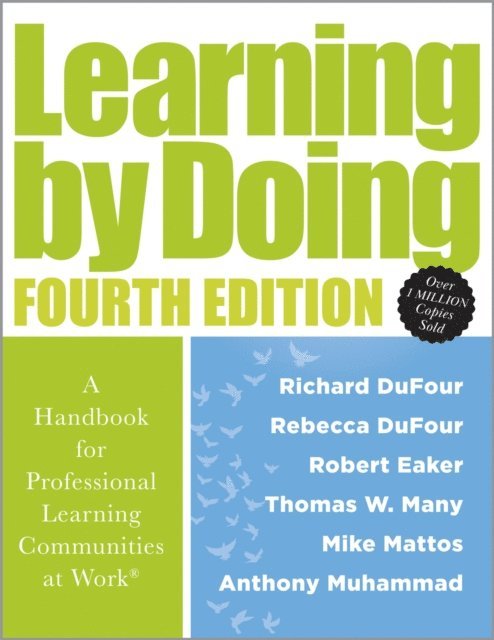
25 years on, the PLC at Work® process continues to produce results across the United States and worldwide. In this fourth edition of the bestseller Learning by Doing, the authors use updated research and time-tested knowledge to address current education challenges, from learning gaps exacerbated by the COVID-19 pandemic to the need to drive a highly effective multitiered system of supports.
This book will help K–12 administrators, school leaders, and teacher teams: Build shared knowledge of both critical vocabulary and the concepts underlying the key PLC termsLearn new, more in-depth strategies for coaching in a PLC at WorkMake honest assessments of student learning, examine their school culture, and implement conventional practices from a fresh, critical perspectiveTake immediate and specific steps to close the knowing-doing gap and implement PLC concepts in their school and districtRecognize that the knowledge needed to support students in achieving higher levels is readily available, and the next step is to transform this awareness into an action plan for school improvementFollow the step-by-step format outlined in each chapter to advance their school’s PLC journey and drive continuous improvementContents:IntroductionChapter 1: A Guide to Action for Professional Learning Communities at WorkChapter 2: Defining a Clear and Compelling PurposeChapter 3: Building the Collaborative Culture of a Professional Learning CommunityChapter 4: Coaching Collaborative Teams in a Professional Learning Community at WorkChapter 5: Creating a Results Orientation in a Professional Learning CommunityChapter 6: Establishing a Focus on LearningChapter 7: Creating Team-Developed Common Formative AssessmentsChapter 8: Responding When Some Students Don’t LearnChapter 9: Hiring, Orienting, and Retaining New StaffChapter 10: Addressing Conflict and Celebrating in a Professional Learning CommunityChapter 11: Implementing the Professional Learning Community Process DistrictwideConclusion: Touching the Emotions—Creating a Culture of CaringReferencesIndex400 kr
Läs direkt efter köp
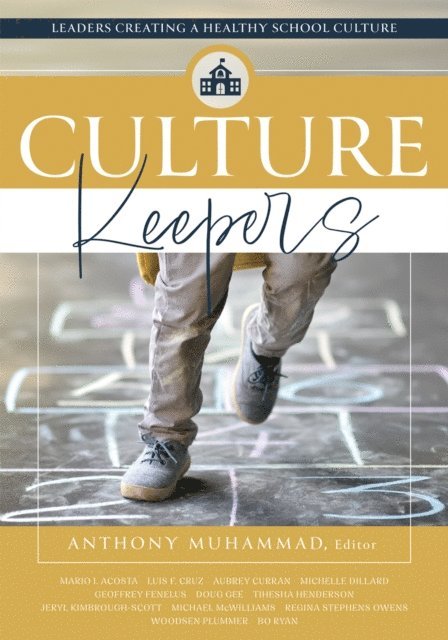
In Culture Keepers, renowned educator and author Anthony Muhammad compiles essays from leading names in education on how to build and sustain a strong school culture. Contributors provide guidance on how to transform school culture post-pandemic, how to confront staff resistance and chronic absenteeism, and how to address achievement gaps in English learners schoolwide, among other pertinent topics.
K–12 school and district leaders will:Understand how to approach school culture transformation post-pandemicIdentify and confront implicit biasNavigate common roadblocks with tried-and-true protocolsAddress staff resistance, chronic absenteeism, and other challengesCommit to practices that foster motivation, empathy, and a focus on goals and valuesContents:ForewordChapter 1: Developing Collective Commitment to Mission, Vision, and ValuesChapter 2: Transforming Post-Pandemic School CultureChapter 3: Addressing Implicit Bias Using a School Discussion ProtocolChapter 4: Getting School Boards on Our SideChapter 5: Exploring a Leadership Model to Address Chronic AbsenteeismChapter 6: Using a Four-Step Process to Create a Thriving School CultureChapter 7: Starting a PLC and Its Effects on School CultureChapter 8: Engaging Adult Learners to Improve Student OutcomesChapter 9: Igniting and Sustaining Teacher MotivationChapter 10: Responding Collectively to Deficits in English Learner AchievementChapter 11: Turning Around a Culture of ComplacencyChapter 12: Fostering a Collaborative Culture Through Differentiated Staff EvaluationCulture Champions
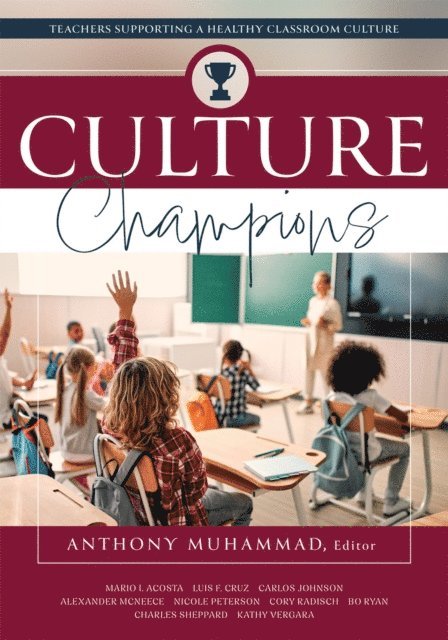
Teachers Supporting a Healthy Classroom Culture (Promote a healthy school culture.)
365 kr
Läs direkt efter köp
In this book, leading educator Anthony Muhammad compiles prominent voices in the field, sharing their tried-and-true strategies for building a healthy school culture, beginning with teachers and their collaborative partnerships with one another, parents, and the community at large. With innovative frameworks, personal anecdotes, case studies, and other resourceful tools, readers will be inspired and equipped to champion school culture transformation.
K–12 teachers can use this book to: Engage peers and lead initiatives in schoolsReceive innovative frameworks and tools to implement right awayLearn how to shift from classroom management to classroom leadershipCollaborate with peers, parents, and the community for most effective outcomesUnderstand how healthy classroom culture motivates students and bolsters teacher moraleContents:IntroductionChapter 1: Responding to Peers Who Have Lost Their WayChapter 2: Empowering Believers to Speak Up—The Fundamentalist PlaybookChapter 3: Doing Is Learning—The Power of Project-Based LearningChapter 4: Making the Shift From Classroom Management to Classroom LeadershipChapter 5: Navigating Bias and Building Respect and TrustChapter 6: Creating Partnerships With Parents and the Community—Reading Goals and Donut HolesChapter 7: Collaborating for Classroom CultureChapter 8: Fostering Classroom Cultures to Motivate Learners and Give Hope to Teachers